
Reviewed · JACK THE RIPPER TOURS
Interactive Jack the Ripper Night Walk: London’s Murder Mystery
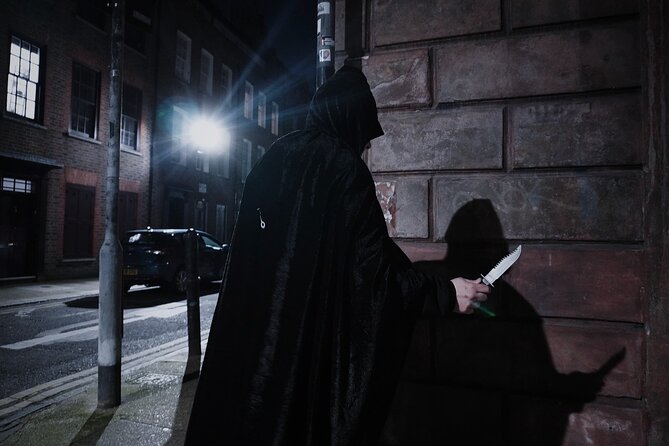
Jack the Ripper’s identity is still unknown, but this two-and-a-half-hour night walk gives you a clear path through the places tied to the case. You move from Brick Lane and Princelet Street to the Ten Bells, Goulston Street, and the final scene at Mitre Square, while the guide builds the story from clues, witness accounts, and Victorian poverty.
I like the route for two reasons. First, it connects the murders to the people who lived in Whitechapel, rather than treating the case as a string of spooky anecdotes. Second, the guides bring different strengths: Tyson is especially good at keeping a group involved, while Sadie’s approach puts the women’s stories at the center. The main drawback is practical: you finish at Mitre Square, not where you started, and one past guest found it hard to hear the guide in the street noise.
Key points to know before booking
- The route ends at Mitre Square: Plan your return trip from EC3A 5DE rather than walking back to the church.
- Seven stops build the case: Brick Lane, Princelet Street, Puma Court, the Ten Bells, Gunthorpe Street, Goulston Street, and St Botolph’s Aldgate each add a different piece.
- The story includes social history: You learn how poverty, crime, and limited shelter shaped life in Victorian East London.
- The guide makes the difference: Tyson, Sadie, Lisa, and Jess have each been praised for humor, clear storytelling, and personal attention.
- It is a real walking tour: You spend about 150 minutes outdoors after dark, so good shoes and warm clothing matter.
- The mystery stays open: The guide examines suspects and clues, but you should not expect a final, proven answer.
Why this Whitechapel walk feels different after dark
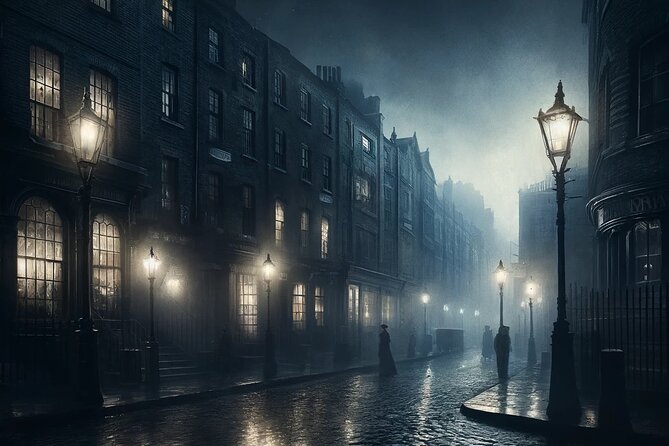
The useful thing about this experience is its sense of place. Jack the Ripper is often presented as a puzzle of names and dates, but here the streets help explain the case. Narrow passages, old courtyards, pubs, churches, and back lanes show why the murders caused such fear in 1888.
You begin outside St Marys Whitechapel Church, at the memorial on an unnamed road in London E1 1FE. From there, the group moves through Whitechapel and Spitalfields. The route is not a loop, and the final stop is Mitre Square in the City of London.
The evening timing adds atmosphere, but it also asks more of you. You need to watch your footing, stay close enough to hear, and keep track of the guide in a group of up to 25 people. If you want the most personal version, a private upgrade is available.
At $22.99 per person, I consider this good value if you want a focused London walking tour with a strong story. You are paying for about two and a half hours of guiding across several historic areas, not for entry to a museum or a theatrical show. The price is especially fair for people who enjoy history, true crime, or walking tours with a clear theme.
More Jack the Ripper Tours:
- London: The Original Jack the Ripper Walking Tour
★ 4.7 · 7,833 reviews - London Jack the Ripper Guided Tour with Ripper-Vision
★ 4.5 · 4,840 reviews - London: Jack the Ripper Small Group Tour
★ 4.7 · 3,159 reviews
Brick Lane and Princelet Street: poverty behind the headlines
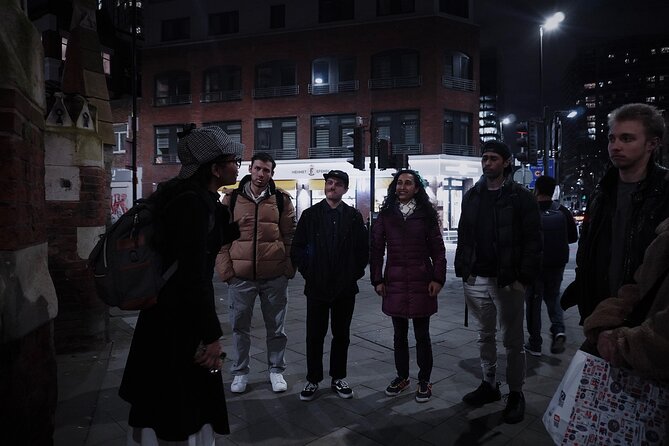
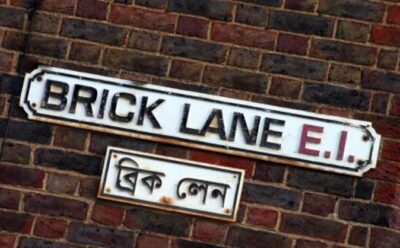
The first stop is Brick Lane, now known for curry houses and street art. The walk uses the street to explain the older East End, where overcrowding, crime, poverty, and desperation shaped daily life.
That context matters. Without it, the murders can seem like isolated acts carried out in a shadowy corner of London. With it, you begin to see why women living on the edge of society were especially vulnerable and why the police struggled to control the area.
You then reach Princelet Street, a cobbled lane that still gives you a feel for 1880s East London. The guide connects the street with Jack the Ripper’s movements and the life of Annie Chapman. This is one of the stronger parts of the walk for anyone who wants more than a list of murder scenes.
Do not expect a preserved crime scene. The value here is the setting and the explanation. The streets have changed, and the guide must connect modern London with evidence from the past. Old photographs and reports can help bridge that gap, and a downloadable collection of these materials has been part of the experience.
Puma Court and the Ten Bells: the case turns personal
Puma Court is presented as one of Spitalfields’ most unsettling alleys. It is a brief stop, but the narrow setting makes the subject feel immediate. The guide asks you to consider how exposed the victims were in quiet passages with little protection and few safe choices.
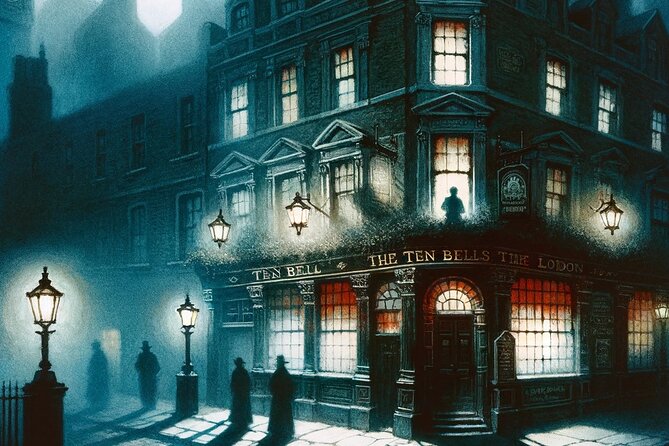
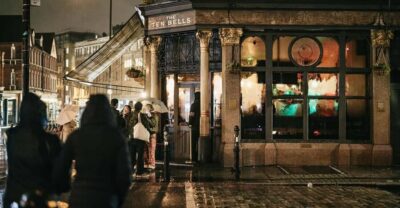
The tour then moves to the Ten Bells, one of the best-known locations connected with the case. Several victims were reportedly seen there before their deaths, and the group gathers outside to discuss their final hours.
Because the pub is a working place rather than a museum exhibit, the stop is observational. You look at the building from outside and listen to the guide rather than entering as part of the tour. That keeps the focus on the story, though anyone hoping for an indoor visit should adjust expectations.
I like the way this section shifts attention from the killer to the victims. The strongest guides do not treat the women as props in a detective game. Sadie, in particular, has been praised for giving their stories an energetic but respectful treatment. That approach makes the tour more than a spooky night out.
Gunthorpe Street and Martha Tabram’s place in the mystery
Gunthorpe Street is tied to Martha Tabram, whose murder was violent enough to make her an important part of the Ripper debate. She is not officially counted among the canonical victims, but some historians and investigators believe she may have been the killer’s first victim.
This stop shows one of the case’s central problems: the boundaries are uncertain. The guide can explain why Tabram is included, but you should not expect every point to be settled. The mystery contains disputed evidence, changing police theories, and later attempts to connect crimes that may or may not have been related.
For me, this is where the tour works best as a lesson in historical uncertainty. You are encouraged to examine the evidence, not simply accept one suspect as fact. That suits the title’s promise of solving a mystery, but the result is discussion rather than a neat answer.
If you enjoy true crime, you will probably appreciate that open-ended quality. If you prefer a clear conclusion, you may find the unresolved ending a little frustrating. The guide can make a strong case, but nobody can provide a proven identity for Jack the Ripper.
More Evening Experiences:
- London: London by Night Sightseeing Open-Top Bus Tour
★ 4.5 · 5,516 reviews - London: River Thames Evening Cruise with Bubbly and Canapés
★ 4.4 · 2,493 reviews - London by Night Bus Tour with Christmas Lights and Live Guide
★ 4.5 · 2,040 reviews - London: Jack the Ripper Evening Walking Tour
★ 4.9 · 1,449 reviews
Goulston Street and the clues left behind
Goulston Street brings the focus back to evidence. After the double murder, investigators found a bloodied piece of apron and a chalk message. The clue led to intense debate, and the guide explains why its meaning remains uncertain.
This part rewards close listening. The value is not only in hearing what was found, but in understanding how a single fragment could shape the investigation. You see how fear, poor communication, and limited forensic tools made the case harder to solve.
The stop also gives the group a chance to weigh competing explanations. Was the message connected to the killer? Was it unrelated? The walk uses the clue to show how quickly rumor and evidence could become tangled in Victorian London.
The biggest practical issue here is sound. One person found that the guide’s voice could be hard to hear at times. In a group of up to 25, stand near the guide and speak up if you miss a key point. This is not a criticism of every guide, but it is a sensible precaution on any outdoor night walk.
St Botolph’s Aldgate: a place of safety near danger
St Botolph’s Aldgate adds a needed change in tone. The church stood at the edge of Whitechapel and offered shelter to women in the Victorian period. Its presence reminds you that the area was not only a setting for crime. It also contained institutions and people trying to help those in need.
This stop gives the tour some balance. You see the contrast between a place of refuge and the nearby alleys where violence took place. It also helps explain the limited choices available to poor women, many of whom had to rely on temporary shelter, public houses, or whatever work they could find.
A good guide keeps this section from becoming a simple pause between murder scenes. Jess, for example, has been praised for combining humor with clear explanations and for taking time to discuss each location. That kind of patience matters because the social background can otherwise get lost in the more sensational parts of the story.
Mitre Square: a grim finish and a practical detail
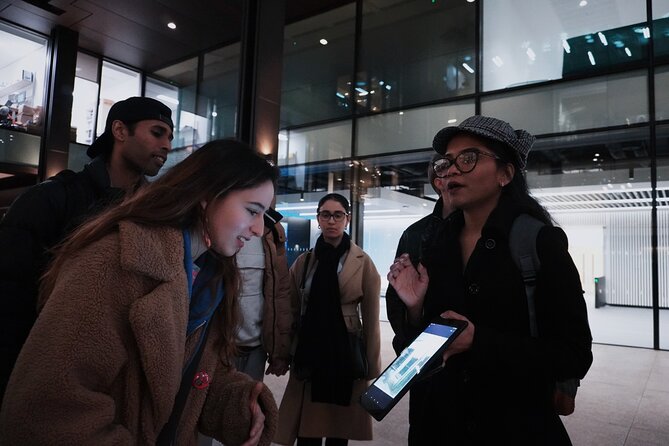
The walk ends at Mitre Square, where Catherine Eddowes was murdered. The violence of the crime shocked London, and the location gives the tour its darkest final chapter.
The ending is effective because you have already followed the case through several streets and clues. Mitre Square is not treated as a theatrical finale with a solved mystery. Instead, it leaves you with the scale of the crime and the limits of what can be known.
Pay attention to the route before booking. You finish at Mitre Square, London EC3A 5DE, rather than returning to St Marys Whitechapel Church. If you have dinner plans, a train to catch, or a hotel on the other side of London, allow time to orient yourself after the tour.
This point came up as a real planning issue for one person who had to work out the return journey. The end location is not a flaw, but it is easy to miss when you are focused on the story. Save the final address on your phone before you set off.
Guides, group size, and the feel of the evening
The guide is the most important part of this experience. The company uses several guides, including Tyson, Sadie, Lisa, and Jess, so the tone can vary from one departure to the next.
Tyson has a lively style and makes a point of remembering people’s names and using their questions during the walk. That can make a group of strangers feel more involved. Lisa has been described as helpful with practical questions as well as the history, which is useful on a route that does not return to its starting point.
Sadie brings an especially strong focus to the women involved in the case. Jess adds humor and patience while covering the details at each scene. You cannot choose a particular guide from the information provided, so book this for the route and subject rather than for a guaranteed personality.
The group limit is 25. That is small enough for a personal feel when everyone stays close, but large enough that you may need to position yourself well. If hearing every detail matters to you, remain near the guide and avoid drifting to the back.
Who should book this night walk
I would recommend it to you if you enjoy:
- True crime presented with historical context
- Walking through old London neighborhoods after dark
- Unsolved cases and disputed evidence
- Stories about the victims and the social conditions around them
- Small-group tours with a guide rather than a self-guided audio route
It also suits repeat visitors to London who want a different way to see Whitechapel and Spitalfields. Brick Lane, Princelet Street, and the Ten Bells are more meaningful when you understand how their past connects to the case.
I would be more cautious if you dislike dark subject matter or find crime tours too sensational. The subject includes violent murders, and the route spends a lot of time discussing the final hours of the victims. The walk also requires you to remain outdoors for around 150 minutes.
The tour is offered in English, and confirmation arrives when you book. Mobile tickets make arrival simple. Most people can participate, but the supplied information does not give specific accessibility details, so contact the provider if you need a particular arrangement.
Free cancellation is allowed up to 24 hours before the start time for a full refund. Changes or cancellations inside that period are not refunded, with cut-off times based on London local time. Since the tour is often booked about 36 days ahead, planning early is sensible if you have fixed dates.
Is the $22.99 price worth it?
At $22.99, this is one of the easier London tours to justify if the subject appeals to you. You get a long guided route, seven locations, historical explanation, and a clear beginning and end across Whitechapel, Spitalfields, and the City.
The value comes from the connections between the stops. A cheaper self-guided walk might show you the same streets, but it would not give you the guide’s explanation of Annie Chapman, Martha Tabram, Catherine Eddowes, the Goulston Street clue, or the role of St Botolph’s Aldgate.
The trade-off is comfort. You do not get a seat, an indoor exhibition, or a return transfer. You also cannot count on one named guide unless the provider confirms that separately. Still, for a focused evening in London, the price is fair.
Should you book the Jack the Ripper night walk?
Book it if you want an atmospheric London walk with real places, disputed clues, and social history behind the crimes. The best part is not guessing a killer’s name. It is seeing how the streets, poverty, police work, and personal stories fit together.
Choose the private upgrade if you want more control over the pace and a more personal exchange with the guide. Choose the standard group tour if you want the lower price and do not mind standing near other people for the full route.
My practical advice is simple: wear comfortable shoes, dress for a cool evening, keep the guide within earshot, and plan your route home from Mitre Square. If those details suit you, this is a strong-value way to see a less polished but more revealing side of London.
FAQ
How long is the Jack the Ripper night walk?
The experience lasts approximately 2 hours and 30 minutes.
What is the price?
The listed price is $22.99 per person.
Where does the tour start?
It starts at St Marys Whitechapel Church Memorial, on an unnamed road in London E1 1FE, United Kingdom.
Where does the tour end?
The final stop is Mitre Square, London EC3A 5DE.
Does the tour return to the starting point?
No. The walk ends at Mitre Square, so you need to plan your return journey from there.
Which locations are included?
The route includes Brick Lane, Princelet Street, Puma Court, the Ten Bells, Gunthorpe Street, Goulston Street, St Botolph’s Aldgate, and Mitre Square.
Is the tour offered in English?
Yes. The tour is offered in English.
How many people can join the standard tour?
The activity has a maximum group size of 25 people.
Is a private tour available?
Yes. You can upgrade to a private tour for a more personal experience.
What is the cancellation policy?
You can cancel at least 24 hours before the start time for a full refund. Cancellations or changes made less than 24 hours before the start time are not refunded.
More London Walking Tours
- Magical London: Harry Potter Guided Walking Tour
★ 4.7 · 22,044 reviews - Tour for Muggles The Ultimate Harry Potter Walking Tour in London
★ 5.0 · 4,684 reviews - London Jack The Ripper Guided Walking Tour
★ 5.0 · 3,131 reviews - London: Harry Potter Movies Walking Tour (Kids Go Free)
★ 4.7 · 3,071 reviews
Just added around London
- Up at The O2:Twilight Climb with Guided Tour with Panoramic Views★ 5.0 · 50 reviews
- Private Chauffeur-London Heathrow from/to Southampton Cruise Port★ 5.0 · 9 reviews
- Kensington Palace VIP Garden Tour with Royal High Tea★ 4.5 · 71 reviews
- Up at The O2: Sunset Climb with Guided Tour with Panoramic Views★ 5.0 · 110 reviews
- Secrets of the London Underground Small Group Walking Tour★ 4.5 · 38 reviews
- Urban Canvas: Exploring Shoreditch’s Vibrant Street Art★ 5.0 · 36 reviews
- Ultimate introduction to photography in Central London★ 5.0 · 19 reviews
- Full-Day Self-Guided Paris Tour from London by Eurostar with Seine River Cruise★ 3.5 · 22 reviews
Jack the Ripper Tours, compared.
London Jack the Ripper Guided Tour with Ripper-Vision
Read our review →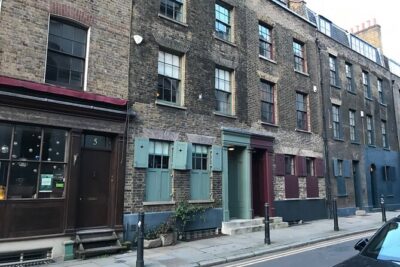
German Language : Original Jack the Ripper Tour
Read our review →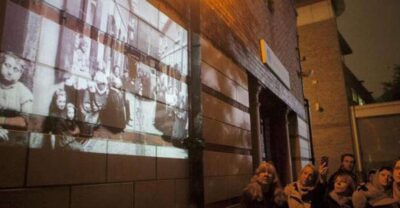
Jack the Ripper Walking Tour – Ripper Vision Tours
Read our review →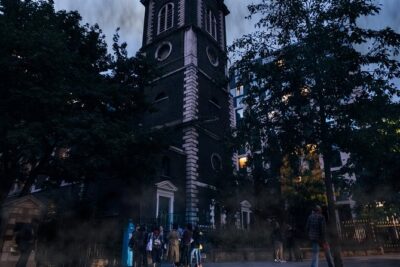
Ultimate Jack the Ripper : Guided Tour of London
Read our review →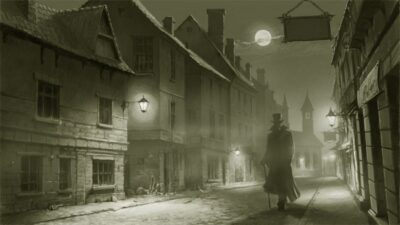
Browse the lists this tour appears in