
Reviewed · LONDON
Indian Cooking Masterclass in London
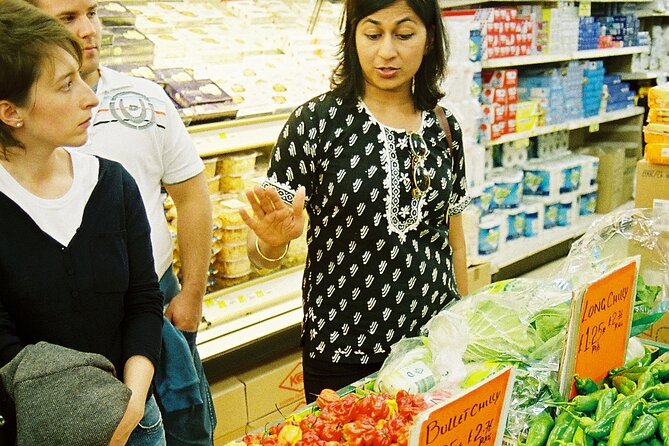
The best part of this London cooking class happens before you reach the stove. Monisha Bharadwaj meets you at Hounslow West Underground station, takes you to a local Indian shop, and shows you how to choose the ingredients that make a home-cooked curry work. Then you walk five minutes to her kitchen and cook lunch from scratch.
I like the small maximum of eight people, which leaves room for real help at the chopping board and stove. I also like the mix of practical shopping advice and cooking science. Monisha is an award-winning author of 17 books, so you are learning from someone who can explain not only what to do, but why it matters.
The main consideration is location. Hounslow is west of central London, so this is not a quick activity to add between visits to Westminster and the Tower. You need to allow time for the Underground ride, though the easy station meeting point and short, step-free walk keep the outing simple once you arrive.
Key points to know before booking
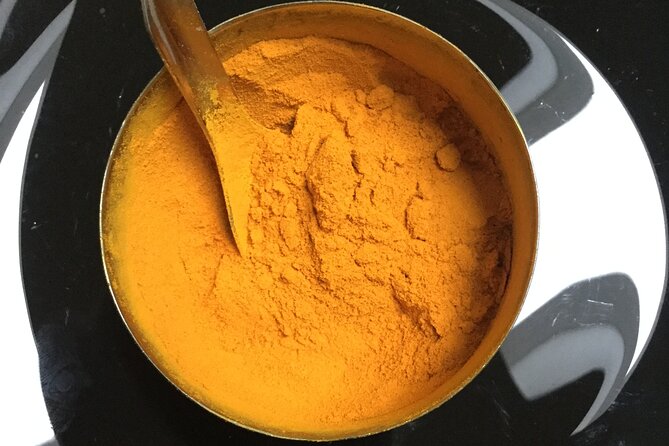
- Shop for ingredients first: You visit a local Indian shop with Monisha and learn how to select the spices and produce used in class.
- Cook four parts of a meal: The menu includes pulao rice, chicken or chickpea curry, a vegetable side dish, and smoked cumin raita.
- Work with an award-winning teacher: Monisha Bharadwaj has written 17 books, including The Indian Cooking Course and Indian Cooking for Dummies.
- Expect hands-on instruction: You cook as a group, with plenty of chances to take part rather than watch a demonstration.
- Eat lunch at the end: The meal you prepare is served after class, with masala chai, coffee, or tea included.
- Plan for a small morning group: The class runs Tuesday through Friday from 10:30 a.m. to 1 p.m., with a maximum of eight people.
Why the Hounslow setting works for this class
This experience begins at Hounslow West Underground station, not in the middle of central London. That may sound less convenient at first, but it suits the subject. Hounslow has a strong South Asian presence, and beginning at a local Indian shop gives the lesson a useful sense of place.
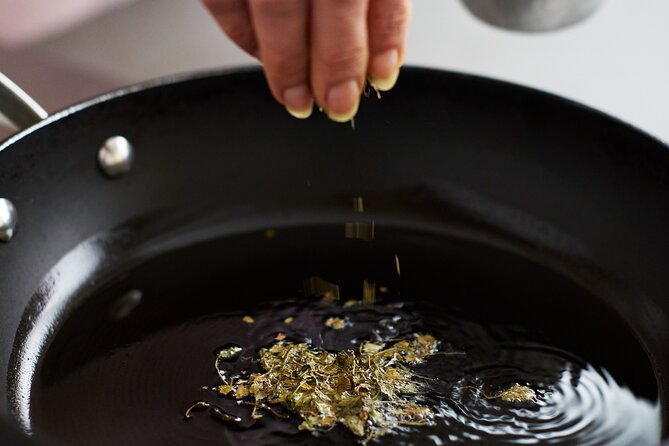
You meet at Stop A outside Hounslow West station. From there, Monisha takes you to the shop where you learn how to buy the ingredients for the meal. This is more useful than simply receiving a spice list. You can ask how to judge an ingredient, which items are worth buying, and what to look for when you want to repeat the recipes at home.
The shop visit also gives you a better idea of how Indian meals are built. A curry does not depend on one mysterious ingredient. It often comes down to the quality of the basics, the order in which they are cooked, and the point at which spices are added.
After shopping, you walk about five minutes to the Cooking With Monisha kitchen. The route has no steps, which helps if you are carrying a bag or prefer to avoid stairs. The activity ends back at the meeting point, so you do not need to work out a separate return route after lunch.
More Cooking Classes:
- Pasta Making with Unlimited Prosecco in London’s West End
★ 5.0 · 264 reviews - Private South Indian Home Cooking Class in London with a Local
★ 5.0 · 6 reviews
Masala chai and the plan for lunch
The class begins with masala chai while Monisha explains how to put together an Indian meal. This opening matters because the dishes are planned as a group, not taught as four unrelated recipes.
Your meal includes a curry, rice, a vegetable dish, and a cool yogurt side. That combination gives you a useful home-cooking pattern. You learn how a strongly seasoned main dish works with mild rice, how a vegetable side can support the curry, and how raita adds freshness and contrast.
The menu is designed around everyday food rather than a restaurant spread. That is good news if your goal is to cook Indian food after returning home. You are not learning a dish that requires a long list of rare items or specialist equipment.
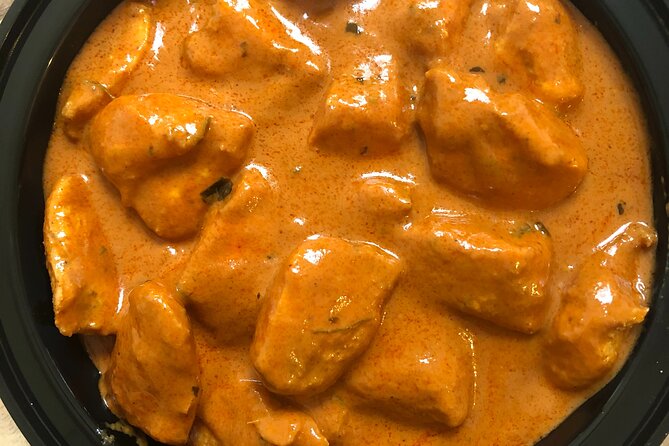
The curry is either murgh masala, a home-style chicken curry, or channa masala, a chickpea curry. The chicken option uses a few spices but builds flavor by layering and cooking the ingredients carefully. The chickpea choice gives you a vegetarian alternative with the same focus on method.
You should check the menu choice when booking or before the class if that matters to you. The supplied details describe the options, but they do not state how the choice is assigned or whether dietary substitutions are available.
Shopping for spices instead of guessing
Many cooking classes hand you premeasured ingredients and move straight to the recipe. Here, you first see where the food comes from and how to make sensible choices in a shop.
That is one of the strongest parts of the experience. Indian cooking can seem difficult when you encounter unfamiliar spice names, different brands, or several versions of what looks like the same ingredient. A guided shop visit turns that confusion into a practical lesson.
Monisha can also connect the shopping choices to the finished dishes. You see why one ingredient belongs in the curry, why another suits the rice, and how simple salad vegetables become part of the smoked cumin raita.
The value continues after the class. Recipe sheets and ingredients are provided, so you leave with something you can use in your own kitchen. The recipes are meant to be recreated without fuss, and the cooking lesson focuses on methods that transfer to other dishes.
I would still suggest taking notes if you have a particular question about spice storage, substitutions, or cooking times. A small group gives you a good chance to ask, but the class lasts only two and a half hours, so time moves quickly once the cooking begins.
Hands-on cooking with Monisha Bharadwaj
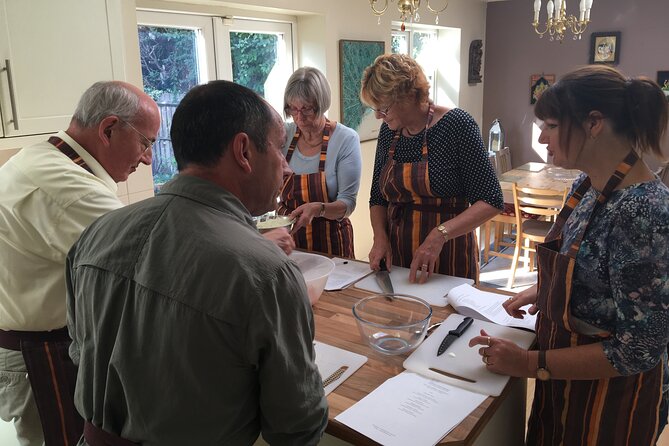
Monisha is the central reason to choose this class. She is an award-winning author of 17 books, including The Indian Cooking Course, Indian in 7, and Indian Cooking for Dummies. She has also worked as a professional chef, judged on Iron Chef America, and been recognized as a culinary educator in the United Kingdom.
Those credentials matter most because the class is built around explanation. You are not simply asked to copy a recipe. Monisha talks through the process and the reasons behind it, including how flavor develops as ingredients are added and cooked.
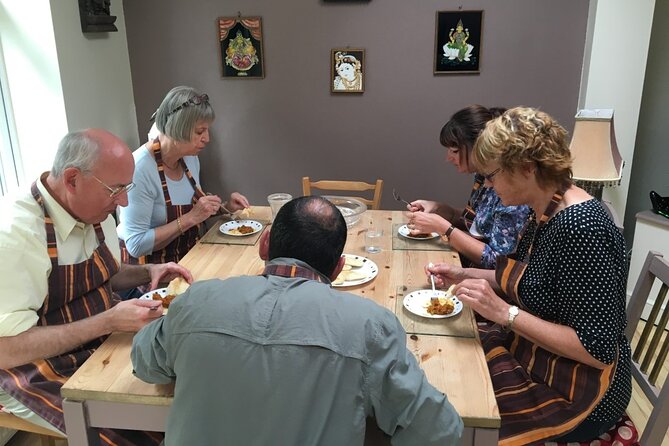
The group cooks together, but the setup includes plenty of hands-on work. You should expect to chop, stir, season, and help assemble the meal rather than sit and watch from the side.
That approach suits beginners who want patient guidance. It also works for confident home cooks who want a better feel for Indian techniques. The important point is that the class does not treat Indian food as a list of fixed rules. It shows you how a few spices can produce depth when the ingredients are handled in the right order.
The small group size helps here. With no more than eight people, Monisha can answer questions and correct mistakes as they happen. You are less likely to be lost at the back of a large demonstration, and you have more room to take an active role.
A different sort of day out in London altogether:
- From London: Harry Potter Warner Bros Studio Tour
★ 4.7 · 26,588 reviews - London: Westminster to Greenwich River Thames Cruise
★ 4.5 · 22,836 reviews - Magical London: Harry Potter Guided Walking Tour
★ 4.7 · 22,044 reviews - London: Madame Tussauds London
★ 4.6 · 20,915 reviews
What you cook: curry, pulao, subzi, and raita
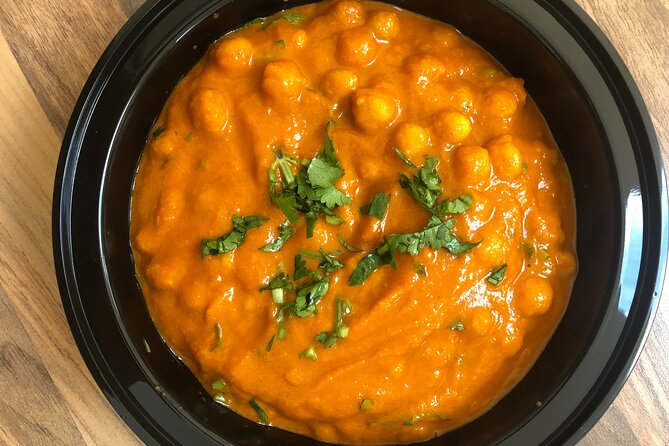
The meal has four main parts, each with a clear purpose.
Murgh masala or channa masala: The curry is the main dish. Murgh masala is a north Indian chicken curry, while channa masala uses chickpeas. The class emphasizes layering ingredients and cooking them properly, rather than relying on a large amount of spice.
Pulao rice: This is lightly spiced basmati rice. Perfect rice is often harder than it looks, so this is a useful skill to take home. The rice also teaches restraint. It should support the curry, not compete with it.
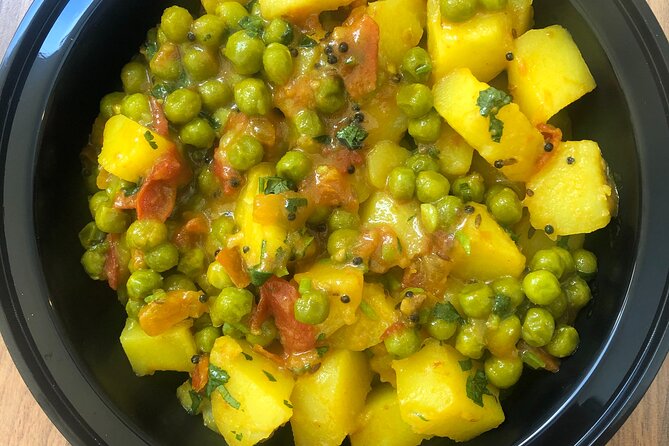
Subzi: This is an everyday vegetable side dish with spices chosen to complement the curry. It is the kind of food that makes an Indian meal feel complete, and it gives you a flexible template for using vegetables at home.
Smoked cumin raita: Cucumber and other salad vegetables are combined with yogurt, then finished with smoked cumin. The cool yogurt provides a sharp contrast to the warm curry and rice.
Together, the dishes form a proper lunch rather than a tasting plate. You get to see how separate elements come together at the table, and you eat the results at the end of the class.
The final meal and what is included
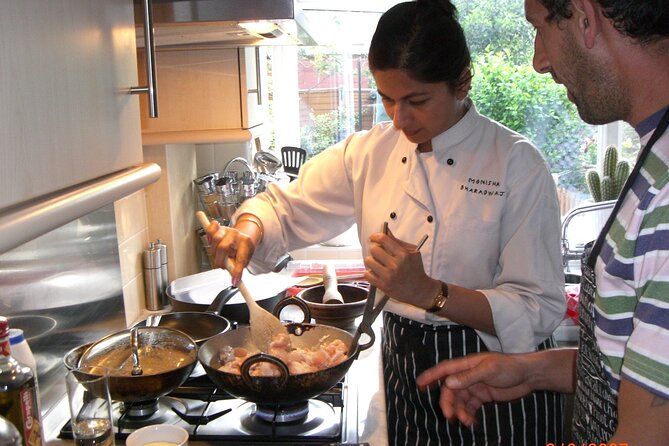
Lunch is included, along with coffee and tea. The meal is made from the food you prepared, which gives the final sitting a satisfying purpose. You are not just being served a dish by the instructor. You can trace the meal from the shop, to the kitchen, to your plate.
Masala chai is also offered as the class discusses the meal plan. Alcohol is not included, and this is best viewed as a daytime cooking lesson rather than a food-and-drink event.
The class lasts about two hours and 30 minutes, from 10:30 a.m. to 1 p.m. That is enough time for shopping, instruction, cooking, and lunch, but it is not a leisurely half-day kitchen workshop. You will want to arrive ready to take part and keep moving.
The end result is particularly useful for anyone who wants to repeat the meal at home. You receive recipe sheets and ingredients, and the menu uses familiar building blocks rather than an elaborate banquet.
Is $122.64 a fair price?
At $122.64 per person, this is not the cheapest cooking class in London. The price makes more sense when you look at what is included: a small group, a guided ingredient-shopping visit, a professional chef and author, hands-on instruction, recipe sheets, lunch, and tea or coffee.
You are paying for more than a meal. The shopping lesson is a practical extra, and the limited group size gives you a better chance to receive direct help. A large class may cost less, but it may also leave you watching someone else cook.
The value is strongest if you want skills you can use later. If you only want to eat Indian food in London, a restaurant will be cheaper. If you want to understand how to choose ingredients and build a full meal, this class offers more lasting value.
It is also a good choice for a special outing. The personal welcome at the station, the local shop, and the meal in Monisha’s kitchen make it feel more personal than a standard cooking demonstration.
Who should book this experience?
I would recommend it to beginner cooks, Indian food fans, and home cooks who want a clearer grasp of spices and technique. It also suits couples, friends, and small family groups who enjoy doing something active together.
The class is especially useful if you have tried Indian recipes at home but found the results flat or uneven. Learning how to layer ingredients and select the right basics may solve more problems than simply buying more spices.
You do not need to be an expert. The instruction is intended for all skill levels, and the teaching style is described as patient, encouraging, and easy to follow.
It may be less suitable if you want a central London activity, a late afternoon or weekend booking, or a passive food tour. Classes run Tuesday through Friday from 10:30 a.m. to 1 p.m., and the location requires a trip to Hounslow.
The experience is recommended by all listed participants and has a five-star rating from 50 reviews. That matches the main strengths of the format: a personal welcome, useful shopping advice, clear teaching, and a generous meal at the end.
Practical details before you go
The class is offered in English and uses a mobile ticket. Confirmation is provided when you book. Service animals are allowed, and the meeting point is near public transportation.
The activity requires good weather, and it also requires a minimum number of participants. If poor weather or low numbers force a cancellation, you can choose another date or receive a full refund.
You can cancel for a full refund up to 24 hours before the start time. Changes or cancellations made less than 24 hours before the class are not accepted for a refund. The cut-off follows local London time.
Should you book the Indian Cooking Masterclass?
Book it if you want a practical food experience with real instruction, not just a meal or a quick demonstration. The ingredient-shopping visit, small class, respected teacher, and four-dish lunch give you useful value for the price.
Skip it if you are staying near central London and do not want to spend time reaching Hounslow, or if you prefer a flexible evening activity. For everyone else, this is a smart way to spend a London morning, especially if you want to return home able to cook the meal again.
FAQ
Where does the Indian cooking class begin?
The class begins at Hounslow West Underground station, at Stop A, in Hounslow, London.
How long does the experience last?
The experience runs for about two hours and 30 minutes, from 10:30 a.m. to 1 p.m.
What days is the class offered?
It is offered Tuesday through Friday.
How many people can join the class?
The class has a maximum of eight participants.
What dishes will I cook?
The menu includes pulao rice, a chicken or chickpea curry, a vegetable side dish called subzi, and smoked cumin raita.
Is lunch included?
Yes. You eat the meal prepared during the class, and coffee and tea are included. Alcoholic drinks are not included.
Can I cancel for a full refund?
Yes. You can cancel at least 24 hours before the start time for a full refund. Cancellations or changes made less than 24 hours before the start time are not accepted for a refund.
Just added around London
- Up at The O2:Twilight Climb with Guided Tour with Panoramic Views★ 5.0 · 50 reviews
- Private Chauffeur-London Heathrow from/to Southampton Cruise Port★ 5.0 · 9 reviews
- Kensington Palace VIP Garden Tour with Royal High Tea★ 4.5 · 71 reviews
- Up at The O2: Sunset Climb with Guided Tour with Panoramic Views★ 5.0 · 110 reviews
- Secrets of the London Underground Small Group Walking Tour★ 4.5 · 38 reviews
- Urban Canvas: Exploring Shoreditch’s Vibrant Street Art★ 5.0 · 36 reviews
- Ultimate introduction to photography in Central London★ 5.0 · 19 reviews
- Full-Day Self-Guided Paris Tour from London by Eurostar with Seine River Cruise★ 3.5 · 22 reviews