
Reviewed · LONDON PHOTOGRAPHY TOURS AND PHOTO SHOOTS
History of London Photography Tour
London’s famous sights look different when you stop treating them as a checklist. This two-hour walking tour takes you from the City’s medieval churches and grand financial buildings to St. Paul’s, the Millennium Bridge, Tower Bridge, and Tate Modern, with a camera lesson running through it all.
I like the practical photography coaching, especially for anyone who has grown too comfortable with automatic settings. I also like the route’s contrast: old churches, Gothic civic buildings, wartime memorials, modern bridges, and a former power station all appear in one compact walk.
The main drawback is that the route uses many well-known landmarks, so you should not expect a secret-London expedition at every turn. The group can reach 18 people, and the tour is fixed at about two hours, which limits how much individual coaching you can receive.
Key points to know before you book
- Start at St. Mary Woolnoth: Meet at IMPRINT Church on Lombard Street, in the heart of the City of London.
- Learn while you walk: A professional photographer leads the route and offers help with composition, lighting, camera settings, and angles.
- Cover ten major sights: The walk includes the Royal Exchange, Bank of England, Guildhall, St. Paul’s, Millennium Bridge, Tower Bridge, and Tate Modern.
- Bring a camera or camera phone: The experience is built around making your own pictures, not simply listening to a guide.
- Finish at Tate Modern: The route crosses from the financial district to the South Bank, ending beside one of London’s best-known modern art buildings.
- Plan for firm booking terms: The tour is non-refundable, although bad weather or a failure to reach the minimum group size can lead to a new date or full refund.
Why this London photo walk works
This is not a sit-down photography class with a few sample images. You learn by making pictures on the street, then adjusting your approach as the scenery changes.
That matters in London, where the best subject is often not the grand view alone. A church doorway, a line of columns, a statue against glass towers, or the way a bridge frames a cathedral can produce a stronger photograph than a straight record shot.
The route also has a useful rhythm. You begin with compact architectural subjects around Bank, move through the City’s older civic center, then reach broad views of St. Paul’s and the Thames. The final section offers more open space and larger subjects, including the Millennium Bridge, Tower Bridge, and Tate Modern.
The group size can reach 18 people, so this is not a private lesson. Still, the strongest feedback points to a relaxed, supportive teaching style. Richard, one of the guides named in the available feedback, helped people who were unsure about camera settings before the walk began. That makes the tour suitable for beginners, but also useful for experienced photographers who want a reason to stop relying on automatic mode.
More London Photography Tours and Photo Shoots:
- London: Private Photoshoot with Video Clip Option
★ 4.8 · 182 reviews - Professional Photoshoot in London Photographer
★ 5.0 · 102 reviews - Private landmarks photoshoot for families and couples
★ 5.0 · 92 reviews
Starting beneath St. Mary Woolnoth
The meeting point is IMPRINT Church, St. Mary Woolnoth, at 10 to 13 Lombard Street. This puts you in the City of London, the small historic core surrounded by the larger metropolis.
St. Mary Woolnoth is an excellent opening subject because it carries several layers of London’s past. Worship has taken place here for at least 2,000 years, and traces of Roman and pagan religious buildings have been found beneath the present church. The current building was rebuilt in 1727 to a design commissioned from Nicholas Hawksmoor.
You have about ten minutes here. That is enough for a quick lesson in finding a strong viewpoint, but not enough for a long architectural study. The church’s setting among modern financial buildings also gives you a useful contrast between old London and the City’s present-day purpose.
You do not pay a separate admission charge at any stop. The value comes from the guide’s instruction and from learning how to see familiar buildings with more care.
Royal Exchange and Bank of England
The Royal Exchange follows, with another ten-minute stop. Its grand exterior gives you a chance to work with repeated lines, symmetry, columns, and wide architectural shapes.
Your guide helps you decide how much of the building to include and where to place yourself. That may sound basic, but large buildings are easy to photograph badly. A quick change in position can make the difference between a flat record shot and a picture with structure.
The Bank of England receives about 15 minutes. This is one of the better places on the route for people who want to photograph formal architecture rather than street scenes. Your guide points out useful angles and helps you work with the building’s scale.
The City can feel visually crowded, especially around major roads and office blocks. That is part of the exercise. You learn to control what enters the frame instead of waiting for a completely empty view.
Guildhall and St. Mary-le-Bow
The 800-year-old Guildhall gives you 15 minutes to photograph Gothic detail and the building’s imposing exterior. It is a good point for practicing vertical framing, texture, and the balance between close detail and a wider view.
St. Mary-le-Bow follows for about ten minutes. The church is tied to the traditional definition of a Cockney, who must be born within earshot of its bells. That local detail gives the photograph a stronger sense of place than a simple building name.
These stops also show why the tour is more than a camera lesson. You receive short pieces of London history that help you understand what you are photographing. The information is not presented as a long lecture, which suits a walking tour with limited time.
If your goal is to produce a carefully edited set of images at every stop, the pace may feel brisk. If you want a useful collection of ideas and several strong pictures, the timing should be more realistic.
A different sort of day out in London altogether:
- From London: Harry Potter Warner Bros Studio Tour
★ 4.7 · 26,588 reviews - London: Westminster to Greenwich River Thames Cruise
★ 4.5 · 22,836 reviews - Magical London: Harry Potter Guided Walking Tour
★ 4.7 · 22,044 reviews - London: Madame Tussauds London
★ 4.6 · 20,915 reviews
St. Paul’s in a 20-minute photo session
St. Paul’s Cathedral gets the longest stop, about 20 minutes. That makes sense. Christopher Wren’s great dome is one of London’s most recognizable subjects, and the surrounding streets offer more than one way to frame it.
The cathedral has witnessed major events over many centuries. The tour information connects it with the marriage of Catherine of Aragon to Prince Arthur in 1501, Queen Elizabeth I’s visit after the defeat of the Spanish Armada in 1588, and the punishment of Guy Fawkes and his fellow conspirators after the Gunpowder Plot.
You are photographing the exterior rather than taking a cathedral tour, and admission inside is not included. That keeps the experience focused and helps the group stay on schedule.
This is where guidance about perspective can be especially useful. A landmark as large as St. Paul’s can dominate the picture, leaving little room for context. Your guide helps you look for a more memorable arrangement, using nearby streets, surrounding buildings, or the cathedral’s architectural lines.
The Firefighters Memorial and London’s wartime story
The National Firefighters Memorial is a shorter ten-minute stop, but it adds a different subject to the route. The monument, made by sculptor John Mills, honors the professional firefighters, men, and women who helped London survive the Blitz.
The statue gives you a chance to work with human figures rather than buildings. You can look at gesture, texture, and the relationship between the monument and the city around it. The setting among major London landmarks also creates a useful contrast between a small, focused subject and a broad urban background.
This stop may appeal to you if you want more than standard postcard photographs. It provides a little emotional and historical weight without requiring a separate museum visit.
Crossing the Millennium Bridge
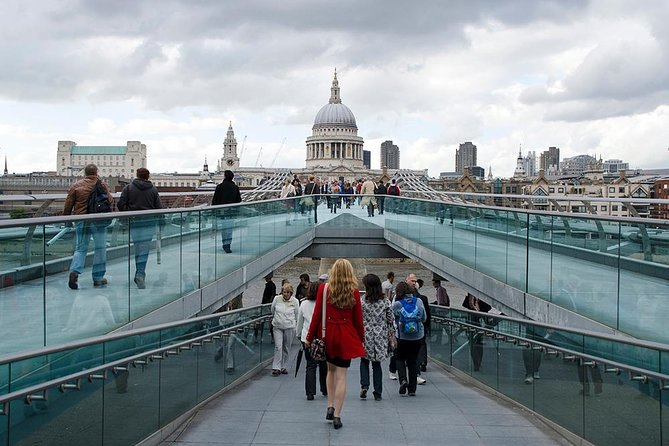
The 325-meter Millennium Bridge connects Tate Modern with the City and St. Paul’s Cathedral. The tour allows about ten minutes here, with the guide helping you make the most of the bridge’s strong lines and open views.
A footbridge is a natural place to practice leading lines. The walkway can draw the eye toward St. Paul’s, while the steel structure creates repeated shapes that work well in both wide and more tightly framed pictures.
The bridge also changes the feel of the tour. You leave the dense streets of the financial district and gain broader views across the Thames. The transition helps your photography, since you are no longer working only with façades and narrow city spaces.
As with the rest of the route, ten minutes is a prompt, not a full workshop. You will need to act fairly quickly, especially if you are using manual settings and want to make several different compositions.
Tower Bridge and the Thames
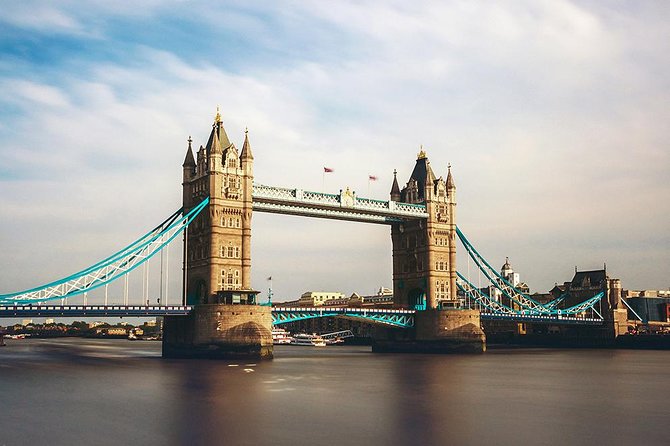
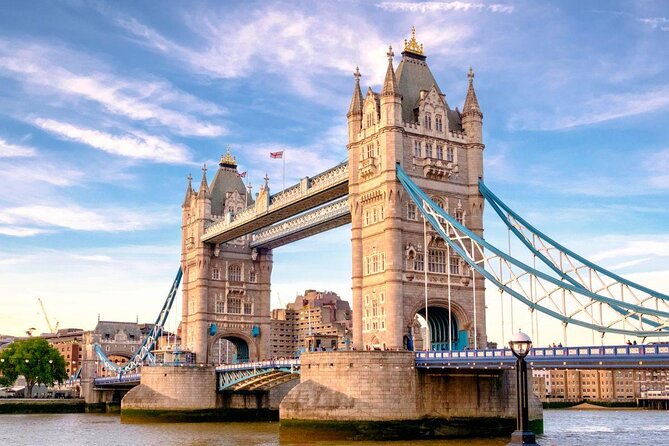
The Tower Bridge stop lasts about ten minutes and offers panoramic views of the river and bridge. This is one of the route’s most obvious postcard subjects, but that does not make it unhelpful.
A professional guide can show you how to move past the standard centered view. You might work with the bridge as a frame, include the river for scale, or concentrate on its towers and structure. The point is not to avoid famous sights. It is to photograph them with more intention.
Because the tour ends at Tate Modern, the Tower Bridge section is part of a continuing move along the Thames rather than a separate return journey. Check your plans before booking, since your day finishes on the South Bank, not back at the starting point in the City.
Tate Modern closes the route
Tate Modern is the final stop, with about ten minutes for photography. The building occupies the former Bankside Power Station, designed by Sir Giles Gilbert Scott, who also designed Battersea Power Station.
Its tall brick exterior gives you a very different subject from the stone churches and formal banks earlier in the walk. You can photograph its scale, strong vertical form, and position along the South Bank.
The tour ends here, beside Britain’s national gallery of international modern art. The stop is useful even if you do not enter the museum, and it leaves you in an area with further cultural and riverside options after the tour.
Do not mistake the ten-minute stop for an art museum visit. Admission to Tate Modern is not part of the experience, and the tour’s focus remains outdoor photography.
What you actually learn about photography
The teaching covers composition, lighting, camera settings, and the search for better angles. The feedback gives a clearer picture of the level: people with different abilities can take part, and the guide may help you adjust settings before the walk starts.
That makes this a good refresher if you own an SLR or another camera but have slipped back into automatic mode. It also works for beginners who want direct help while photographing real subjects.
You should bring your own camera or camera phone. The tour does not provide photography equipment, and you will get little from it if you plan to leave your camera in your bag.
The advice is practical rather than highly technical. You may not come away with a full course in exposure or advanced editing, but you should gain new ways to think about framing and a reason to experiment.
Price, pace, and group size
At $71.63 per person, the price is reasonable if you want both a guided London walk and hands-on photography coaching. You are paying for a professional photographer, historical context, and a route that covers a large stretch of central London in about two hours.
It is less attractive if you mainly want sightseeing commentary or a quiet photo session. Much of the route includes well-known landmarks, and a group of up to 18 can make individual attention uneven.
The total listed stop times add up to the two-hour duration, so the schedule is tight. Wear comfortable shoes and arrive ready to walk. The tour is near public transportation, and the end point at Tate Modern is easy to use as a base for continuing your day.
The minimum age is 18. Children can take part only with an adult, and both must have paid tickets. Service animals are allowed, and most people can participate.
The booking terms need attention. This experience is non-refundable and cannot normally be changed. If poor weather cancels the tour, you can receive another date or a full refund. The same applies if the minimum number of participants is not reached.
Who should book this tour?
I would choose this walk if you want to improve your pictures while seeing a broad slice of central London. It suits a first-time visitor who wants history with the sightseeing, and it also suits a local who knows the landmarks but wants fresh ways to frame them.
It is particularly useful for:
- Beginners who want help using a camera or camera phone
- SLR owners who want to stop relying on automatic settings
- Couples or friends looking for a creative way to see central London
- People interested in architecture, monuments, and urban composition
- Visitors who prefer a small, focused activity rather than a full-day tour
I would hesitate if you want rare locations, long time at each stop, or a private lesson. The route includes famous London sights, and its success depends partly on how much help the guide can give within a group of up to 18.
Should you book the History of London Photography Tour?
Book it if the idea of seeing London through your camera appeals to you more than simply collecting facts. The route is well chosen for variety, the historical details add meaning, and the strongest teaching appears to come through friendly, practical help rather than formal classroom instruction.
Skip it if you want admission to St. Paul’s or Tate Modern, a deep exploration of less-known neighborhoods, or flexible cancellation terms. For a compact two-hour walk that combines iconic views with useful camera coaching, the $71.63 price can be good value, provided you bring your equipment and accept the brisk pace.
FAQ
Where does the photography tour start?
It starts at IMPRINT Church London, St. Mary Woolnoth, at 10 to 13 Lombard Street, London EC3V 9AN.
Where does the tour end?
The tour ends at Tate Modern, Bankside, London SE1 9TG.
How long does the experience last?
The walking photography tour lasts approximately two hours.
What sights are included?
The route includes St. Mary Woolnoth, the Royal Exchange, the Bank of England, Guildhall, St. Mary-le-Bow, St. Paul’s Cathedral, the National Firefighters Memorial, the Millennium Bridge, Tower Bridge, and Tate Modern.
Do I need to bring a camera?
Yes. You need a camera or camera phone to get the most from the experience.
Is a professional photographer included?
Yes. The tour is led by a professional photographer who provides advice on camera skills, composition, lighting, and photography angles.
What is the maximum group size?
The tour can have a maximum of 18 participants.
What is the minimum age?
The minimum age is 18. Children must be accompanied by an adult, and both the child and adult must have paid tickets.
Can I cancel for a refund?
The experience is non-refundable and cannot normally be changed. If the tour is canceled because of poor weather or because the minimum number of participants is not reached, you will be offered another date or a full refund.
More Historical Tours
- London Small Group Tour of Historical Pubs
★ 5.0 · 10,422 reviews - Soho Music & Historic Pubs Tour
★ 5.0 · 1,993 reviews - London: Historic Pubs of Central London Walking Tour
★ 4.9 · 1,065 reviews - London: Soho Music and Historic Pubs Walking Tour
★ 4.9 · 836 reviews
Just added around London
- Up at The O2:Twilight Climb with Guided Tour with Panoramic Views★ 5.0 · 50 reviews
- Private Chauffeur-London Heathrow from/to Southampton Cruise Port★ 5.0 · 9 reviews
- Kensington Palace VIP Garden Tour with Royal High Tea★ 4.5 · 71 reviews
- Up at The O2: Sunset Climb with Guided Tour with Panoramic Views★ 5.0 · 110 reviews
- Secrets of the London Underground Small Group Walking Tour★ 4.5 · 38 reviews
- Urban Canvas: Exploring Shoreditch’s Vibrant Street Art★ 5.0 · 36 reviews
- Ultimate introduction to photography in Central London★ 5.0 · 19 reviews
- Full-Day Self-Guided Paris Tour from London by Eurostar with Seine River Cruise★ 3.5 · 22 reviews
London Photography Tours and Photo Shoots, compared.
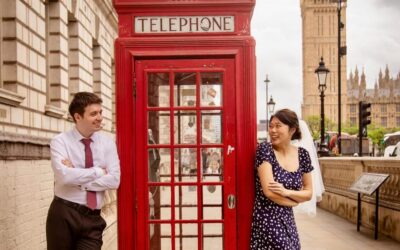
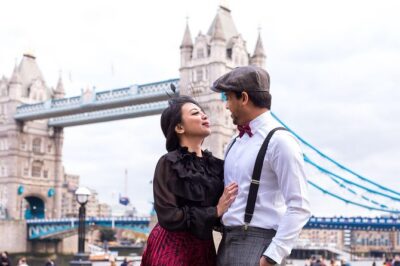
Professional Photoshoot in London Photographer
Read our review →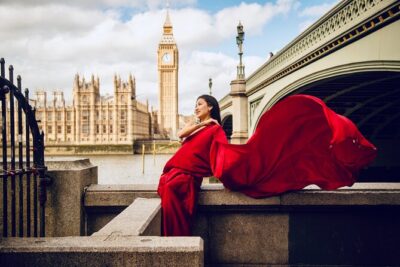
Browse the lists this tour appears in