

Reviewed · HIDDEN LONDON WALKING TOURS
Hidden Gems Tour of the City of London
London’s oldest quarter packs a remarkable amount into a short walk. This 140-minute tour connects Roman remains, the Great Fire, medieval power, grand banks, and modern city views, so you get more than a parade of famous facades.
I like the small-scale feel suggested by the booking experience, and I like the useful inclusions: entry to either the London Mithraeum or Guildhall, plus the viewing platform at 120 The Garden. Guide Nick has earned especially warm praise for bringing the route to life and making people think.
The main consideration is pace. You cover a lot in just over two hours, and the tour focuses on exterior landmarks and city context rather than full visits inside St Paul’s Cathedral or the Tower of London. If you want long interior visits, this is not the right format.
Key points at a glance
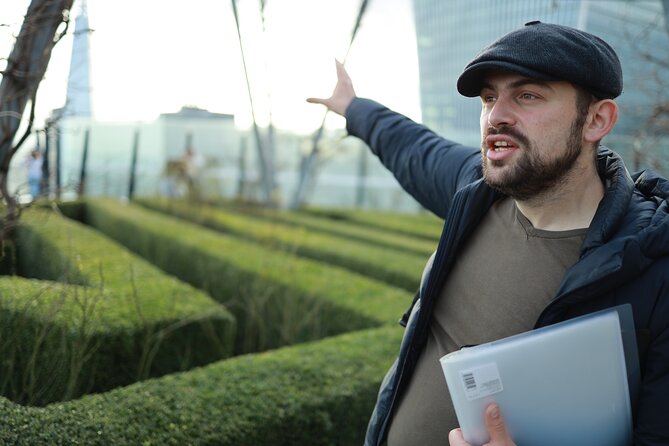
- Roman London to modern London: The route links ancient remains with today’s financial district and newer architecture.
- Five major landmarks: You pass St Paul’s Cathedral, the Monument, Bank of England, Leadenhall Market, and the Tower of London.
- Two useful inclusions: Your booking includes entry to the London Mithraeum or Guildhall and the viewing platform at 120 The Garden.
- A lively English-speaking guide: Nick has led at least some departures, and his enthusiasm for the route has been singled out.
- Good value at $24: The price is modest for a guided walk with two included entries.
- Practical access: The experience is wheelchair accessible, with free cancellation up to 24 hours before the start.
Why the City of London makes such a good walking route
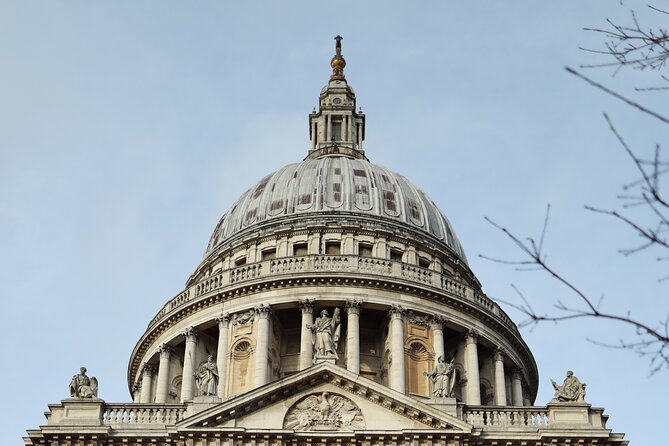
The City of London is small in area but huge in historical reach. This is the oldest section of the capital, and the tour uses that compact setting well. You move through evidence of Roman London, medieval authority, the destruction caused by the Great Fire, the rise of modern finance, and the city’s present-day architecture.
I like this kind of route because the landmarks make more sense when placed beside one another. St Paul’s is not simply a famous cathedral. The Monument is not just a tall column. Leadenhall Market is not merely a photogenic arcade. Together, they show how London repeatedly rebuilt itself while keeping traces of earlier centuries underfoot.
The tour also gives you a useful first orientation. If you are new to London, you can use the route to understand how the City relates to the Tower of London, the river, and the wider centre. If you already know the capital, the Roman and financial history may give familiar streets a new angle.
More Hidden London Walking Tours:
- Secret London Tour by Bike
★ 4.8 · 557 reviews - Hidden London Walking Tour
★ 5.0 · 378 reviews - London Soho Food Tour with 7+ Tastings of Delicious Hidden Gems
★ 5.0 · 366 reviews
Ancient remains beneath the financial district
Roman remains are one of the first reasons to choose this experience. London’s earliest city was not an isolated archaeological site far from modern life. Its traces sit beneath and beside offices, streets, shops, and major transport routes.
The London Mithraeum is included as one possible entry point, while the tour may instead include Guildhall. The exact choice matters because each offers a different view of the City’s past. The Mithraeum connects you with Roman London and the remains of a temple dedicated to Mithras. Guildhall represents the City’s long civic life and its role as a centre of administration and power.
You should check the departure details to see which entry is planned for your booking. Both options add value because they take you beyond a guide pointing at buildings from the pavement. You get a chance to see a place connected with the city’s past at closer range.
Do not expect a full archaeological day. The tour has several stops to cover, so the included visit works as one part of a broader story. That is a strength if you want variety, but a limitation if Roman London is your main reason for booking.
St Paul’s Cathedral and the Great Fire
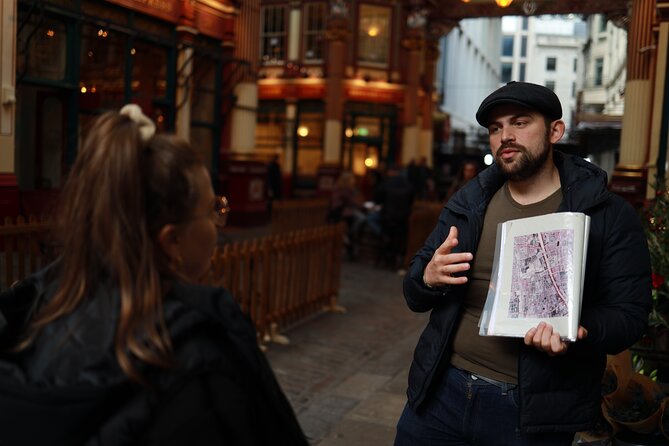
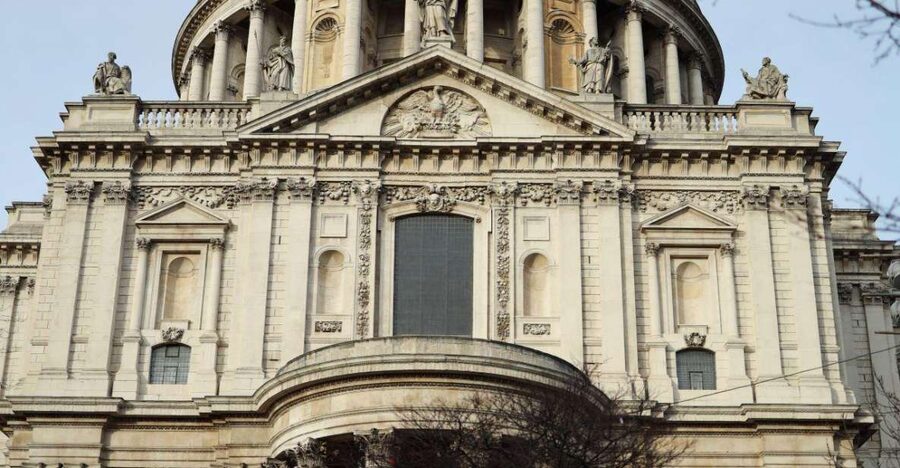
St Paul’s Cathedral is one of the route’s major visual anchors. Its familiar dome gives the walk a clear sense of place, while its connection with London’s rebuilding after the Great Fire adds weight to the stop.
The tour does not list entry into the cathedral itself. You should therefore think of St Paul’s as an important landmark and storytelling stop, not a substitute for a dedicated cathedral visit. If you want the interior, galleries, or extended time inside, plan that separately.
The Monument to the Great Fire of London adds another layer. Built to mark the devastating fire of 1666, it links disaster with the city’s later rebuilding. The stop is useful because it turns a major event into something you can locate in the streets around you.
I find this part of the route especially helpful for understanding how London changed. The fire destroyed a large part of the old city, but what followed was not a clean break with the past. The tour shows how memory, reconstruction, and newer commercial ambitions occupy the same district.
Bank of England and the machinery of money
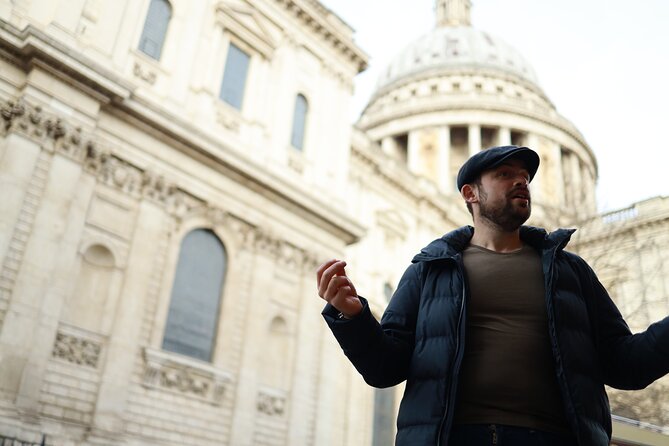
The Bank of England shifts the focus from religious and civic landmarks to finance. The City of London remains closely associated with banking and commerce, and this stop helps explain why the district looks and functions so differently from much of central London.
You should expect context rather than a bank interior visit. The attraction here is the contrast between old streets and the institutions that shaped Britain’s financial life. A good guide can make that contrast clear, showing how the City has remained a place of power even as its buildings and working habits changed.
This is also where the route’s mix of old and new becomes most useful. You may pass imposing historic buildings, modern offices, and contemporary public spaces within a short distance. The tour encourages you to read the surroundings instead of treating each building as a separate photo stop.
If your interest is mainly royal London, art, or food, the banking focus may feel less essential. For anyone curious about how the capital works, it is a valuable part of the walk.
More City Tours:
- City Sightseeing London Hop-On Hop-Off Bus Tour & Bookable Extras
★ 4.0 · 1,224 reviews - London: Go City Explorer Pass® – Tickets for 2-7 Attractions
★ 4.3 · 1,111 reviews - London: Speedboat Tour Through Heart of the City
★ 5.0 · 387 reviews - London: Upside Down House Westfield White City Entry Ticket
★ 4.0 · 338 reviews
Leadenhall Market’s ornate change of mood
Leadenhall Market provides one of the route’s most distinctive settings. Its decorative structure and covered passages offer a sharp change from the broad civic spaces and financial buildings nearby.
The market is also a reminder that the City is not only about institutions. Commercial exchange, shopping, food, and daily movement have long been part of its identity. You get a more human sense of the area here, even though the broader route keeps its focus on history and architecture.
This is a good place to pause and look up. The market’s design rewards attention to details that can be missed when you are hurrying between major sights. Since the tour has a fixed duration, your time here may be limited, but the stop adds variety and gives the route a welcome change of texture.
I would not book this walk solely for market browsing. It is one component of a carefully packed historical route, not a food tour or a shopping experience. Still, it is an effective stop because it breaks up the grand landmarks and gives you a different view of the City.
The Tower of London and the edge of the old city
The Tower of London is the route’s most famous medieval landmark. Its presence brings the tour toward the eastern edge of the City and connects the financial district with royal authority, imprisonment, and military history.
The information provided does not include entry to the Tower. Treat it as a landmark viewed and discussed during the walk rather than an included interior visit. You will need a separate ticket if you want to explore the complex inside.
That distinction is important when judging the price. At $24, the tour is not selling entry to every major sight. It is selling a guided connection between them, with two additional entries included. For many people, that is a sensible arrangement because the Tower and St Paul’s each deserve more time than this route can provide.
The Tower also gives the walk a strong ending or late-stage landmark, depending on the exact route used. It helps you see that the City was not only a commercial centre. It sat beside royal and military power, with the river linking these parts of London.
The view from 120 The Garden
Entry to the viewing platform at 120 The Garden is another practical perk. A high viewpoint can help you make sense of the route after walking through streets where the wider pattern is often hard to see.
From above, you may find it easier to connect the major landmarks and appreciate the mix of old and new buildings. The platform also adds a change of pace. After a history-heavy walk, a city view gives you time to step back and look at London as a whole.
The supplied details call it the viewing platform of 120 The Garden, but they do not specify the height or a guaranteed length of time there. Avoid planning around a long photography session. Consider it an included viewpoint that adds value, not a dedicated observation-deck visit.
I like this inclusion because it broadens the tour beyond ground-level storytelling. You hear how London changed, then get a chance to see the result from above.
What the guide adds to the experience
A route like this depends heavily on the guide. The City of London can feel confusing at first, with major landmarks separated by streets that look ordinary until you know what happened there.
Nick is named as a guide on one booking, and his enthusiasm for the route made a clear difference. If Nick leads your departure, you can expect someone who cares about the subject and enjoys helping you see more than the obvious sights. The tour is conducted in English, so you should be comfortable following spoken explanations for nearly two and a half hours.
The route also benefits from a guide who can keep the links between stops clear. Without that connection, the tour could become a list of unrelated buildings. The strongest version of the experience will explain how Roman London, the Great Fire, banking, markets, and royal power fit into one compact area.
One booking had only one participant. That does not guarantee a private tour, but it suggests the experience can sometimes feel personal rather than crowded. You should not assume every departure will have the same group size.
Is $24 good value?
At $24 per person, the tour is priced sensibly for a 140-minute guided walk, especially with two included entries. The value is strongest if you want a clear introduction to the City and prefer to learn as you move rather than research each landmark alone.
The included London Mithraeum or Guildhall entry gives the price more substance. The viewing platform at 120 The Garden adds another useful feature. You are not paying only for an outdoor walk, though the exact value depends on which included site is offered and how much time the guide can give it.
The tour is less useful if you plan to enter St Paul’s Cathedral and the Tower on the same day and want long visits inside both. In that case, this walk should be treated as an orientation and historical overview, not a replacement for individual admission tickets.
I would also compare the price with what you value most. If you want a guide to explain the City’s connections and point out details you might miss, $24 is a fair outlay. If you prefer wandering at your own pace, you may find the fixed route and timing less appealing.
Timing, access, and who should book
The tour lasts 140 minutes, so wear comfortable shoes and be ready to keep moving through the historic centre. The supplied information does not give a precise starting point or route order, so check the available departure details before booking and allow enough time to reach the meeting place.
The experience is wheelchair accessible. That is useful, though the route still covers a historic district with varied buildings and public spaces. If you have specific access needs, confirm the arrangements for the included Mithraeum or Guildhall visit when choosing your departure.
The tour is not suitable for babies under one year or people over 95 years. English is the listed tour language, and no other language option is provided.
I would recommend this experience to:
- First-time visitors who want a practical introduction to the City of London
- History fans interested in Roman remains, the Great Fire, and medieval power
- Anyone curious about the Bank of England and the City’s financial identity
- People who want a guided walk with a viewpoint and one historical entry included
- Repeat visitors who have seen central London but have not explored the City closely
I would be more cautious if you need extensive indoor sightseeing, a slow walking pace, or a tour conducted in a language other than English.
Should you book the City of London walk?
Book it if you want a compact, well-priced introduction to London’s oldest district, with major landmarks, Roman context, a financial history angle, and a city view. The combination of a live guide, entry to the Mithraeum or Guildhall, and 120 The Garden makes the $24 price easy to justify.
Skip it if your priority is spending hours inside St Paul’s Cathedral or the Tower of London. You will see and discuss those landmarks, but the tour is built around connections between sites rather than lengthy visits to each one.
The strongest reason to choose it is the way the route joins very different parts of London in one walk. If you like a guide who can keep you thinking, Nick is a name worth noting. Free cancellation up to 24 hours before the start and the reserve-now, pay-later option also make it a low-risk choice when your plans are still shifting.
FAQ
How long does the Hidden Gems Tour of the City of London last?
The tour lasts 140 minutes.
How much does the tour cost?
The listed price is $24 per person.
What language is the tour conducted in?
The live tour is conducted in English.
Is the tour wheelchair accessible?
Yes, the activity is listed as wheelchair accessible.
Is entry to St Paul’s Cathedral included?
No included entry to St Paul’s Cathedral is specified. The cathedral is one of the featured landmarks on the route.
Is entry to the Tower of London included?
No Tower of London entry is specified. The Tower is one of the highlighted landmarks.
Which entries are included?
Your booking includes entry to either the London Mithraeum or Guildhall, along with entry to the viewing platform at 120 The Garden.
Can I cancel for a full refund?
Yes. You can cancel up to 24 hours in advance for a full refund.
Can I reserve the tour without paying immediately?
Yes. The reserve-now, pay-later option lets you book without paying at the time of reservation.
Just added around London
- London: “Queen” Highlights Walking Tour★ 4.3 · 48 reviews
- Couple’s photo: Romantic photoshoot in London★ 4.8 · 22 reviews
- London: Private Tour with Locals – Highlights & Hidden Gems★ 5.0 · 8 reviews
- Luxury Private Tour in London with Lunch★ 5.0 · 7 reviews
- London 1- or 2-Hour Professional Photo Shoot★ 4.9 · 6 reviews
- London: Christmas Lights Tour – With Christmas Music★ 4.8 · 9 reviews
- London: Private Black Cab Night Tour with Hotel Pick Up★ 5.0 · 11 reviews
- London: Private Pub Tour★ 4.5 · 4 reviews
Hidden London Walking Tours, compared.


London Soho Food Tour with 7+ Tastings of Delicious Hidden Gems
Read our review →
Private London Tour with a Local: Custom Highlights & Hidden Gems
Read our review →
Private Tour with Locals – Highlights & Hidden Gems
Read our review →Browse the lists this tour appears in