
Reviewed · LONDON
Burnings, Butchery & Black Death: London’s Bloody Past
London’s ugliest stories gather around Smithfield. Here, you’ll hear how thousands of Black Death victims were disposed of, how executions were carried out, and how a place of slaughter later became the slum Dickens used in Oliver Twist. William Wallace’s execution gets a particularly grim lesson, including why Braveheart could not have shouted his famous line.
I like the compact two-mile route and the way it links churchyards, markets, hospitals, and narrow old lanes. I also like the small group limit of 15, which makes it easier to hear the guide and ask questions. The drawback is the subject matter: this is genuinely grim, and children under 13 cannot join.
Key points to know before you go
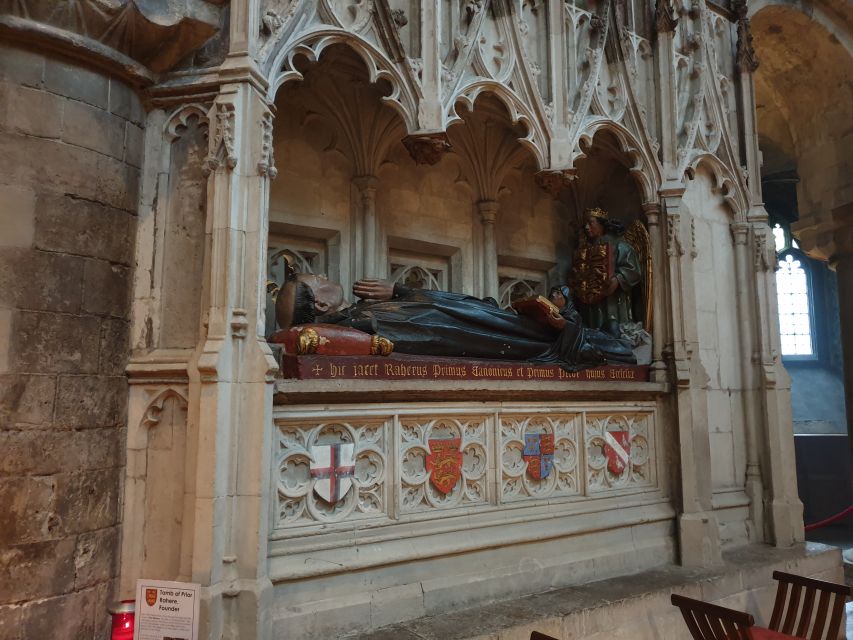
- Smithfield tells two kinds of slaughter: the walk connects the area’s long role in animal butchery with public executions and mass burials.
- The Black Death story is practical and unsettling: you learn how medieval London dealt with tens of thousands of corpses.
- William Wallace appears in the route: the Sir William Wallace Memorial brings fact and popular legend together.
- Tom is one of the named guides: his tours mix historical detail, myths, and humor, while encouraging questions.
- The route covers about two miles: it begins outside Barbican Station and finishes at Ely Place near Farringdon.
- Church entries depend on services: St Bartholomew the Great and other churches may be visited when worship is not taking place.
Smithfield’s dark story begins at Barbican
Meet your guide outside the Barbican Station exit on Aldersgate Street. Look for the Historic London Tours sign. This is a useful starting point because you are already beside one of the City of London’s most historic districts, yet the tour quickly moves away from modern office blocks and into older streets and squares.
The walk lasts about two hours and covers roughly two miles. That is a manageable distance for most people who are comfortable walking through central London, but you should still wear sensible shoes. This is a street tour, not a bus ride with long pauses between sights.
The group limit of 15 matters. Smithfield’s lanes and courtyards are not huge, and a small party helps you stay close to the guide. It also gives you a fair chance to ask about the strange details that usually make this kind of tour memorable.
Tom is one guide named in the tour information. His approach combines historical facts, myths, and humor. That balance suits the material. Without some humor, two hours of executions, plague burials, and slaughter could become heavy going. The humor does not erase the brutality. It gives you room to keep listening.
Other London outings people book alongside this one:
- From London: Harry Potter Warner Bros Studio Tour
★ 4.7 · 26,588 reviews - London: Westminster to Greenwich River Thames Cruise
★ 4.5 · 22,836 reviews - Magical London: Harry Potter Guided Walking Tour
★ 4.7 · 22,044 reviews
Charterhouse Square and the city’s plague problem
Charterhouse Square is one of the early stops, with about five minutes set aside for guided explanation. The stop introduces the problem that shaped much of this district in the fourteenth century: London had to deal with enormous numbers of people who died during the Black Death.
You will learn how the city disposed of tens of thousands of corpses. That detail gives the plague story a practical edge. Instead of treating the Black Death as a distant date in a textbook, the tour asks how a crowded medieval city handled burial on such a scale.
The short stop also shows the tour’s basic rhythm. You move through a sequence of places, hear the story attached to each one, and keep walking. If you prefer long visits inside museums, this may feel brief. If you like connecting several small sites into one story, the pace works well.
Smithfield Market and the history of butchery
Smithfield Market is the heart of the route. For centuries, this area was linked to both animal slaughter and human execution. The tour uses that contrast to explain why Smithfield developed such a harsh reputation.
You will hear about the market’s role in the city’s food supply, then move into the darker history of public punishment. The point is not simply that bad things happened here. It is that Smithfield served practical city needs for centuries: food was processed, crowds gathered, criminals were punished, and the dead had to be dealt with.
The modern market setting can make the past harder to picture. You may see ordinary city activity around you while the guide describes scenes of medieval violence. That contrast is part of the experience, but it also means you need to pay close attention. Much of the story comes through spoken explanation rather than preserved buildings.
St John’s Gate and the men behind the myths
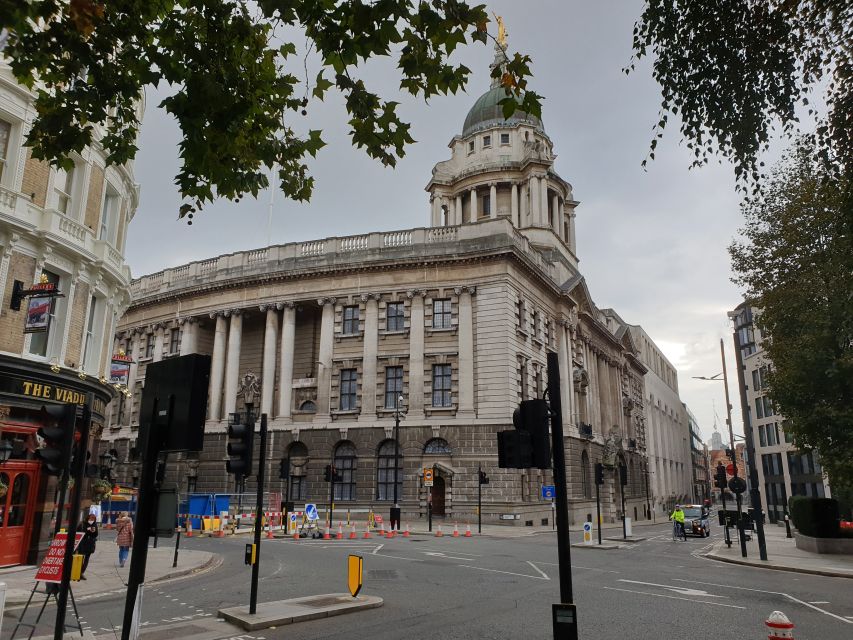
At St John’s Gate, the route brings in another layer of London’s past. The tour promises encounters with kings, body snatchers, Charles Dickens, an eighteenth-century ghost, and William Wallace. Not every story belongs to the same period, and that is the point: the walk moves across roughly a thousand years rather than following one narrow historical theme.
Body snatchers add a particularly macabre chapter. Their story helps you see how valuable bodies and medical knowledge could become in the eighteenth century, when demand for dissection created a grim trade. The ghost story offers a change of mood without taking the tour away from its historical setting.
You should expect a mixture of documented events, local legends, and popular stories. A good guide needs to show the difference between them, and the tour’s stated mix of facts, myths, and humor suggests that this distinction is part of the presentation.
A different sort of day out in London altogether:
- London: Madame Tussauds London
★ 4.6 · 20,915 reviews - Stonehenge, Windsor Castle, and Bath from London
★ 4.5 · 18,662 reviews - London: Warner Bros. Studio Tour with Transfers
★ 4.7 · 17,586 reviews - London: Tower Bridge Entry Ticket
★ 4.7 · 15,560 reviews
Cloth Fair and the old lanes around Smithfield
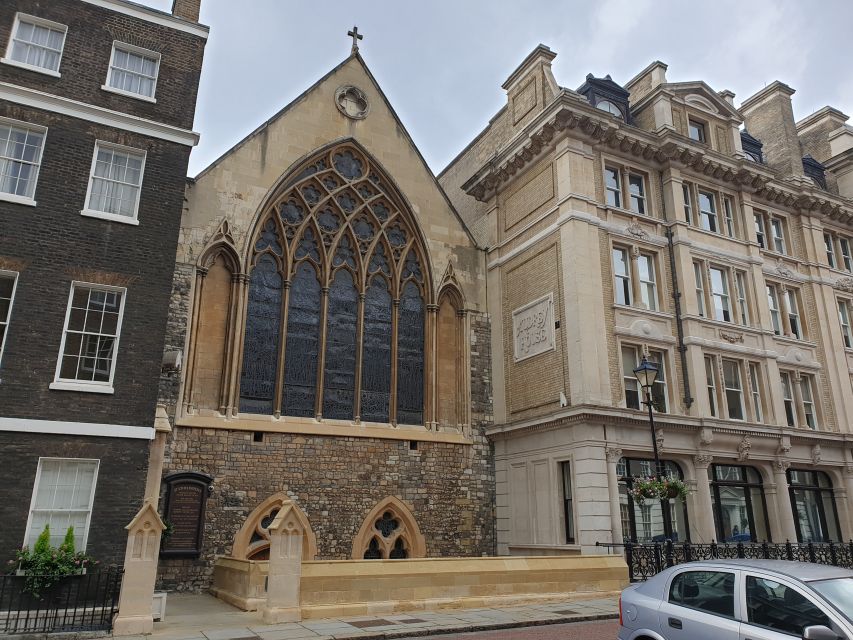
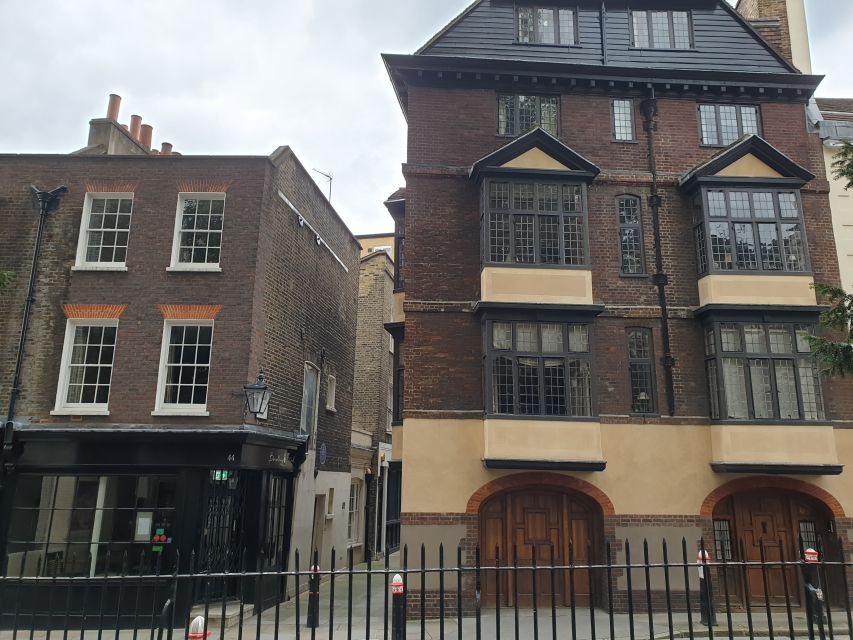
Cloth Fair provides one of the route’s more atmospheric stops. The name points to the district’s older commercial life, while the surrounding lanes help explain how Smithfield later became associated with poverty and overcrowding.
This is where the Dickens connection begins to feel useful rather than decorative. The tour explains how the area became a notorious slum and how Dickens used it as a setting for Oliver Twist. You are not just hearing that Dickens wrote about poor London. You are seeing the kind of district that helped shape those descriptions.
The route’s value lies in this connection between literature and place. If you have read Oliver Twist, the stop gives you a sharper sense of the urban world behind the novel. If you have not, the guide still gives you a clear picture of how a working district could change character over time.
St Bartholomew the Great and a medieval survivor
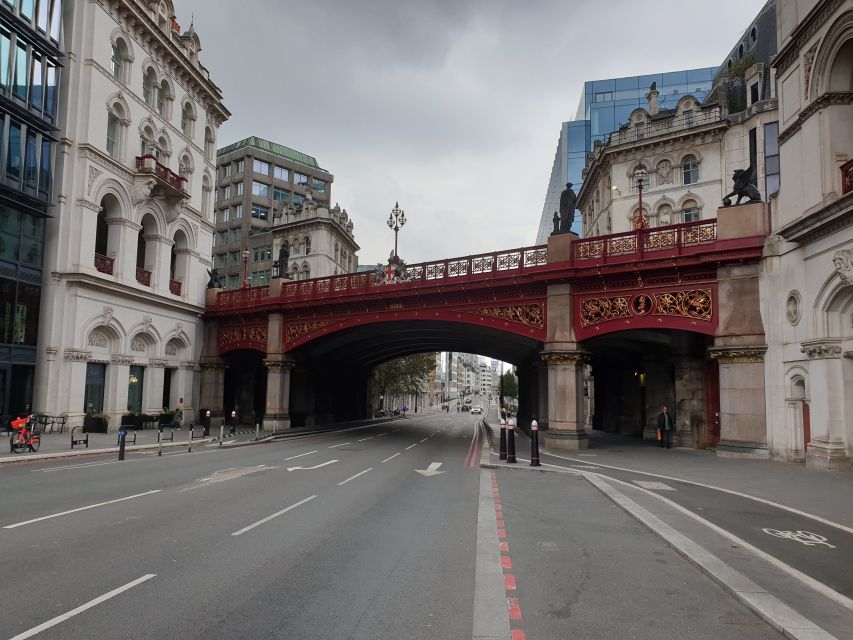
St Bartholomew the Great is one of the churches along the route. Entry is included when there is no service in progress. That condition matters, so you should treat the interior visit as possible rather than guaranteed.
The church gives the tour a welcome change from open streets and market spaces. It also helps show that Smithfield was not only a place of death and trade. Religious institutions, hospitals, and civic life all occupied the same small area.
The stop is listed as a short guided visit. Do not expect an extended church tour or a long period for quiet exploration. The guide’s story remains the main event, and the church works as one piece of a larger walk.
William Wallace, executions, and the Braveheart correction
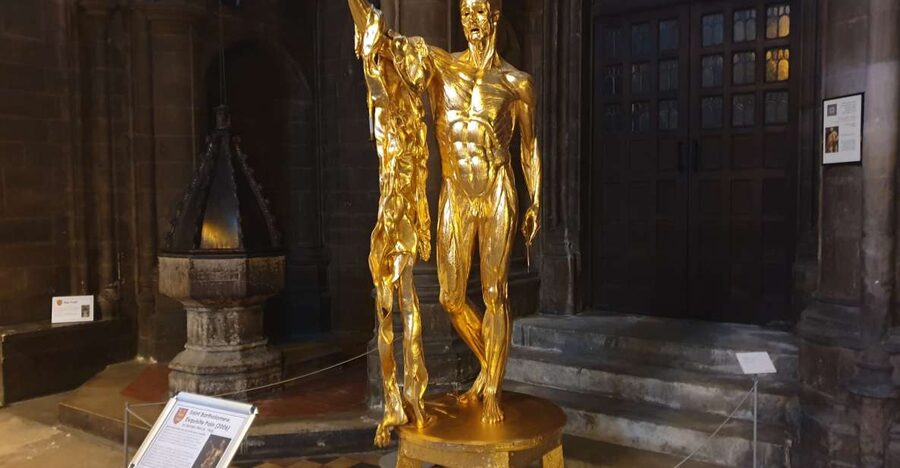
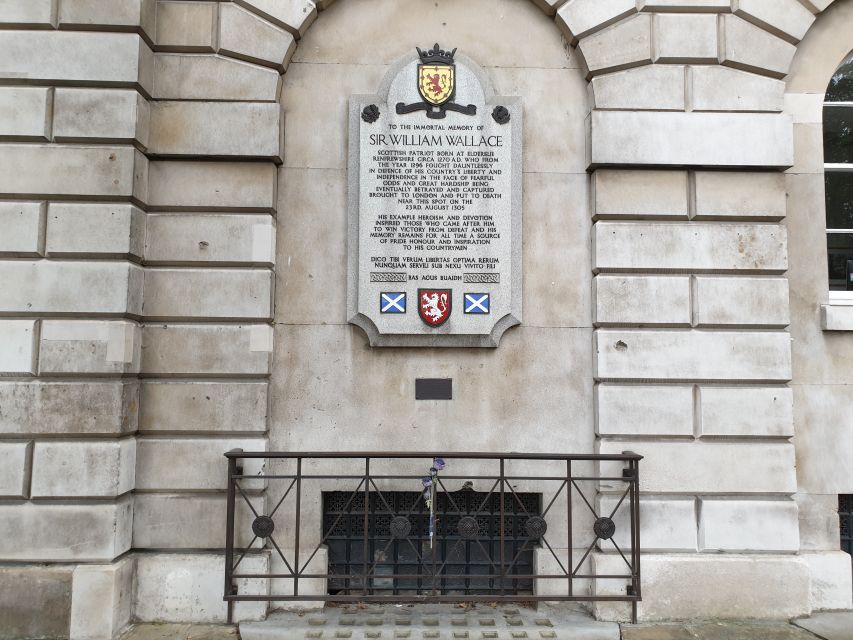
The Sir William Wallace Memorial is one of the tour’s headline stops. Wallace, known widely as Braveheart, was executed in London, and the guide explains what actually happened.
The practical lesson is hard to forget: Wallace was in no condition to shout Freeeedoooommmm during his execution. The famous film image belongs to popular storytelling, not to the grim reality of medieval punishment. This is the sort of detail that makes the history stick because it cuts through a familiar myth with blunt humor.
The wider execution story is just as important. You learn about methods used in the Middle Ages and the public nature of punishment. The tour does not treat these events as clean, distant facts. It puts them back into the streets where crowds once gathered to watch.
This section will appeal to anyone who likes history with a strong correction of popular myths. It may be too graphic for younger children, which is one reason the minimum age is 13.
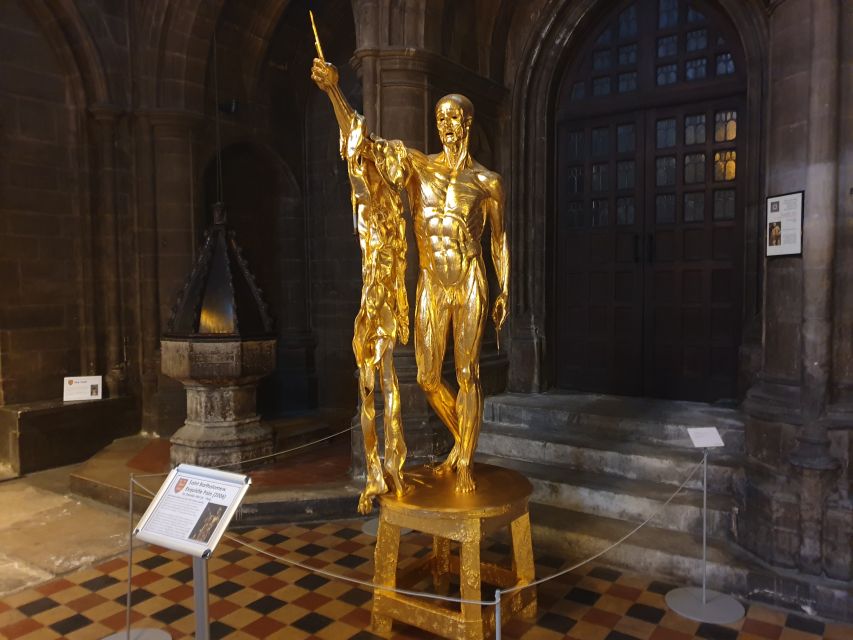
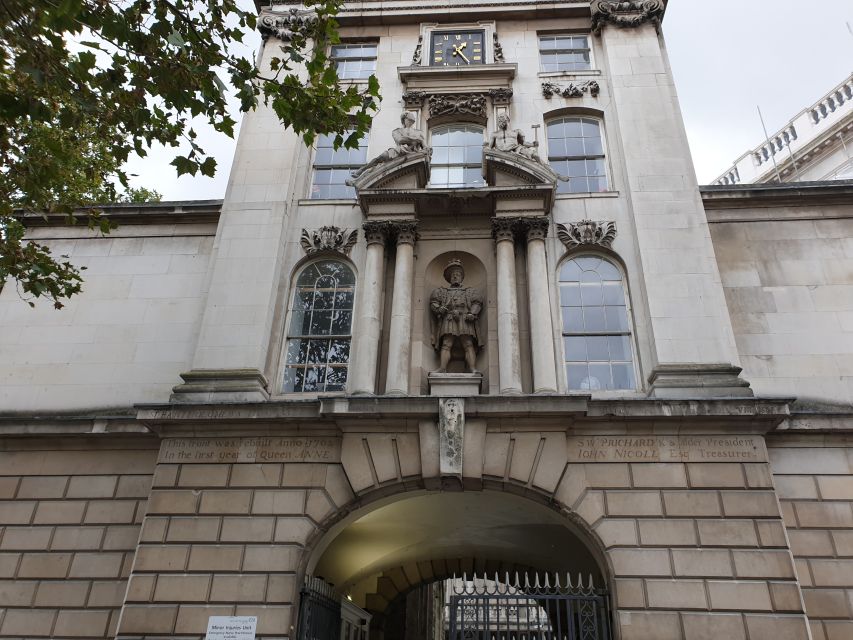
St Bartholomew’s Hospital and the medical side of death
St Bartholomew’s Hospital adds a different angle to the area’s story. Along with churches and markets, hospitals formed part of Smithfield’s long working life.
The stop helps connect several themes that might otherwise seem separate: plague, injury, executions, body snatching, and medical practice. In this part of London, death was not an abstract idea. It affected hospitals, families, religious institutions, markets, and city officials.
You will want to keep the guide’s timeline in mind. The walk jumps between medieval and later periods, so the same street may carry several different stories. That can be exciting, but it also rewards listeners who pay attention to dates and transitions.
The Golden Boy of Pye Corner and London’s changing streets
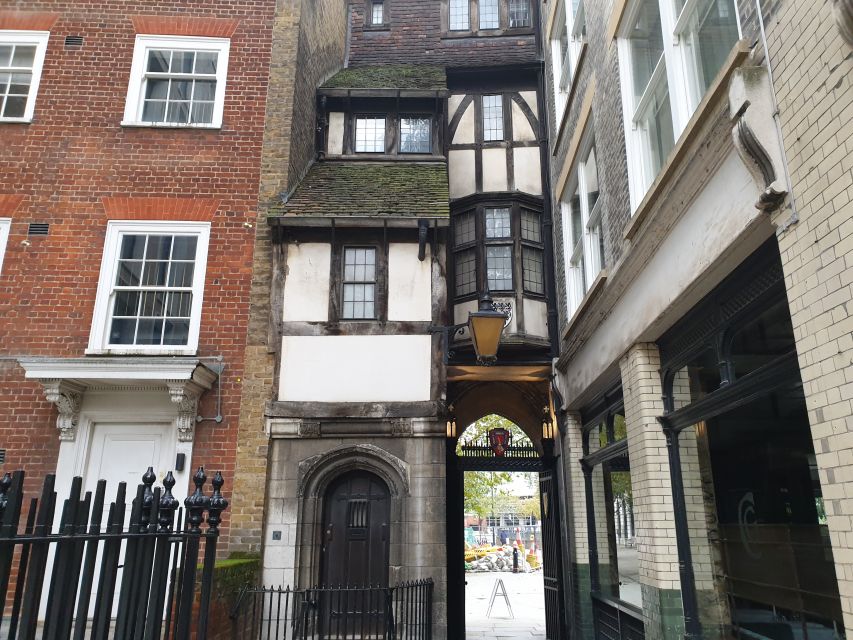
The Golden Boy of Pye Corner marks another point where physical evidence keeps an old story alive. The tour uses the site to continue its look at fire, disease, poverty, and urban change.
Because the walk takes place in central London, you see the city as it is now while hearing about conditions that have disappeared. That contrast is one of the strongest reasons to choose a walking tour instead of reading the same subjects in a guidebook. You are not confined to a single historic building. The streets themselves become the setting.
The stops are brief, often around five minutes each. This keeps the tour moving, but you should not expect time for lengthy photography or independent browsing at every site. Take quick pictures when appropriate and stay close to the guide.
London Central Markets and Smithfield’s working identity
The route returns to the London Central Markets, also known as Smithfield Market. This second look at the market reinforces the place’s long identity as a center of animal slaughter and meat trading.
The repeated market connection makes sense. Smithfield is not simply an execution site with a market nearby. Butchery is central to the district’s story. The tour shows how human and animal slaughter occupied the same part of London, creating a setting with an unusually direct relationship to death.
This is also a good place to consider the tour’s tone. It is not a polished royal-history walk. You get kings, but you also get slaughterhouses, plague pits, slums, and body snatchers. The subject is rougher and more local than the standard Westminster sightseeing route.
Ely Place and a quiet finish near Farringdon
The tour finishes at Ely Place. The route information places the end near Farringdon Station, making onward travel simple in principle, though you should check your own connection before booking other timed plans.
Ely Place gives the walk a change of mood after Smithfield’s heavier stories. The tour’s final stretch brings you through another historic setting while leaving you close to transport links. Ending here also keeps the experience compact. You are not left far from central London attractions or the Underground.
Because the route finishes after two hours, you still have time for another activity the same day. I would avoid booking something immediately afterward if you want to stop for photos, ask extra questions, or deal with a slower walking pace.
Is $26 a fair price for two hours?
At $26 per person, this is fairly priced if you want a focused history walk with a live guide rather than a general orientation tour. The cost covers the guide, the walking route, and church entry when visits are possible.
The value comes from the way the stories connect. You get plague disposal, medieval executions, Smithfield’s market history, Dickens, body snatchers, Wallace, and a ghost in one compact outing. You are not paying for a major attraction ticket, so the guide’s interpretation carries most of the value.
I would book it for the storytelling and local detail, not for grand interiors or long stops at famous monuments. The eight recorded ratings are all five out of five, and the comments repeatedly point to clear delivery, varied information, humor, and an open attitude toward questions. Tom is praised by name for combining facts, myths, and humor, and for being attentive to older members of a group.
That does not remove the need to choose carefully. If you dislike graphic history, want a relaxed architectural walk, or need time inside each church, another London tour may fit better.
Who should book this walk?
I would recommend it to adults and older teenagers who enjoy the city’s rougher stories. It is especially useful if you have already seen London’s major sights and want to understand the older district around Smithfield.
It also suits readers of Dickens and people interested in how popular stories distort real events. The Wallace section is a clear example, but the same approach runs through the walk’s treatment of myths, ghosts, executions, and plague.
The tour may suit older members of your party if they are comfortable walking two miles. One guide is specifically described as helpful and attentive with elderly parents, but the route remains a walking tour with several outdoor stops.
You should skip it if you are bringing children under 13, or if the words animal slaughter, public execution, and Black Death corpses already sound like too much. This is not a soft introduction to London.
Should you book Burnings, Butchery & Black Death?
Book it if you want a compact, story-led walk through Smithfield’s most unsettling past. The small group, two-mile route, and named guide Tom give the experience a personal scale, while the subject matter reaches far beyond a standard sightseeing stroll.
The best reason to go is the range. In two hours, you connect plague, meat markets, public punishment, Dickens, hospitals, body snatching, and medieval mythmaking. The main caution is equally clear: the material is graphic and the stops are short.
Meet outside Barbican Station, wear comfortable shoes, and leave room for the guide’s questions and stories. If that sounds like your kind of London, $26 is a sensible price for a focused walk that shows you a side of the city most visitors miss.
FAQ
Where does the tour begin?
It begins just outside the Barbican Station exit on Aldersgate Street. Your guide will be holding a Historic London Tours sign.
Where does the tour finish?
The tour finishes at Ely Place, near Farringdon Station.
How long is the walking tour?
The tour lasts about two hours.
How far do you walk?
The total distance is about two miles.
What language is the tour in?
The live tour guide speaks English, and English is the listed tour language.
Is entry to churches included?
Yes, church entry is included when visits are possible. Churches may not be entered if a service is in progress.
Can children join the tour?
Children under 13 are not suitable for this experience.
How many people can join?
Ticket sales are limited to 15 attendees.
Can I cancel for a full refund?
Yes. You can cancel up to 24 hours in advance for a full refund. You can also reserve now and pay later.
Just added around London
- Up at The O2:Twilight Climb with Guided Tour with Panoramic Views★ 5.0 · 50 reviews
- Private Chauffeur-London Heathrow from/to Southampton Cruise Port★ 5.0 · 9 reviews
- Kensington Palace VIP Garden Tour with Royal High Tea★ 4.5 · 71 reviews
- Secrets of the London Underground Small Group Walking Tour★ 4.5 · 38 reviews
- Urban Canvas: Exploring Shoreditch’s Vibrant Street Art★ 5.0 · 36 reviews
- Up at The O2: Sunset Climb with Guided Tour with Panoramic Views★ 5.0 · 110 reviews
- Ultimate introduction to photography in Central London★ 5.0 · 19 reviews
- Full-Day Self-Guided Paris Tour from London by Eurostar with Seine River Cruise★ 3.5 · 22 reviews