
Reviewed · LONDON PHOTOGRAPHY TOURS AND PHOTO SHOOTS
Beginners Photography Course – Small Group Workshop
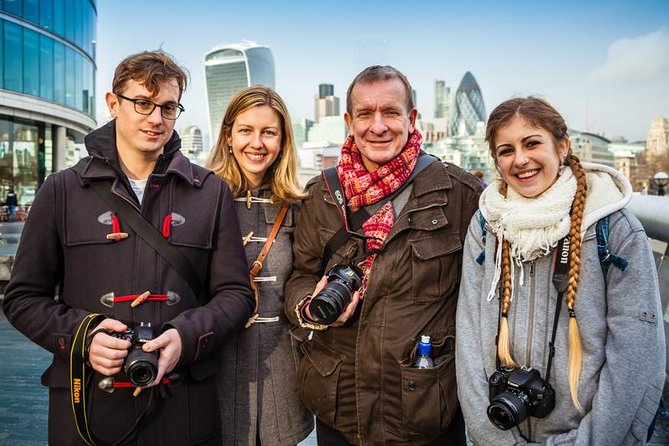
London becomes your classroom on this small-group photography workshop, where you learn by taking pictures rather than sitting through a long technical talk. Photographer Lou works with the camera you actually own, from a familiar DSLR to an inherited model that still feels intimidating.
I like two things right away: the maximum of six people leaves room for one-to-one help, and the lessons happen beside some of London’s most useful photographic subjects. The short exercises on ISO, shutter speed, and aperture give you a reason to change settings and see the result.
The main drawback is the price: $336.07 for about four hours is a serious spend for an introductory class. It makes more sense if you want lasting camera skills, not simply a guided walk with a few nice pictures.
Key points at a glance
- Personal help with your own camera: The teaching is adjusted to the model you bring, rather than delivered as a generic camera lecture.
- Very small group: Six people maximum means you should have time to ask questions and get individual assistance.
- Hands-on practice: You work through ISO, shutter speed, aperture, focus, composition, depth of field, and light on location.
- Three strong London viewpoints: City Hall, Tower Bridge, and the Tower of London provide varied subjects within one compact route.
- Useful for complete beginners: The course is designed for people stuck on Auto or Scene modes, including those starting with an inherited camera.
- Bring your own gear: You need a camera, a fully charged battery, memory cards, and possibly a spare battery.
Learning your camera at City Hall
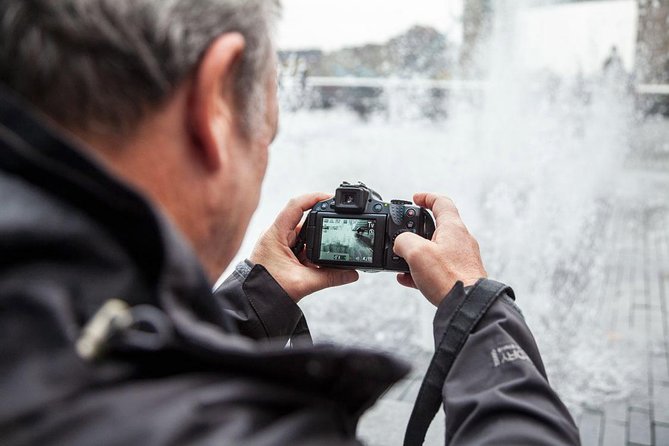
The workshop begins at London Bridge Station Approach Road, London SE1 9SP, then moves toward More London and City Hall. This opening location gives you a practical setting for learning the controls without the pressure of a formal classroom.
Your first task is to get comfortable with the main functions of your own camera. That matters more than it may sound. Photography classes often explain settings in general terms, but the buttons, menus, and dials differ from one camera to the next. Here, Lou can guide you through the equipment in your hands.
The early work focuses on the three settings that cause the most confusion for beginners:
- ISO, which affects your camera’s sensitivity to light
- Shutter speed, which affects exposure and the way movement appears
- Aperture, which affects exposure and the amount of the scene that looks sharp
You do not simply hear definitions and move on. Short assignments help you change the settings and compare the results. That practical approach is one of the strongest reasons to consider this course. The goal is not to memorize a list of terms. It is to understand what happens when you make a choice.
The two-hour City Hall section is the longest part of the morning or afternoon. That gives you time to stop, ask questions, and repeat an exercise if the first attempt is unclear. The small group is especially valuable here, since everyone may arrive with a different camera make and model.
The teaching also covers how to approach different subjects. You might work on the same scene in more than one way, changing the settings or viewpoint to alter the finished image. This helps you see that photography is not only about pointing the camera at an interesting building.
A useful benefit is the chance to deal with camera problems before they become a wall between you and the lesson. Lou has helped participants with confusing menus and even a camera that needed a factory reset. That does not mean every camera issue can be solved on the spot, but it shows why personal instruction can be more helpful than a large class.
More London Photography Tours and Photo Shoots:
- London: Private Photoshoot with Video Clip Option
★ 4.8 · 182 reviews - Professional Photoshoot in London Photographer
★ 5.0 · 102 reviews - Private landmarks photoshoot for families and couples
★ 5.0 · 92 reviews
Framing Tower Bridge from across the Thames
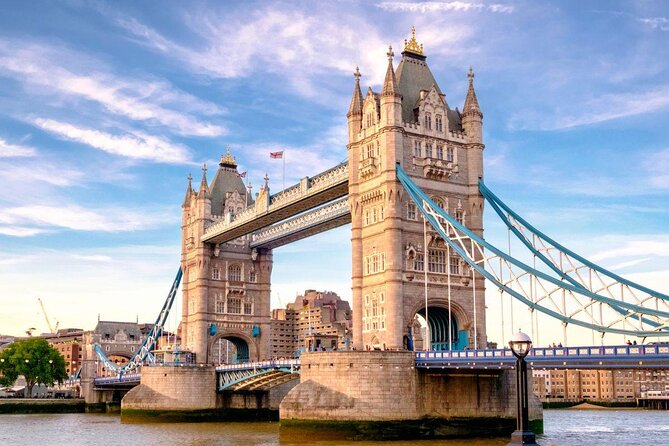
The next stop takes about 30 minutes and gives you a clear subject: Tower Bridge from across the river. You work on composition, framing, focus, depth of field, and the effect of light.
Tower Bridge is a familiar sight, which makes it a useful practice subject. You can concentrate on how to arrange the image rather than search for something to photograph. The bridge also gives you strong lines, repeated shapes, open space, and architectural detail to work with.
This is where the course begins connecting camera controls with visual decisions. A technically correct exposure is not enough if the framing feels weak. You learn to think about where the bridge sits in the frame, how much surrounding space to include, and which details deserve attention.
The lesson on focusing techniques is also practical. A camera may focus on the wrong part of a scene if you leave every decision to its automatic mode. Learning how to select or control focus can make your images more deliberate, especially when you want a particular feature to appear sharp.
The short time at Tower Bridge is a limitation. Thirty minutes is enough for a focused exercise, but not for a relaxed architectural shoot in every kind of light. You should see this stop as a concentrated lesson, not a long sightseeing break.
Still, the setting helps the ideas stick. Instead of hearing about depth of field in the abstract, you can test how different aperture choices change the appearance of the bridge and its surroundings. Your tutor remains available as you work, so you can ask for help before moving on.
Photographing the Tower of London
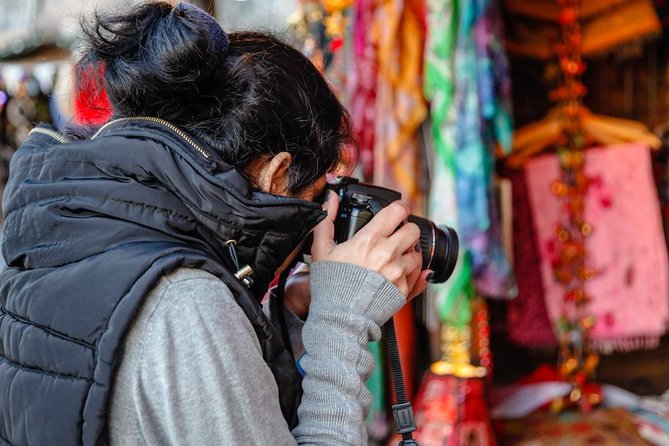
The final listed stop is another 30-minute session, this time photographing the Tower of London from across the river. The subject shifts from a modern bridge to a historic fortress, giving you a different set of shapes, textures, and visual lines.
Here you work with lens choices, shutter speed, composition, and light. Lens choice is particularly useful for beginners who may own a zoom lens but use it without thinking about how focal length changes the image. The exercise can help you consider how close or far away a subject should feel in the final photograph.
The Tower also gives you a chance to compare approaches. You might frame a wider view that includes the river and surrounding buildings, or concentrate on architectural details. The important lesson is that the same location can produce different images depending on your position, focal length, and framing.
As at Tower Bridge, the half-hour schedule keeps the class moving. That works well if you prefer a structured introduction, but it may feel quick if you want to linger over every setting. You will get the most from it by listening closely, trying the exercise promptly, and asking specific questions.
The walking route ends back at the meeting point. Food and drinks are not included, so plan around the four-hour session if you need a meal or refreshment.
What the teaching style is really like
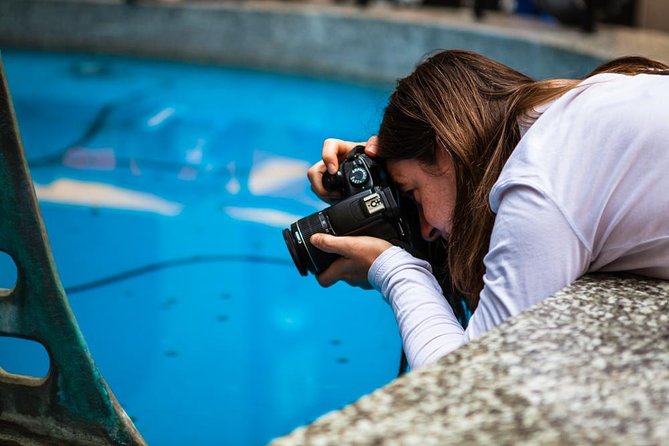
The course is aimed at beginners, including people who have used a camera for years but stayed on Auto or Scene modes. That makes it a good fit for you if camera menus seem confusing or if you understand the basic idea of exposure but cannot yet apply it.
The instruction is practical and patient. Lou’s teaching covers cameras from different manufacturers, and the course adjusts to the equipment each person brings. That is important in a group setting, since one person may use a DSLR while another has a different type of digital camera.
The small group also helps prevent a common problem with photography classes: some people move ahead while others are still trying to find the right menu. With six places maximum, you have a better chance of getting help before frustration builds.
The course is not just about exposure. You also work on white balance, focusing, composition, depth of field, and light. The material is broad for four hours, so you should not expect to master every camera function. You should expect to leave with a clearer grasp of the main controls and a better idea of how they affect your photos.
Several people who took the class went on to use manual settings with more confidence, including shutter speed, ISO, white balance, and aperture. That is a realistic measure of success here. The course cannot replace regular practice, but it can give you a starting system that makes practice much less random.
You should also be ready to keep learning after the workshop. One useful detail from the class experience is that a camera manual may finally make sense once you understand the basic terms. Bring it along if you have it, or at least keep it available for later practice.
More Workshops:
- London: Traditional English Scone Making and Tea Workshop
★ 5.0 · 702 reviews - London: East End Street Art Tour and Spray Painting Workshop
★ 4.8 · 297 reviews - London Traditional English Scone Making and Tea Workshop
★ 5.0 · 271 reviews - London: Half-Day Street Art Tour and Workshop
★ 4.9 · 172 reviews
Is $336.07 good value?
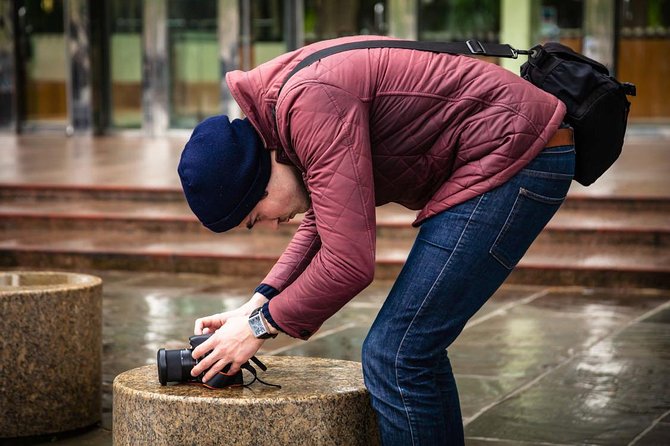
At $336.07 per person, this is not a cheap London activity. Spread across four hours, the cost works out to roughly $84 per hour. The price is easier to justify if you value tailored instruction and plan to keep using the skills after your visit.
You are paying for more than admission to viewpoints. The attraction tickets listed for the stops are free, and the real cost is the professional photographer, the small group, and the personal attention. If your camera has been sitting unused or you routinely rely on Auto, that help may save you months of trial and error.
The value is weaker if you already understand manual exposure, focus modes, and composition. You would probably get more from an intermediate or creative course, if available, rather than paying beginner-level prices for material you know.
Group discounts may be available, which could improve the price for people booking together. The group cap remains important, since a discount is less useful if the class becomes too large for personal help. Here, the stated limit of six protects the main benefit of the format.
You also need to supply your own equipment. Bring the camera you want to learn, a fully charged battery, a spare if you have one, and memory cards. There is no point bringing a different camera because it feels more advanced. The course is built around making you comfortable with the one you own.
Who should book this workshop?
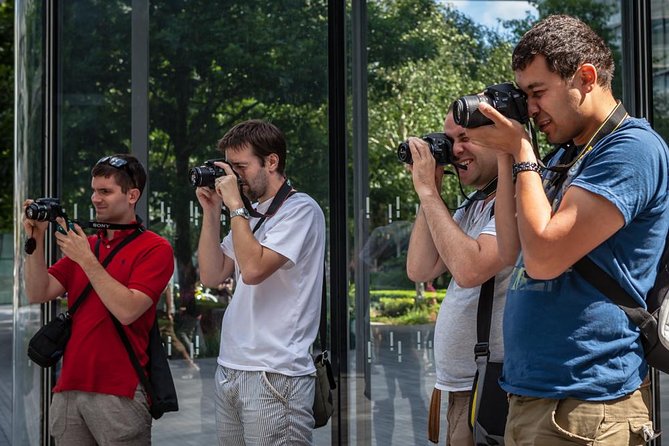
I would recommend it most strongly to:
- Someone stuck on Auto or Scene modes
- A person who has inherited a camera and does not know where to start
- A beginner who wants help with a specific camera model
- A photographer who understands basic terms but cannot connect them to real pictures
- Someone who prefers practical exercises to classroom theory
- A visitor who wants to combine London sightseeing with useful instruction
The minimum age is 16. The activity is near public transportation, and most people can take part. Service animals are allowed.
You should think twice if you want a relaxed sightseeing walk with plenty of time for each landmark. The schedule is built around lessons, and the Tower Bridge and Tower of London sections are only 30 minutes each. You should also consider the price carefully if you only want a handful of souvenir photographs.
The course is offered in English. Since the teaching depends on detailed explanations of camera controls, you should be comfortable following technical instruction in English.
Practical details before you go
The meeting point is London Bridge Station Approach Road, London SE1 9SP. The activity finishes back at the meeting point, which makes the start and end simple to plan around.
Wear something suitable for walking and bring only the equipment you can comfortably manage. A camera with a full battery is essential. A spare battery and extra memory cards are sensible because the exercises involve repeated shooting.
You will not need to pay admission for City Hall, Tower Bridge, or the Tower of London viewpoints as part of this activity. Food, drinks, and lunch are not included, so handle those separately.
You receive confirmation when you book. Free cancellation is available up to 24 hours before the start time. If you cancel inside that window, the payment is not refunded, and changes are not accepted. The activity also needs a minimum number of participants, so a cancellation by the provider would lead to another date, another experience, or a full refund.
My verdict on the four-hour course
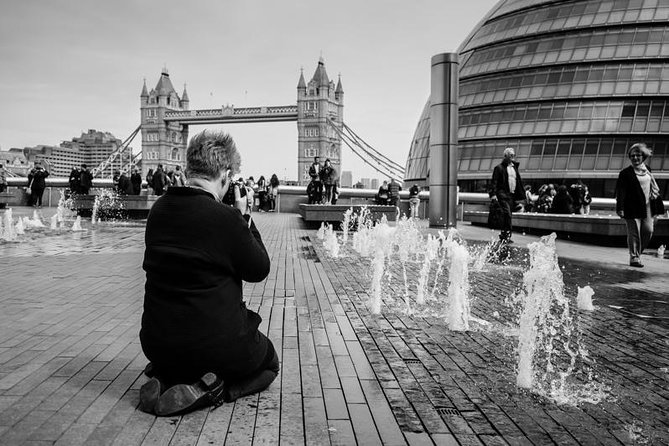
This is a focused introduction for people who want to stop guessing and start controlling their camera. The strongest features are the six-person limit, teaching based on your own equipment, and exercises that turn ISO, shutter speed, aperture, focus, and composition into usable skills.
The price is high for a beginner activity, and the two landmark sessions are brief. But if you own a camera you barely understand, the personal tuition can be worth more than another standard sightseeing tour.
Book it if you want lasting camera confidence and are willing to practice afterward. Skip it if you already shoot comfortably in manual modes or mainly want a leisurely photo walk. Bring your own camera, arrive with a full battery, and be ready to take plenty of test shots.
FAQ
Where does the photography workshop begin?
It begins at London Bridge Station Approach Road, London SE1 9SP, UK.
Where does the activity finish?
The workshop ends back at the meeting point.
How many people can join the group?
The maximum group size is six people.
What camera equipment should I bring?
Bring your own camera, a fully charged battery, a spare battery if available, and memory cards.
What age do you need to be?
The minimum age is 16.
Can I cancel for a full refund?
Yes. You can cancel at least 24 hours before the experience start time for a full refund. Cancellations made less than 24 hours before the start are not refunded.
Just added around London
- Up at The O2:Twilight Climb with Guided Tour with Panoramic Views★ 5.0 · 50 reviews
- Private Chauffeur-London Heathrow from/to Southampton Cruise Port★ 5.0 · 9 reviews
- Kensington Palace VIP Garden Tour with Royal High Tea★ 4.5 · 71 reviews
- Up at The O2: Sunset Climb with Guided Tour with Panoramic Views★ 5.0 · 110 reviews
- Secrets of the London Underground Small Group Walking Tour★ 4.5 · 38 reviews
- Urban Canvas: Exploring Shoreditch’s Vibrant Street Art★ 5.0 · 36 reviews
- Ultimate introduction to photography in Central London★ 5.0 · 19 reviews
- Full-Day Self-Guided Paris Tour from London by Eurostar with Seine River Cruise★ 3.5 · 22 reviews
London Photography Tours and Photo Shoots, compared.
Professional Photoshoot in London Photographer
Read our review →
Browse the lists this tour appears in