
Reviewed · EAST END AND SHOREDITCH TOURS
A Ball of Chalk – Guided Private East End Walk
East London tells London’s story from the pavement up. On this private walk, you’ll pass a former church that became a synagogue and then a mosque, hear about Jack the Ripper at The Ten Bells, and trace how poor Spitalfields grew into a center for food, fashion, art, and nightlife. Brick Lane and its backstreets provide the main stage.
I like the tour’s focus on ordinary people, from weavers and market traders to Bengali families, Jewish settlers, artists, and Blitz-era civilians. I also like its private format, which lets your group move at its own pace and ask questions without being folded into a large crowd. The main drawback is price: at $137.07 per person, it is a serious cost for a two-hour walk, and food, drinks, hotel transfers, and most entrance costs are extra.
Key Points
- A private East End walk: Only your group takes part, with an English-speaking local guide.
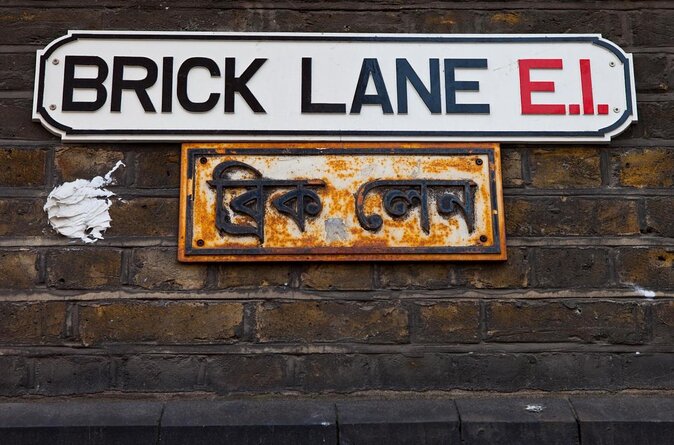
- Brick Lane’s changing identity: See a former Christian church and Jewish synagogue now serving as Brick Lane Jamme Masjid.
- The Ten Bells: Step inside a historic pub linked with Jack the Ripper’s grim story.
- Spitalfields in one short walk: Visit the market, old brewery district, street art, vintage shops, and food stalls.
- A people-centered history: Hear about Bengali Muslims, Eastern European Jews, French Protestants, cockneys, artists, and market workers.
- Useful route: Begin at Whitechapel Gallery at 2:30 p.m. and finish near Shoreditch Station.
Why This Walk Gets Beyond Westminster
If your idea of London is palaces, Parliament, and grand avenues, this walk offers a needed change of pace. The East End is less polished and more revealing. Its story comes from migration, trade, poverty, invention, nightlife, and survival.
The route focuses on Spitalfields and Brick Lane, two places where London’s identity has changed many times. Huguenot weavers, Jewish settlers, Bengali families, market traders, artists, fashion workers, and food sellers all helped shape the area. You are not simply looking at old buildings. You are seeing how one neighborhood adapts as new communities arrive and old industries fade.
That makes the experience useful for anyone who wants social history rather than a parade of famous names. The emphasis is on people who worked, worshiped, traded, cooked, protested, and lived here. You’ll hear about workhouse paupers, costermongers, 1950s gangs, artists, fashion followers, and the civilians who endured the Blitz.
The route also shows East London’s current personality. Street art, hand-painted crafts, vintage clothing, record shops, curry restaurants, and international food stalls sit beside older pubs and former industrial buildings. The contrast is part of the point. Spitalfields did not leave its past behind. It keeps putting new layers over it.
More East End and Shoreditch Tours:
- Jack The Ripper Tour in London’s East End
★ 4.5 · 718 reviews - Shoreditch Street Art Tour London
★ 5.0 · 481 reviews - Gangster Tour of London’s East End Led by Actor Vas Blackwood
★ 5.0 · 389 reviews
Starting at Whitechapel Gallery at 2:30 p.m.
The walk begins outside Whitechapel Gallery at 77-82 Whitechapel High Street at 2:30 p.m. This is a practical starting point, since the route then moves toward Brick Lane, Spitalfields, and Shoreditch.
Allow a little time to reach the meeting point. The area is served by public transportation, and the end point is Shoreditch Station on Bethnal Green Road. Since the tour is one-way, you do not need to return to Whitechapel Gallery after the walk.
The route lasts about two hours. The timed stops add up to less than that, so the remaining time is used for walking between locations, street-level explanations, and the natural pauses of a private tour. Wear comfortable shoes. You will be on your feet and moving through busy urban streets, markets, and back lanes.
A private tour matters here. East London has plenty of small details, and you may want to stop to ask about a sign, a building, a food shop, or a piece of art. With only your own group present, those questions are easier to fit in. The experience is not designed for a fixed crowd of strangers.
Brick Lane Jamme Masjid and Four Centuries of Arrival
The first major stop is Brick Lane Jamme Masjid, visited from the outside for about five minutes. The building itself is the lesson.
It began as a Christian church, later became a Jewish synagogue, and now serves the local Bengali Muslim community. In a few steps, you get a clear picture of how immigration changed this part of London. The building is not just a place of worship. It is a record of the people who settled here, built lives, and reshaped the neighborhood.
The stop is short, but its subject is large. Your guide can connect the building to the broader story of French Protestants, Eastern European Jews, and Bengali Muslims who made East London home. This is one of the walk’s best examples of using a single address to explain a whole district.
Because the visit is outside, do not expect an interior tour or a formal religious visit. The value is in the explanation and the visible changes to the building. Modest timing also keeps the walk moving.
Brick Lane, From Curry Shops to Street Art
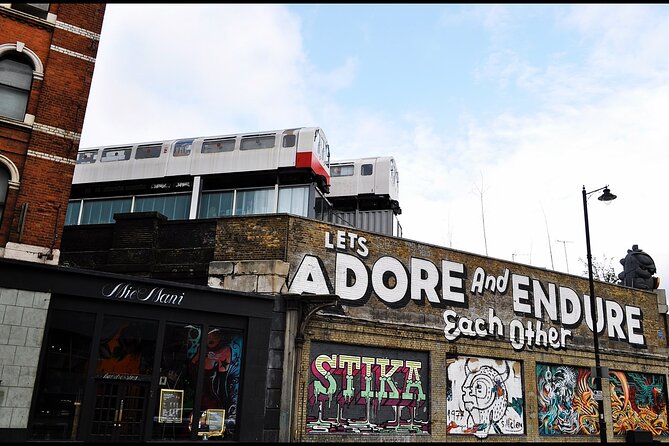
Next comes about 20 minutes on Brick Lane. This is the most immediately colorful part of the route, with curry restaurants, food shops, vintage stores, record shops, street art, and independent businesses.
Brick Lane has a reputation for being trendy, but the walk places that current style beside its older identity. You’ll hear about the street as a place shaped by working people and immigrant communities, not just as a destination for weekend food and shopping.
The street art is a major draw. The tour includes work associated with artists such as Banksy and Stik, though the exact art you see can change. Street art is temporary by nature, and East London’s walls do not stay still for long. That uncertainty is part of the appeal, but it also means you should not expect a guaranteed list of individual pieces.
The food is another reason to pay attention. Bengali cuisine is one of the area’s clearest cultural marks, while newer vendors add flavors from around the world. Food and drinks are not included in the tour, so plan to buy something only if you want to pause and pay separately.
I would schedule this walk when you have room afterward for a meal or snack. The guide gives you a useful introduction to the food scene, but the experience does not include tastings. If you enjoy browsing menus and deciding for yourself, that is a benefit. If you expect a food tour, it may feel limited.
More London Walking Tours:
- Magical London: Harry Potter Guided Walking Tour
★ 4.7 · 22,044 reviews - London: The Original Jack the Ripper Walking Tour
★ 4.7 · 7,833 reviews - Tour for Muggles The Ultimate Harry Potter Walking Tour in London
★ 5.0 · 4,684 reviews - London Jack The Ripper Guided Walking Tour
★ 5.0 · 3,131 reviews
The Ten Bells and the Darkest Story in Spitalfields
The walk then enters The Ten Bells, a traditional British pub visited for about 25 minutes. This is the tour’s most concentrated stop and its most unsettling subject.
The pub is linked with the Jack the Ripper story, and your guide explains the crimes associated with this area. The subject is grim, so you should know what you are signing up for. This is not a light pub history stop. It uses a famous and disturbing criminal story to explain the Victorian streets around Spitalfields.
The Ten Bells also gives you a chance to step indoors and see a working pub setting rather than only another exterior landmark. The stop includes admission, but food and drinks remain your responsibility. You do not need to buy anything unless you choose to.
This portion will suit you if you like crime history and want the local setting explained rather than reduced to a sensational headline. If Jack the Ripper stories are not your interest, it is worth asking your guide to connect the stop to the wider social conditions of Victorian Spitalfields, including poverty and overcrowding.
That broader context matters. The area’s story was not only about a murderer. It was also about the people who lived in hard conditions, worked long hours, and faced limited choices. A good guide can keep the crime story in proportion, and Frances, one of the named guides associated with this experience, is praised for adding personal knowledge of the area to its history.
The Old Worst Street in London

Around Spitalfields Market, the route pauses to consider what was once called the Old Worst Street in London. This five-minute outside stop looks at the neighborhood’s former rookery, or slum.
Today’s Spitalfields can feel fashionable, tidy, and expensive. That makes the earlier conditions harder to picture. The tour asks you to look past the current shops and food stalls and consider a district marked by poverty, overcrowding, and precarious work.
The stop is brief, but it helps prevent the walk from becoming a simple celebration of cool shops and street art. East London’s present success came after a long period of hardship. Understanding that change gives the newer restaurants, markets, and creative businesses more meaning.
Do not expect preserved slum interiors or a museum exhibit here. You are standing in the modern street and using the guide’s explanation to reconstruct the past. That works best if you enjoy history told through place rather than through displays and artifacts.
Old Spitalfields Market, From Flesh Market to Modern Stalls
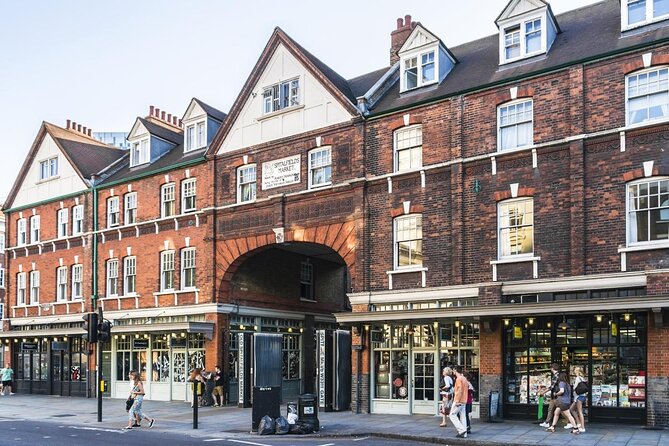
Old Spitalfields Market began in 1638 as a market for flesh, fowl, and roots, licensed by King Charles I. Today, its stalls are more likely to feature clothing, hand-painted crafts, and street food.
The market stop lasts about ten minutes and gives you a neat example of how commerce changes while a location remains useful. The old market function has shifted, but the area still draws people to buy, eat, browse, and meet.
You might find this stop especially useful if you want to continue exploring after the tour. The guide points out the market’s current character, while the historical background explains why this part of London became a place of trade in the first place.
The ten-minute timing is enough to orient you, but not enough for serious shopping. If you see something you want, note the location and return later. Since the tour ends near Shoreditch Station, you can continue on foot or by public transportation after the guided portion.
The Old Truman Brewery and Shoreditch’s Next Move
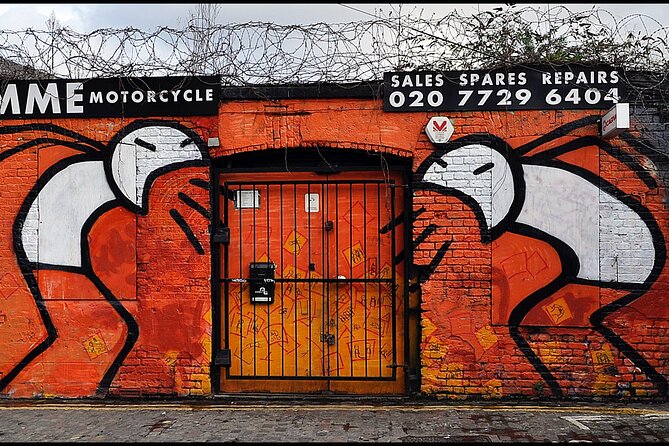
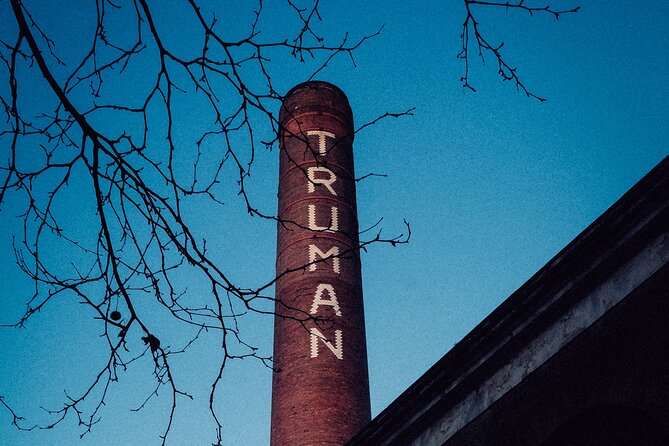
The final stop is outside The Old Truman Brewery for about 15 minutes. London has always liked its beer, and this building introduces the history of an important local brewery.
The brewery also provides a bridge to modern Shoreditch. The guide uses the stop for a short introduction to the area’s food, nightlife, and creative scene, giving you ideas for the rest of your afternoon or evening.
This is a good place to finish because it brings the story forward. You have moved from churches and synagogues to markets and pubs, then from old industry to the contemporary businesses that now define much of Shoreditch. The route ends at Shoreditch Station on Bethnal Green Road, giving you an easy point from which to continue.
The brewery is visited from outside, so the tour does not promise a working brewery visit or a beer tasting. Think of it as a historical signpost and an introduction to what lies beyond the route.
Is $137.07 Per Person Fair Value?
The price is $137.07 per person, which is high for a two-hour walking tour. You are paying for a private experience, not just a fixed route. Only your group participates, and an English-speaking local guide leads the walk.
That price makes more sense for a small group that can divide the cost among several people. Group discounts are available, so check the final booking price carefully if you are traveling with friends or family. For one or two people, the cost may feel harder to justify.
What you receive is a tailored introduction to an area that can be confusing on your own. Brick Lane and Spitalfields reward wandering, but the buildings do not always explain themselves. A guide adds the connections between immigration, religion, poverty, trade, crime, art, and food.
The tour does not include meals, drinks, hotel pickup, hotel drop-off, or general entrance costs. The Ten Bells admission is included, while the other stops are outside or free to enter. Budget separately for anything you eat or drink.
I see the strongest value here in the guide’s storytelling and the private format. The stop list alone would not justify the price for me. The personal layer matters. One named guide, Frances, is particularly praised for combining local experience with stories about the area’s character. If you want a guide who can respond to your questions rather than recite a script, that is an important point in the tour’s favor.
Who Should Book This East End Walk?
I would recommend it to first-time visitors who have already seen central London or want to balance Westminster with a less formal district. It also suits repeat visitors who prefer neighborhoods, food, street art, and social history to famous monuments.
The walk is a good match for:
- Small groups willing to pay more for privacy
- People interested in immigration and London’s working history
- Fans of street art, vintage shops, markets, and international food
- Visitors who enjoy Jack the Ripper history
- Anyone who wants ideas for an evening in Shoreditch
- Most people who can manage a two-hour urban walk
You may want something else if you are looking for tastings, museum interiors, major landmarks, or a full-day excursion. The route is mainly outside, and its appeal comes from streets, buildings, stories, and atmosphere.
Most people can take part, and service animals are allowed. The tour requires good weather. If poor weather causes cancellation, you are offered another date or a full refund. Otherwise, the booking is non-refundable and cannot be changed, so check your schedule before paying.
Should You Book It?
Book this walk if you want London explained through its communities, streets, pubs, markets, and changing businesses. The best parts are the former religious building on Brick Lane, the social history behind Spitalfields, and the private guide’s ability to connect old stories with the East End you see today.
At $137.07 per person, it is not a bargain, especially for a very small party. It becomes a better buy when group discounts reduce the cost or when you value a private guide enough to pay for a more personal pace.
I would choose it for an afternoon before dinner in Shoreditch, particularly if you want a local introduction rather than a list of monuments. Wear good shoes, bring an appetite for later, and keep your expectations clear: this is a story-led neighborhood walk, not a tasting tour or a formal museum visit.
FAQ
How long does the East End walk last?
The walk lasts approximately two hours.
Where does the tour begin?
It begins at Whitechapel Gallery, 77-82 Whitechapel High Street, London E1 7QX.
What time does the tour start?
The scheduled start time is 2:30 p.m.
Where does the tour end?
The walk ends at Shoreditch Station on Bethnal Green Road, London E1 6LA.
Is this a private tour?
Yes. Only your group participates in the private activity.
What is included in the price?
The price includes a private guided walk of the East End, including Brick Lane and Spitalfields, led by an English-speaking local guide.
Are food and drinks included?
No. Food and drinks are not included.
What happens if the weather is poor?
The experience requires good weather. If it is canceled because of poor weather, you are offered a different date or a full refund.
Just added around London
- Up at The O2:Twilight Climb with Guided Tour with Panoramic Views★ 5.0 · 50 reviews
- Private Chauffeur-London Heathrow from/to Southampton Cruise Port★ 5.0 · 9 reviews
- Kensington Palace VIP Garden Tour with Royal High Tea★ 4.5 · 71 reviews
- Up at The O2: Sunset Climb with Guided Tour with Panoramic Views★ 5.0 · 110 reviews
- Secrets of the London Underground Small Group Walking Tour★ 4.5 · 38 reviews
- Urban Canvas: Exploring Shoreditch’s Vibrant Street Art★ 5.0 · 36 reviews
- Ultimate introduction to photography in Central London★ 5.0 · 19 reviews
- Full-Day Self-Guided Paris Tour from London by Eurostar with Seine River Cruise★ 3.5 · 22 reviews
East End and Shoreditch Tours, compared.

Gangster Tour of London’s East End Led by Actor Vas Blackwood
Read our review →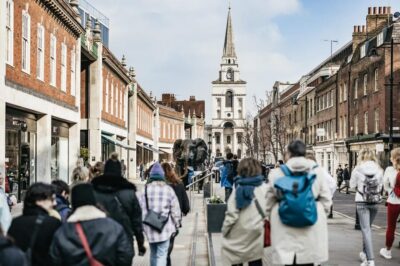
East End Street Art Tour and Spray Painting Workshop
Read our review →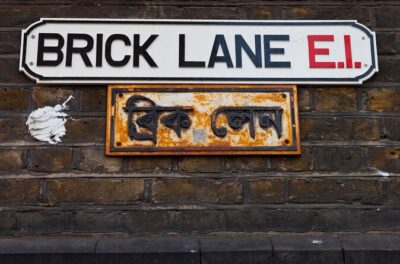
PRIVATE London Food Tours – Borough Market, Soho, East End
Read our review →
Private East End Food Tour: 7 Tastings with Bagels & Fish & Chips
Read our review →
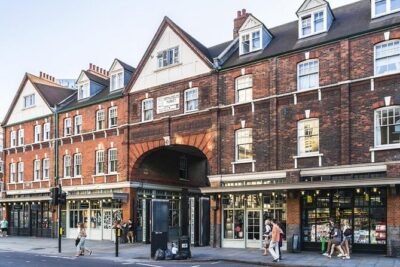
Walking Tour around Spitalfields in the East End of London
Read our review →Browse the lists this tour appears in