
Reviewed · JACK THE RIPPER TOURS
London: Jack the Ripper Small Group Tour
Jack the Ripper’s story becomes far more unsettling when you are standing in the East End streets where the 1888 murders took place. This two-hour walk through Whitechapel and Spitalfields connects the famous names and clues to real streets, pubs, alleys, and surviving buildings.
I like the small groups, which make it easier to ask questions and discuss the many theories. I also like the guides’ use of photographs, evidence, and Victorian background, especially when guides such as Becky, Ollie, Cova, and Sarah explain the case from the victims’ point of view. The main drawback is that you walk outdoors for two hours, often after dark, and the tour is not suitable for wheelchair users.
Key points at a glance
- A walk through the actual East End locations: See Whitechapel, Spitalfields, Aldgate East, Brick Lane, and places linked to the murders.
- Strong focus on the victims: The story is presented with sympathy, not just as a grisly puzzle about the killer.
- Small groups help the conversation: Groups are often around 13 to 15 people, and some departures may be much smaller.
- Photographs and evidence add context: Guides use visual material to connect present-day streets with Victorian London.
- A good evening activity for $26: The price is modest for two hours of guided history, though food, drinks, and indoor stops are not included.
- Check the language before booking: The information lists English and Spanish in one place, and English and French elsewhere, so confirm your preferred option at checkout.
Walking into Whitechapel’s darkest chapter
The tour begins near Aldgate East station, beside the Fashion Warehouse. This is a useful starting point because you are already at the edge of the East End district central to the story, but Aldgate East has four station exits. Give yourself extra time and check the exact exit and meeting instructions before leaving your hotel.
Your guide sets the scene before the case takes over. Whitechapel in 1888 was not simply a backdrop for murder. It was a crowded working district with poverty, lodging houses, pubs, markets, and narrow streets. That context matters because the murders were tied to the conditions of the area, the limited police methods of the period, and the lives of women who have often been reduced to names in a crime story.
The best guides make this social background part of the main event. Becky is praised for combining clear explanation with humor, while Ollie is known for adding local details about the streets themselves. Cova is particularly passionate about the subject, and Sarah has a knack for explaining the victims and the setting with care. Your guide will vary, but the tour depends heavily on the guide’s storytelling, so expect a lively presentation rather than a silent walk between points.
More Jack the Ripper Tours:
- London: The Original Jack the Ripper Walking Tour
★ 4.7 · 7,833 reviews - London Jack the Ripper Guided Tour with Ripper-Vision
★ 4.5 · 4,840 reviews - London Jack The Ripper Guided Walking Tour
★ 5.0 · 3,131 reviews
Whitechapel Road and the first layer of evidence
Whitechapel Road forms one of the early anchors of the walk. Here, the guide introduces the area and the murders associated with it, using photographs and evidence to show what has changed and what has survived.
You should not expect a preserved crime scene. Modern London is all around you. Traffic, shops, rubbish collection, and ordinary city life continue as usual. That contrast is part of the experience. It forces you to imagine the Victorian streets rather than simply look at a museum display.
The strongest part of this section is the attention to detail. Guides explain not just what happened, but how investigators pieced together information, where uncertainty remains, and how newspapers helped create the Ripper legend. You hear about suspects and theories, but a good guide keeps fact separate from speculation.
This distinction is important. Jack the Ripper was never identified with certainty, and the tour does not offer a neat final answer. Instead, you get the evidence, the leading ideas, and the reasons each theory has supporters and weaknesses. Guides also share their own views, which gives the discussion a personal edge without pretending the mystery is solved.
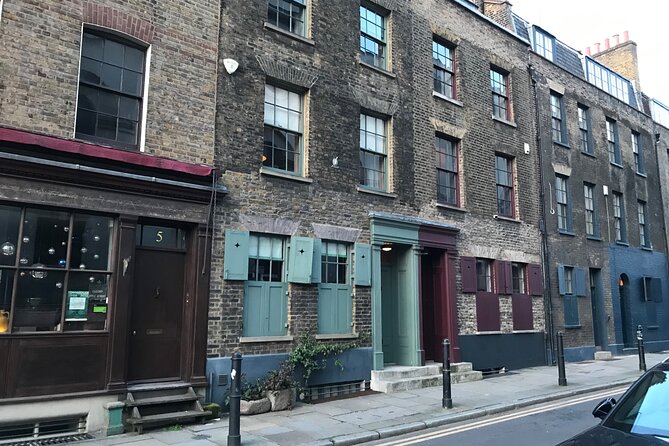
Spitalfields, old buildings, and Victorian streets
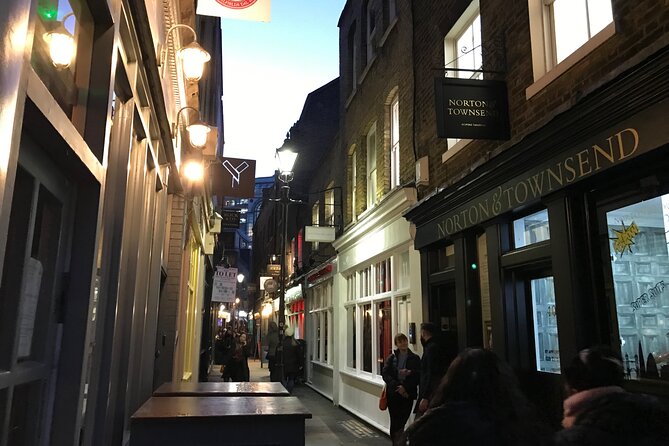
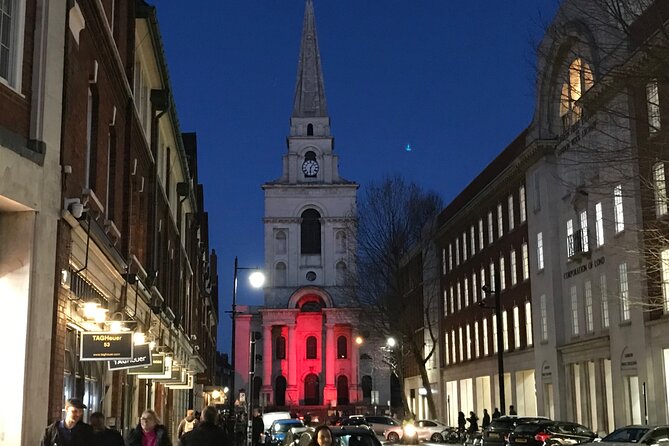
The route continues into Spitalfields, where the atmosphere shifts from major road to older streets and landmark buildings. Some parts of the district have changed greatly, while other buildings and street patterns help you picture the East End of the late nineteenth century.
I find this section valuable because it broadens the experience beyond murder sites. You learn about the district itself and the people who lived and worked there. The guide may point out places connected with the women’s daily lives and explain how poverty, insecure work, and crowded housing shaped the area.
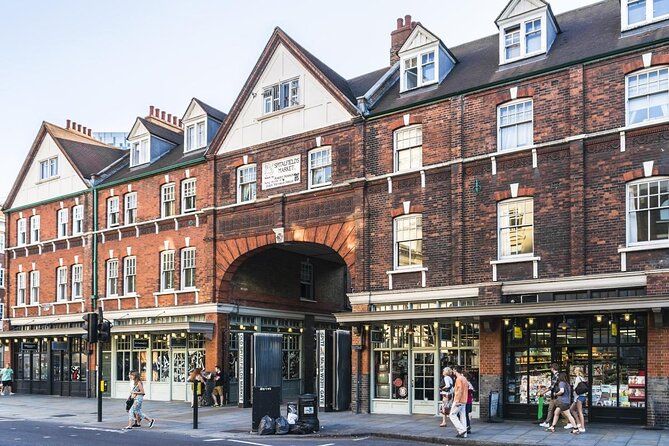
Spitalfields Market is one of the notable landmarks along the wider route. Today it is associated with shopping and food, but the surrounding district retains traces of its older character. The tour does not turn into a market visit, and food and drinks are not included, so think of the market as a reference point rather than a scheduled meal stop.
Small groups make a real difference here. With about 13 to 15 people, you can usually hear the guide and ask questions without holding up a large crowd. One departure had just five people, creating an almost private walk. Group size can change, but the format is built around conversation rather than a distant guide speaking to a mass of people.
The Ten Bells Pub and the human story
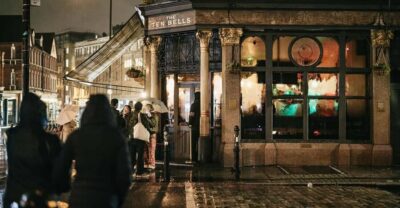
The Ten Bells Pub is one of the tour’s best-known stops. Several of the victims were said to have frequented the pub, making it a powerful place to discuss the women as real people who worked, socialized, and tried to get by in the area.
The pub also shows how history and legend can overlap. Its association with the case has helped make it famous, but the guide can explain what is documented and what has been repeated over time. That balance keeps the stop from becoming a theatrical horror prop.
You may have time to look at the pub from outside and hear its story. Do not assume that a drink, meal, or extended indoor visit is part of the tour. Those costs are separate, and one useful suggestion is to allow time for a photograph if you want one. The walk is focused on the guide’s commentary, not on a pub break.
This is also where the tour’s tone matters most. The murders were violent, and the subject cannot be made entirely comfortable. Still, the best approach is respectful. Ollie, Sarah, Becky, and other guides have been praised for discussing the victims sympathetically while still keeping the walk engaging and, at times, lightly humorous. That mix helps prevent the evening from becoming either exploitative or unbearably grim.
A different sort of day out in London altogether:
- From London: Harry Potter Warner Bros Studio Tour
★ 4.7 · 26,588 reviews - London: Westminster to Greenwich River Thames Cruise
★ 4.5 · 22,836 reviews - Magical London: Harry Potter Guided Walking Tour
★ 4.7 · 22,044 reviews - London: Madame Tussauds London
★ 4.6 · 20,915 reviews
Brick Lane and a changing East End
Brick Lane gives the walk another useful contrast. Today, it is known for street art, food, and a mix of cultures. The guide connects this present-day identity with the district’s rougher Victorian past, showing how the East End has changed while remaining a place with a strong local character.
This stop is less about a single murder location and more about understanding the neighborhood. The street helps you see that Whitechapel is not frozen in 1888. It is a living part of London, and the crime story is only one chapter in its history.
The changing surroundings can also make the tour feel less atmospheric than expected. Street lights, traffic, restaurants, and people going about their evening can interrupt the spooky mood. If you want maximum atmosphere, book a departure after sunset. A dark, cold, or misty night can add tension, though you should dress for the weather rather than rely on the forecast to create the mood.
Some city noise is unavoidable. One evening included rubbish collection trucks, which is a reminder that this is a real neighborhood, not a film set. I see that as a minor drawback rather than a flaw, but it is worth knowing if you expect a perfectly staged ghost walk.
Aldgate East and the unsolved questions
Aldgate East is tied to the beginning and end of the route, and it helps bring the investigation side of the story into focus. The guide explains links to the murders, the police work, and the questions that remain unresolved.
The appeal here is not just guessing the killer’s identity. You also learn how evidence was collected, how suspects entered the story, and why the case became so difficult to solve. The lack of a final answer is frustrating, but it gives the guide room to compare theories rather than recite a fixed conclusion.
Guides often invite questions throughout the walk. That makes the experience work well for people who already know the basic story and want to test their own theory. It also suits newcomers, since the guide provides enough background to follow the names, dates, and locations without prior reading.
The visual material is a major help. Photographs make it easier to connect the modern street with the old case, especially when buildings or street lines have survived. You are not asked to rely on atmosphere alone. The combination of images, testimony, police evidence, and local history gives the walk more substance than a simple sequence of scary stories.
What the $26 price really gets you
At $26 per person, this is a good-value London activity if you want two hours of guided history in an unusual part of the city. A guide, a structured route, local context, photographs, theories, and discussion are included. For a major capital where many organized activities cost much more, the price is reasonable.
The value depends on what you want. If you are looking for a polished indoor exhibition, this will feel basic because the streets are the main attraction. If you enjoy walking, real locations, and a story that leaves room for debate, the price is easier to justify.
Food and drink are not included, and there is no promise of a pub stop where you sit down. Plan a meal before or after the walk. Brick Lane and Spitalfields give you plenty of surrounding options, but selecting and paying for them is up to you.
The two-hour length is well judged. It is long enough to cover the main locations and background, but short enough to fit into an evening of sightseeing. You will be on your feet throughout, so comfortable shoes and warm, waterproof clothing are sensible. The tour runs outdoors in all sorts of conditions, and cold or wet weather can make the experience less pleasant even when the guide is excellent.
Who will enjoy this walk most
I would recommend it to adults and older teenagers interested in crime history, Victorian London, urban history, or unsolved cases. It works especially well for people who enjoy hearing competing theories rather than being handed a final answer.
It is also a good choice for a small group of friends or family members. The format encourages questions, and the subject gives you something to discuss afterward. Solo visitors can join comfortably, though the social feel depends on the size of the departure.
I would be more cautious if you dislike gruesome subjects, outdoor walking, or stories that involve the deaths of real people. The guides treat the victims with sympathy, but the violence remains central to the case. This is not a light sightseeing stroll.
The tour is not suitable for wheelchair users. The supplied information does not promise a fully step-free route, so anyone with mobility concerns should ask the provider for current route details before booking.
Language, timing, and small details to check
The activity information is inconsistent about languages. One section says English and Spanish tours are available, while another lists English and French. Select your preference carefully at checkout and confirm it if the choice is unclear.
You must arrive on time. The group cannot wait for late arrivals, and Aldgate East station has four exits. Look for the Fashion Warehouse near the meeting point, and allow extra time to get oriented in the station.
The tour is listed as two hours, though one departure lasted about one hour and 45 minutes. That small variation is normal for a walking activity, but keep your evening schedule flexible.
Free cancellation is available up to 24 hours before departure for a full refund. You can also reserve now and pay later, which helps if your London plans are still shifting.
Should you book it?
Book this Jack the Ripper walk if you want a reasonably priced, discussion-led introduction to Whitechapel and the Victorian case. The strongest reasons are the real locations, small groups, visual evidence, and guides who bring personality to the subject. Becky, Ollie, Cova, Sarah, Jay, and Angie have all been praised for clear delivery, humor, sympathy, and strong command of the story.
Skip it if you want a fully indoor activity, a quiet museum visit, or a definitive answer about the killer. For everyone else, choose an evening departure, wear good shoes, arrive early at Aldgate East, and bring an open mind. The most rewarding part is not the shock of the murders. It is seeing how a real neighborhood, real victims, imperfect evidence, and decades of speculation became one of London’s most lasting mysteries.
FAQ
How long is the Jack the Ripper tour?
The tour is scheduled to last two hours. One departure was reported as lasting about one hour and 45 minutes, so allow a little flexibility in your evening plans.
Where does the tour meet?
The meeting point is beside Aldgate East station. Look for the Fashion Warehouse, where your guide will be waiting.
What languages are available?
The information provided lists English and Spanish in one section, and English and French in another. Check the language choice carefully at checkout before booking.
Is food or drink included?
No. Food and drink are not included in the $26 price. The Ten Bells Pub and Brick Lane are part of the area covered, but you should plan and pay for any refreshments separately.
Can I cancel the booking?
Yes. You can cancel up to 24 hours before the tour for a full refund. The activity also offers a reserve-now, pay-later option.
Is the tour suitable for wheelchair users?
No. The tour is listed as unsuitable for wheelchair users.
Just added around London
- London: “Queen” Highlights Walking Tour★ 4.3 · 48 reviews
- Couple’s photo: Romantic photoshoot in London★ 4.8 · 22 reviews
- London: Private Tour with Locals – Highlights & Hidden Gems★ 5.0 · 8 reviews
- Luxury Private Tour in London with Lunch★ 5.0 · 7 reviews
- London 1- or 2-Hour Professional Photo Shoot★ 4.9 · 6 reviews
- London: Private Black Cab Night Tour with Hotel Pick Up★ 5.0 · 11 reviews
- London: Christmas Lights Tour – With Christmas Music★ 4.8 · 9 reviews
- London: Private Pub Tour★ 4.5 · 4 reviews
Jack the Ripper Tours, compared.
London Jack the Ripper Guided Tour with Ripper-Vision
Read our review →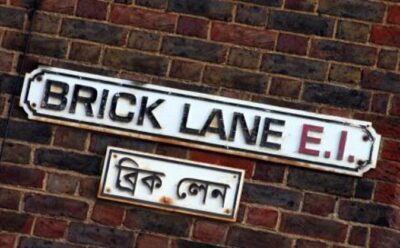
German Language : Original Jack the Ripper Tour
Read our review →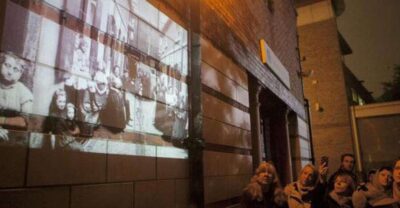
Jack the Ripper Walking Tour – Ripper Vision Tours
Read our review →
Ultimate Jack the Ripper : Guided Tour of London
Read our review →

Browse the lists this tour appears in