
Reviewed · BRITISH MUSEUM TOURS
London: British Museum Highlights: Private Tour
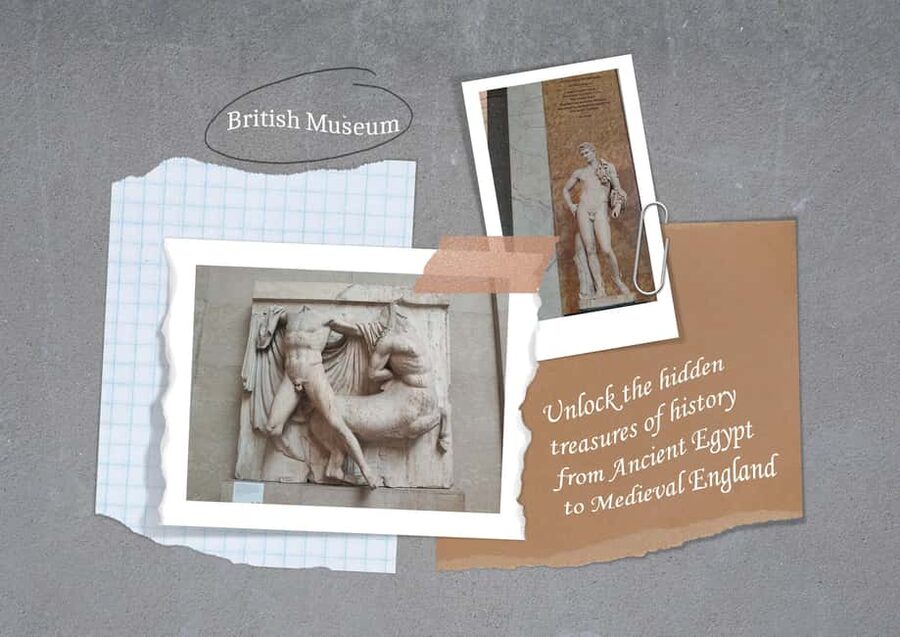
The British Museum can feel like a city of objects, with more than 8 million pieces under one roof. This private two-hour tour gives you a clear path through its biggest ideas, from the Rosetta Stone and Parthenon Marbles to Egyptian mummies and medieval stories about Jesus.
I like the small group limit of four, which lets the guide shape the discussion instead of delivering a speech to a crowd. I also like the focus on how cultures shaped ideas of beauty, love, death, faith, and the soul. The main drawback is time: two hours is enough for a strong introduction, not a complete museum visit.
- See the Rosetta Stone, the famous key to reading Egyptian hieroglyphs.
- Study the Parthenon Marbles and consider how ancient Greece shaped Western ideas of beauty.
- Stand near Egyptian mummies while exploring ancient views of death and the afterlife.
- Hear stories of tragic love and fate through art from earlier cultures.
- Explore lesser-known medieval tales about Jesus Christ, presented through comic-book-like religious art.
- Walk with a private English-speaking guide, with express security entry and a maximum of four people.
A focused route through a very large museum
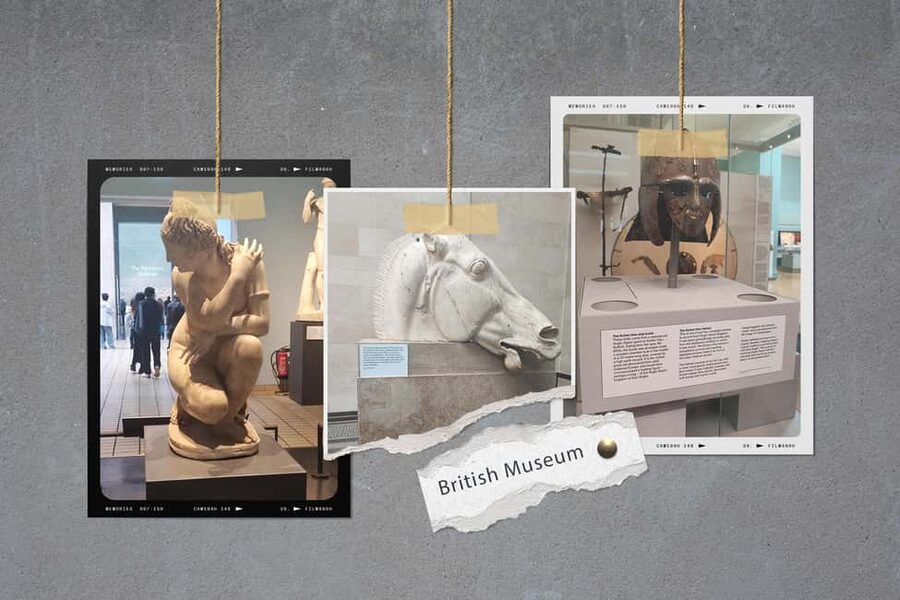
The British Museum is not a place you casually finish in an hour. Its collection covers thousands of years and many parts of the world. Without a plan, you can spend half your visit wandering between grand galleries and still miss the objects you most wanted to see.
This tour solves that problem with a tight route built around major works and big human questions. Rather than treating each object as an isolated prize, the guide connects art to the way people thought about beauty, religion, love, death, language, and the soul.
That approach matters here. The museum’s scale can make even famous objects feel disconnected. A professional storyteller can give you the thread that ties them together.
The group is private and limited to four people. That is a real advantage over a large walking tour. You can ask questions, pause when something catches your eye, and hear the guide without straining to stay near the back.
The tour lasts about two hours and ends back at the meeting point. It is conducted in English, so you should be comfortable following a fairly quick spoken explanation while walking through museum galleries.
Meeting at Edward VII’s Entrance
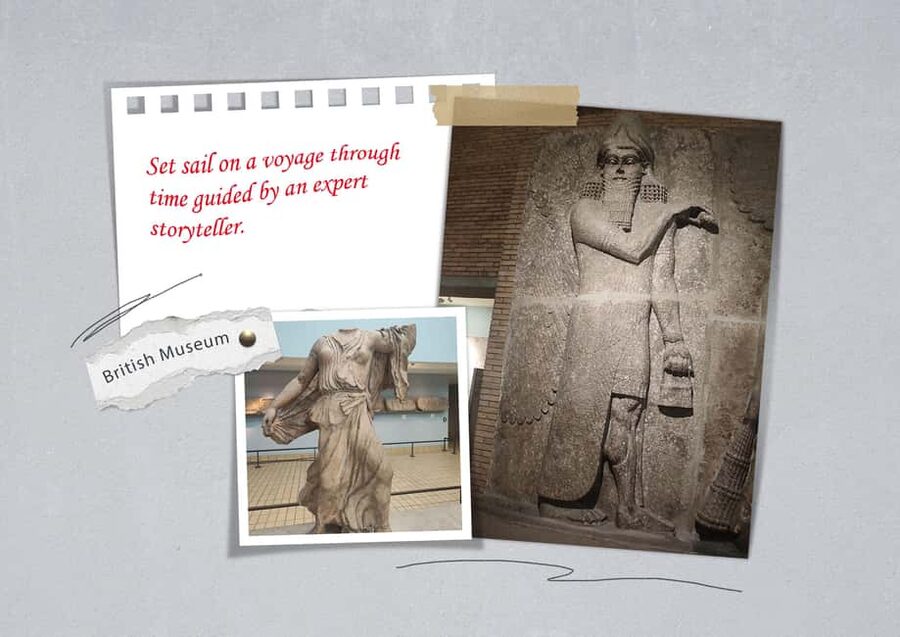
You meet at the group entrance to the British Museum, known as Edward VII’s Entrance. Your guide holds a sign reading My London Guide, which makes the meeting point easier to spot.
There is no hotel pickup or drop-off, so allow time to reach the museum on your own. The activity begins and ends at the museum meeting point, which works well if you plan to continue sightseeing in central London afterward.
Express security entry is included. That does not mean you skip every possible wait at the museum, but it does give the tour a practical head start through security. Arrive ready to walk rather than treating the entrance as a place to reorganize your bags.
Large bags and backpacks are not allowed inside. Food and drinks are also not allowed in the exhibition halls. Pack light, keep water outside the galleries, and leave sharp objects, selfie sticks, and other restricted items behind.
More British Museum Tours:
- London: British Museum Guided Tour
★ 4.3 · 1,182 reviews - British Museum London Guided Tour Semi-Private 8ppl Max
★ 5.0 · 984 reviews - London: Tour of the British Museum
★ 4.1 · 678 reviews
The Rosetta Stone and the power of language
The Rosetta Stone is one of the museum’s essential stops. Its fame comes from language, not decoration. The stone carried the same decree in several scripts, giving scholars the evidence they needed to read Egyptian hieroglyphs.
That makes it more than an old slab of stone. It shows how a single object can change the way an entire civilization is understood. You are not just looking at writing on a wall. You are looking at a turning point in modern knowledge of ancient Egypt.
The guide’s role is especially useful here. At a crowded museum display, it is easy to take a quick photograph and move on. A good explanation helps you understand why the inscriptions mattered and why the object became so important.
Photography is allowed without flash. You cannot touch the exhibits, so expect to view the Rosetta Stone as a protected object rather than something to examine at close range.
The Parthenon Marbles and changing ideas of beauty
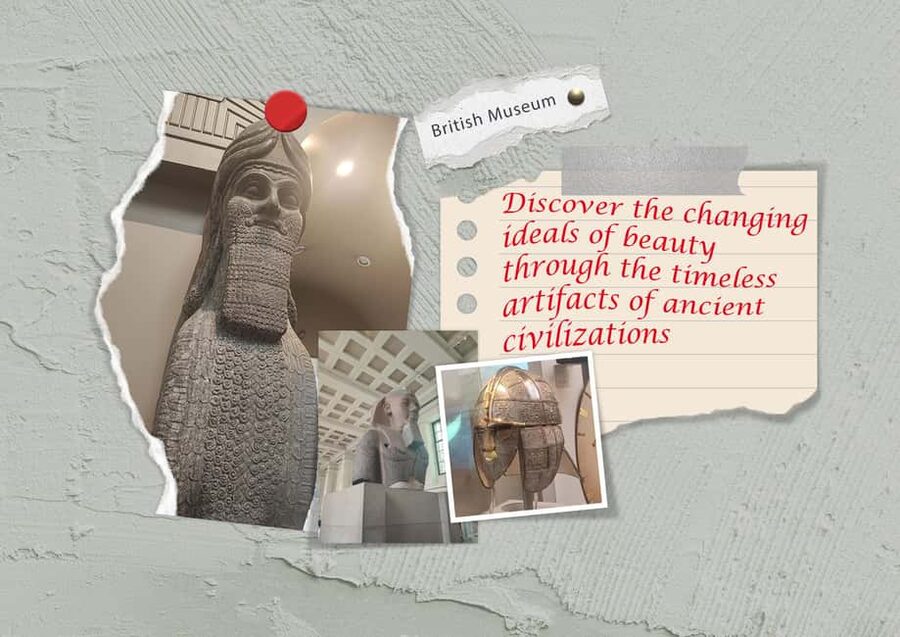
The Greek galleries offer a different kind of conversation. The Parthenon Marbles let you consider how ancient Greek art influenced later ideas about the human body, proportion, movement, and beauty.
The tour presents ancient Greece not only as the home of philosophy, democracy, theatre, and drama, but also as a source of artistic standards that still shape Western culture. That is a useful question to carry through the gallery: are we responding to the art itself, or to centuries of later admiration?
You may find the discussion more interesting than a simple explanation of who made the sculptures. It asks why certain forms became models of beauty and how cultural taste survives long after the society that created it has changed.
The marbles also raise questions about ownership and museum display, though the supplied tour information focuses mainly on beauty and cultural influence. If those wider debates matter most to you, ask the guide directly during the visit.
Egyptian mummies and the line between life and death
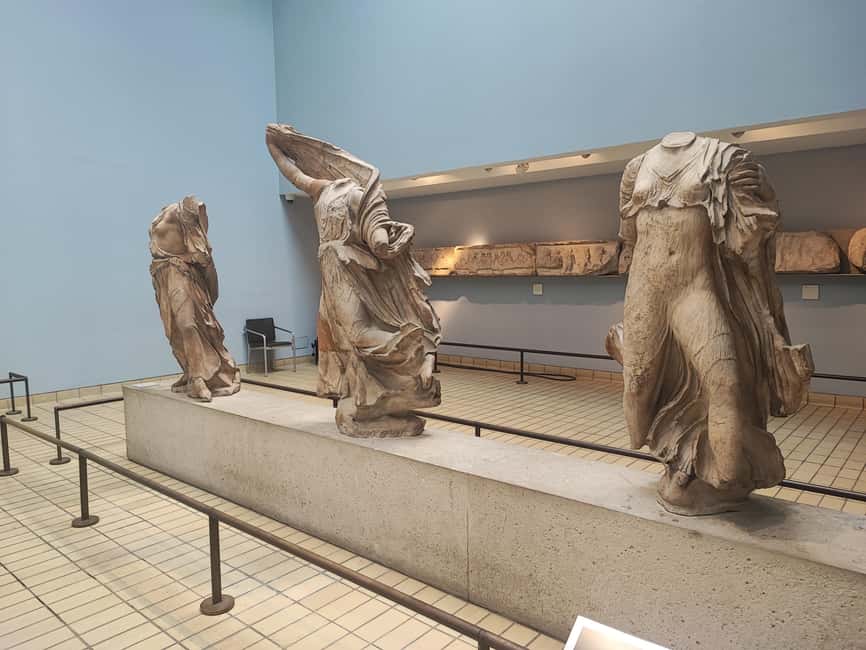
The Egyptian section brings the tour toward mortality. Mummies can be striking because they are both human remains and carefully prepared objects connected to belief, medicine, ritual, and the afterlife.
Here, the guide encourages you to think about the relationship between life and death in ancient Egypt. The subject is not treated only as a spooky attraction. It becomes a way to consider how people prepared for death, what they believed happened afterward, and what medical skill can reveal about an earlier society.
This stop may be the most powerful part of the route for you, but it is also the point where the tour’s walking pace matters. The museum visit involves a moderate amount of walking, and the galleries can be tiring if you have already spent the morning sightseeing.
The tour is not suitable for wheelchair users according to the activity information. If mobility is a concern, check the museum and provider directly before booking rather than assuming the private format solves every access issue.
More London Sightseeing and Highlights Tours:
- London: London by Night Sightseeing Open-Top Bus Tour
★ 4.5 · 5,516 reviews - London: Tootbus Must-See Hop-On Hop-Off Bus Tour with Cruise
★ 4.0 · 3,653 reviews - London: River Thames Hop-On Hop-Off Sightseeing Cruise
★ 4.4 · 3,112 reviews - Westminster to Greenwich Sightseeing Thames Cruise in London
★ 4.5 · 2,969 reviews
Mesopotamia and the ideas that still shape daily life
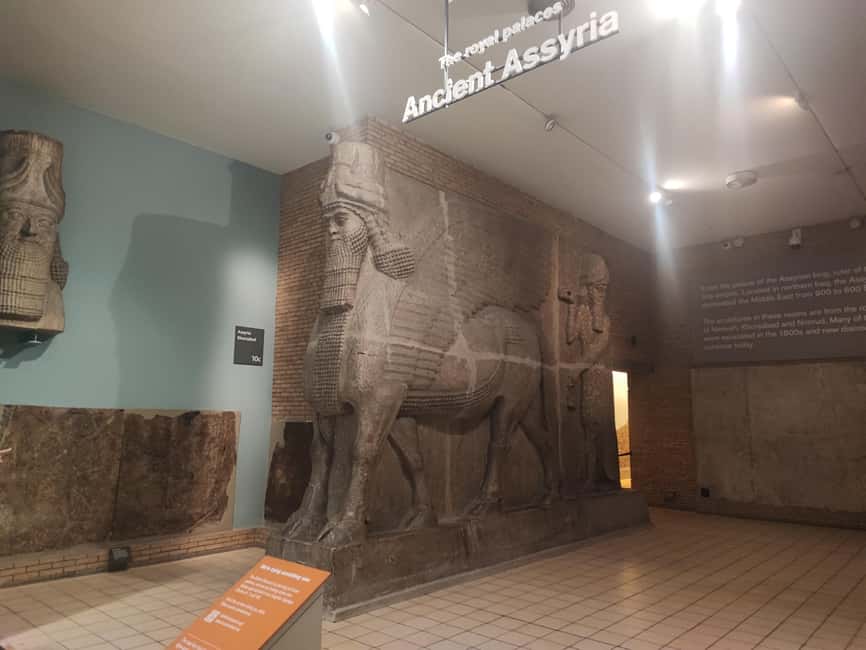
The route also turns toward ancient Mesopotamia, associated here with the wheel, siege engines, and modern farming. Those subjects can sound practical beside the museum’s grand sculpture and funerary objects, but that is exactly their value.
You are asked to think about how inventions change ordinary life. Farming, transport, and warfare are not distant academic topics. They affect how communities grow, defend themselves, trade, and organize power.
This section adds balance to the art-focused stops. The tour is not only about beautiful objects. It also considers the tools and systems that helped early societies function.
The guide’s storytelling matters because technical subjects can become a list of dates and inventions. Framing them as questions about the world we still live in helps keep the discussion connected to your own experience.
Ancient India, rebirth, and the search for inner peace
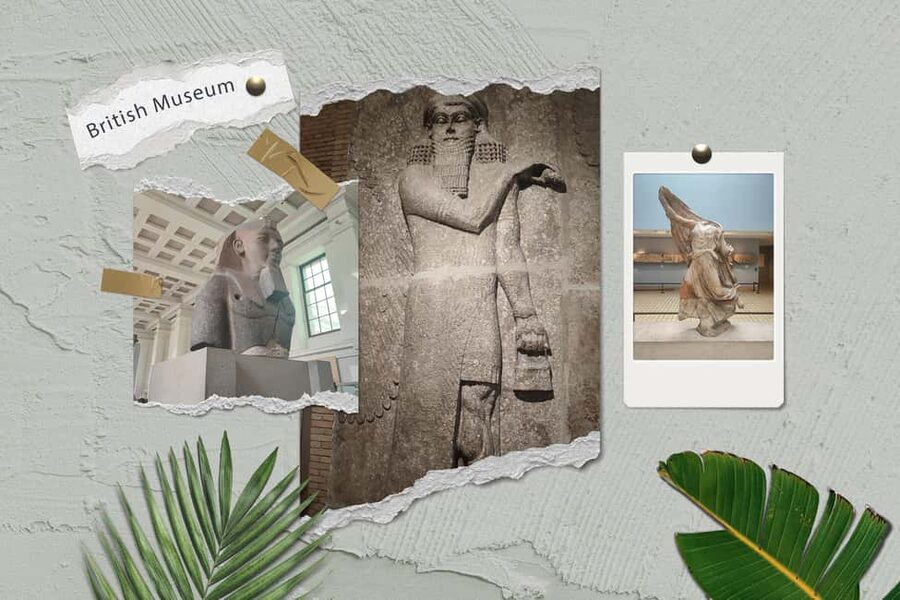
The India material shifts the discussion from inventions and public life toward the soul. The tour connects ancient India with yoga, rebirth, and paths toward enlightenment.
You are invited to consider how these ideas continue to shape modern views of life and spiritual practice. The reference to yoga mats keeps the tone light, but the subject itself is serious. The art can open questions about what happens after death, how people seek peace, and why certain religious ideas continue to travel across borders and centuries.
This is one reason the experience may suit curious first-time museum visitors better than a tour that simply rushes between famous labels. You get a series of themes that link different cultures without pretending they all believed the same things.
The tour cannot give every tradition a full treatment in two hours. Think of this section as an introduction that may point you toward galleries or subjects you want to explore later on your own.
Tragic love, fate, and familiar human emotions
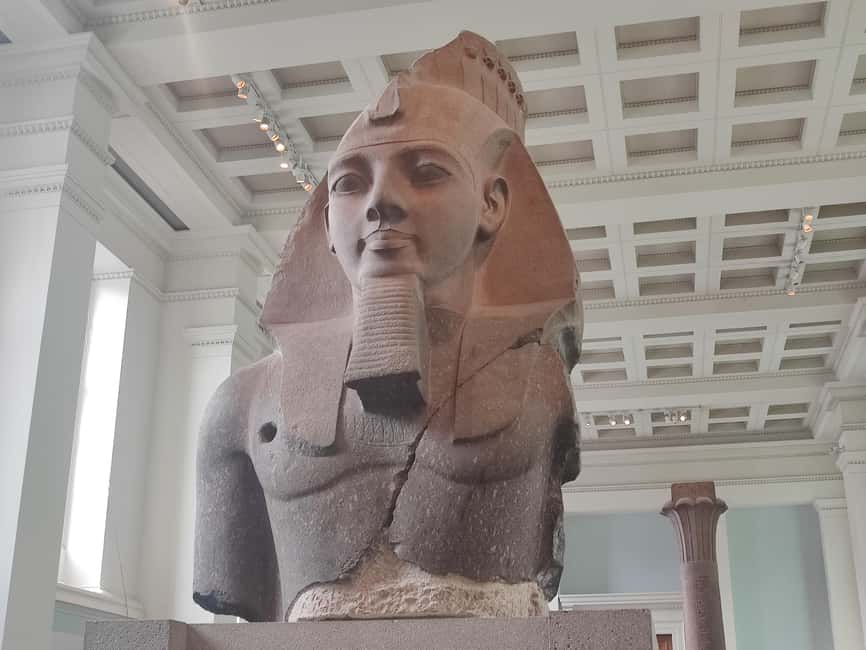
The tour includes stories of tragic love and fate as a way to explore how earlier cultures expressed strong emotion. Those stories matter because they remind you that ancient art was not only about rulers, gods, and public ceremonies.
Love, loss, jealousy, duty, and bad luck are easy to recognize across time. The details change, but the emotional questions remain familiar. Looking at art through those stories can make a quiet object feel more immediate.
This section also gives the guide room to act as a storyteller rather than a catalogue reader. The experience is designed around interpretation, so you should expect connections and narrative rather than a long stream of dates.
If you prefer a strictly academic lecture, the light jokes and accessible style may feel less formal than you want. For most people, that conversational approach should make the museum easier to follow.
Medieval art and the childhood stories of Jesus
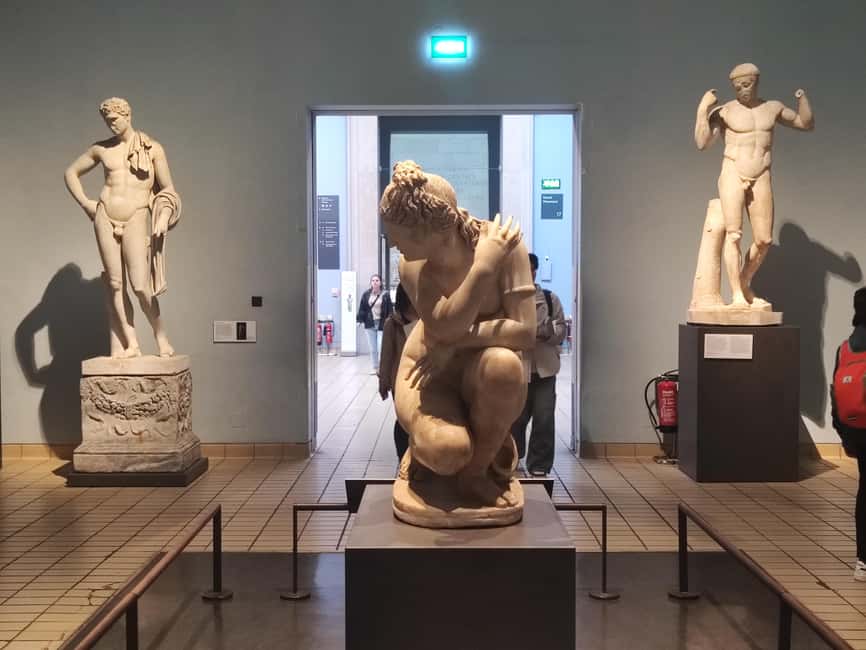
One of the more unusual stops deals with alternative stories about the childhood of Jesus Christ. The tour presents medieval religious art as a kind of visual storytelling, with comic-book-like scenes that expand beyond the best-known accounts.
That is an appealing detail because it shows how people used art to fill in parts of a sacred story that were not fully covered in the traditional narratives. Medieval viewers encountered religious ideas through images as much as through written text.
You should expect this section to focus on storytelling and cultural interpretation rather than a formal religious lesson. It offers a glimpse of how artists and audiences imagined episodes outside the central accounts.
This may be especially interesting if you have already seen the museum’s headline objects and want something less predictable. It also reinforces the tour’s wider theme: people have always used images to explain the unknown, preserve beliefs, and tell stories that mattered to them.
What the guide adds to the visit
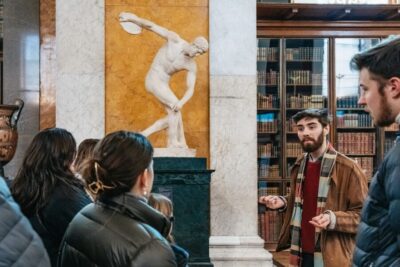
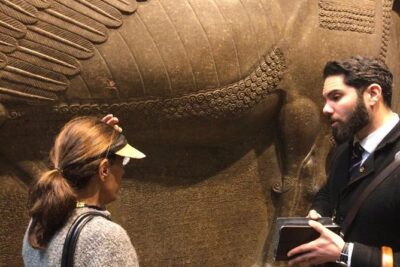
The experience includes a live guide described as a professional storyteller. That wording gives you a useful sense of the format. This is not designed as a silent escort from one famous object to another. You should expect spoken interpretation, links between cultures, and a friendly tone.
Richard is specifically associated with the tour, and the available feedback gives him strong praise for being informative, enthusiastic, and effective. If Richard is assigned to your group, you can expect a guide who has made a good impression with museum visitors. Guide assignments can change, so booking information should be checked if having a particular person matters to you.
A private guide is most valuable at the British Museum when you use the access well. Ask questions. Say if you want more time at a particular object. Mention if you already know ancient Greece but want more attention on Egypt or medieval art.
Because the group has only up to four people, the guide can respond to your interests more easily than on a large scheduled walk. That is the main reason to choose this over visiting the same galleries with an audio guide or a general group tour.
Is $74.08 per person a fair price?
The listed price is $74.08 per person. If four people book together, the total comes to $296.32 before any changes in availability or booking terms.
That is not a bargain museum entry, but the price includes a private guide, express security entry, and a two-hour route through major highlights. The value improves when you are traveling as a small group that wants personal attention and does not want to plan the museum independently.
For one person or a couple, the cost is harder to justify if you are happy to wander, read labels, and spend several hours at your own pace. The tour makes the most financial sense for up to four people sharing the private experience.
You are paying for direction and interpretation rather than admission alone. If the museum feels intimidating, or if your London schedule leaves only two hours, that guidance can be worth more than saving money on a self-guided visit.
Who should book this private museum tour?
I would recommend it to first-time British Museum visitors who want the major objects explained without committing to an all-day museum visit. It also suits families or small groups who prefer a guide to adjust the pace and answer questions.
The themes make it a good fit for people interested in art, religion, mythology, language, ancient technology, and the way societies understand death. You do not need specialist background. Curiosity is more useful than prior study.
It may not suit you if you want to see dozens of galleries, spend long periods sketching or reading every label, or explore the museum without a fixed route. Two hours passes quickly, especially with moderate walking and several major stops.
Plan for practical limits. English is the only stated tour language. Wheelchair users should not book without first resolving the accessibility concern. Keep bags small, avoid flash photography, and remember that food and drinks stay out of the exhibition halls.
Free cancellation is available up to 24 hours before the activity for a full refund, and you can reserve now and pay later. Those terms make it easier to fit the tour into a changing London schedule.
Should you book it?
Book this tour if you want a clear, story-led introduction to the British Museum and value a private group of no more than four. The Rosetta Stone, Parthenon Marbles, mummies, ancient beliefs, tragic love stories, and medieval religious art give the two hours a varied shape.
Skip it if you prefer slow independent browsing or need wheelchair access. For everyone else, the tour offers a practical way to make sense of a huge museum, with Richard or another English-speaking guide helping you see connections rather than simply collecting famous objects.
FAQ
How long does the British Museum private tour last?
The tour lasts about two hours.
How many people can join the private tour?
The private group can include up to four guests.
What language is the tour conducted in?
The live tour is conducted in English.
Where does the tour meet?
Meet at the group entrance to the British Museum, Edward VII’s Entrance. The guide holds a sign reading My London Guide.
Is express entry included?
Yes. The activity includes fast track entry through an express security check.
Can I take photographs inside the museum?
Photography is allowed without flash. Flash photography is not allowed, and you may not touch the exhibits.
Is the tour suitable for wheelchair users?
The activity information states that it is not suitable for wheelchair users. The tour also involves a moderate amount of walking.
Just added around London
- London: “Queen” Highlights Walking Tour★ 4.3 · 48 reviews
- Couple’s photo: Romantic photoshoot in London★ 4.8 · 22 reviews
- London: Private Tour with Locals – Highlights & Hidden Gems★ 5.0 · 8 reviews
- Luxury Private Tour in London with Lunch★ 5.0 · 7 reviews
- London 1- or 2-Hour Professional Photo Shoot★ 4.9 · 6 reviews
- London: Private Black Cab Night Tour with Hotel Pick Up★ 5.0 · 11 reviews
- London: Christmas Lights Tour – With Christmas Music★ 4.8 · 9 reviews
- London: Private Pub Tour★ 4.5 · 4 reviews
British Museum Tours, compared.
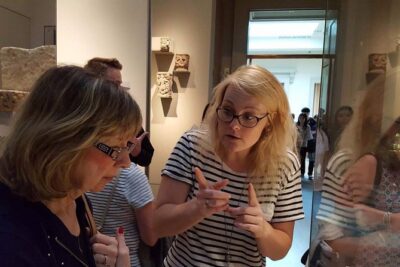
British Museum London Guided Tour Semi-Private 8ppl Max
Read our review →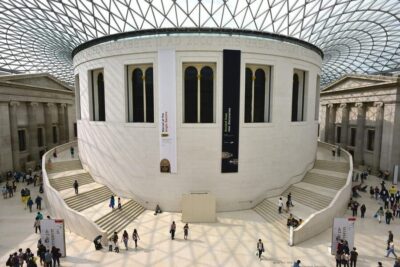
British Museum Audio Tour & Priority Entrance Ticket
Read our review →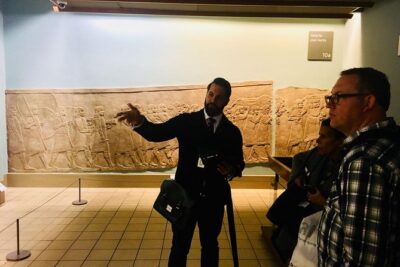
The British Museum London – Exclusive Guided Museum Tour
Read our review →
British Museum & National Gallery of London Semi-Private 8ppl Max
Read our review →Browse the lists this tour appears in