
Reviewed · LONDON WALKING TOURS
London: Modern Architecture & Building Guided Walking Tour
London’s modern skyline makes far more sense when someone explains why its buildings look so odd. This two-hour walk with Sam, a former construction management professional, links the Shard, Walkie Talkie, Gherkin, Lloyd’s of London, and other City landmarks with the engineering work beneath the streets.
I like the way the tour combines big-name buildings with less obvious subjects, including future developments and major underground projects. I also like that Sam can talk about both design and construction, so you get more than a list of architects and completion dates. The main drawback is that you do not enter any of the buildings, and the route is not suitable for wheelchair users or people with mobility impairments.
Key points to know
- Sam brings a construction professional’s view: He has worked in construction management in London and Sydney, giving the tour a practical angle.
- The route covers the City’s modern icons: You see the Shard, Walkie Talkie, Gherkin, Lloyd’s, Cheesegrater, Barbican, and more.
- The underground city gets attention: Sam explains major engineering projects beneath London’s streets.
- The tour ends near skyline models: The NLA, inside The London Centre, offers scale models and information for further looking.
- The pace suits mixed interests: Clear explanations and questions can work for architecture fans and people who only have a mild interest.
- Plan for the weather: This is an outdoor walk that continues in normal rain, cold, or heat.
Why this London walk is different
Many sightseeing walks use buildings as photo stops. This one uses them as evidence of how London works. You look at the shape of a tower, its position beside older streets, and the engineering problems that had to be solved to put it there.
That approach gives the experience a useful thread. The City of London is not a clean modern district built from scratch. It is a tight financial quarter layered over older streets, historic sites, railway lines, riverside infrastructure, and underground works. A building such as the Gherkin is not just a distinctive glass shape. It also raises questions about structure, space, energy, access, and how a new tower fits into a very old city.
Sam’s background matters here. He can explain building techniques in plain English, while still handling more technical questions. That balance is useful if one person in your group loves construction and another simply wants to understand why London’s skyline looks the way it does.
The walk is in English and is described as a small-group experience. The exact group size is not given, so you should not assume a private or near-private tour. Still, a guided walk of this length gives you more room for questions than a large bus tour.
More London Walking Tours:
- Magical London: Harry Potter Guided Walking Tour
★ 4.7 · 22,044 reviews - London: The Original Jack the Ripper Walking Tour
★ 4.7 · 7,833 reviews - Tour for Muggles The Ultimate Harry Potter Walking Tour in London
★ 5.0 · 4,684 reviews
Starting at Sugar Quay beside the Tower of London
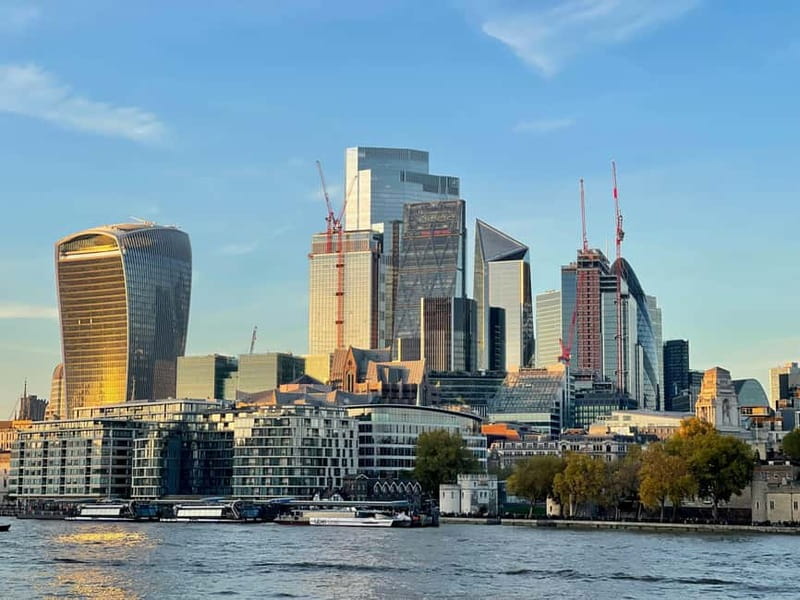
The meeting point is Sugar Quay Jetty, near the Tower of London, on the north side of the Thames. It is a strong starting point because you begin with a broad view across the river before moving into the narrow streets of the City.
From here, the tour takes in the Thames and City Hall area. The river gives you a useful sense of scale. You can look from the historic Tower of London toward newer towers and see how London’s skyline is a mix of different eras rather than one planned design.
City Hall is included as a sightseeing stop, along with the River Thames. You should expect to hear about the building and its setting, not go inside. Since entry to every building is excluded, bring a camera and pay attention to the outside views.
Wear shoes that can handle about two hours of walking. The route crosses busy urban streets and includes outdoor stops, so comfortable footwear matters more than dressing up for the financial district.
The Shard and London’s vertical ambitions
The Shard is one of the early headline stops. Its height gives the building a special role in the tour: it is both a major architectural object and a marker of London’s shift toward taller construction.
Seeing it from ground level is different from visiting an observation deck. You will not go inside on this tour, and the price does not include building admission. Instead, Sam can place the tower within the wider development of London and explain how its structure and position affect the skyline.
This is also a good point to take photographs. The tower is most useful as part of a larger discussion, rather than as a quick photo opportunity. If you already know the Shard from postcards and skyline views, the construction angle should give you a fresh reason to look up.
Crossing the City to the Walkie Talkie
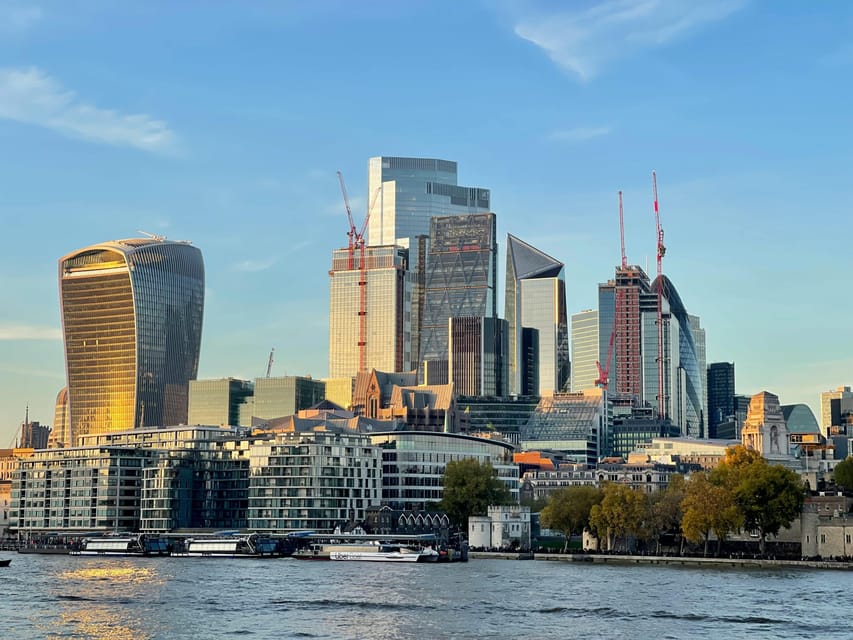
The Fenchurch Building, better known as the Walkie Talkie, brings a very different shape to the route. Its broad upper floors and unusual profile make it easy to recognize, but the interesting part is how a building’s form affects the space around it and the way people experience it from street level.
The tour treats these buildings as more than isolated designs. You can expect stories and facts about the structures listed along the way, plus other buildings encountered during the walk. Sam’s professional background should be especially useful when the discussion turns from appearance to methods, materials, and the practical demands of construction.
The route does not promise access to viewing platforms or offices. That keeps the price lower than an attraction ticket, but it also means this experience is best for people who want context and close-up views, not interior architecture.
A different sort of day out in London altogether:
- From London: Harry Potter Warner Bros Studio Tour
★ 4.7 · 26,588 reviews - London: Westminster to Greenwich River Thames Cruise
★ 4.5 · 22,836 reviews - London: Madame Tussauds London
★ 4.6 · 20,915 reviews - Stonehenge, Windsor Castle, and Bath from London
★ 4.5 · 18,662 reviews
Lloyd’s, the Cheesegrater, and the Gherkin

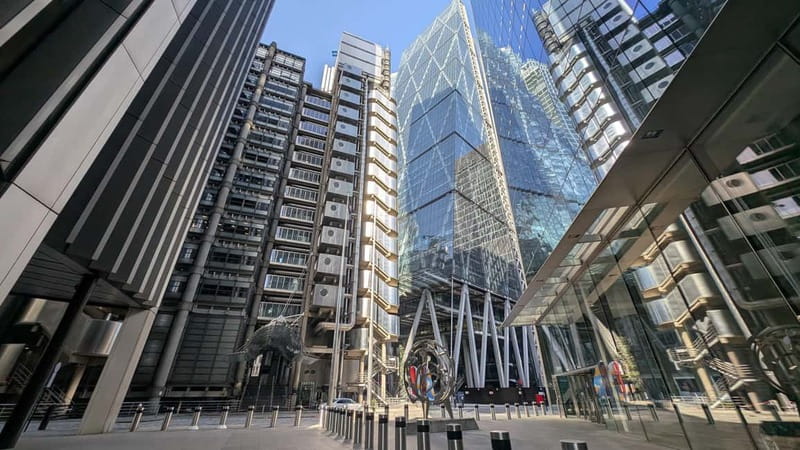
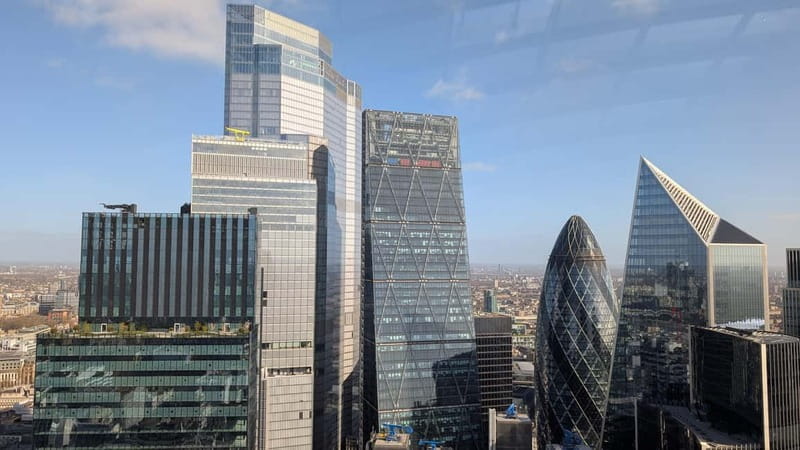
The City’s cluster of famous towers is at its most entertaining around Lloyd’s of London, the Leadenhall Building, and 30 St Mary Axe, the Gherkin. These buildings sit close enough together for you to compare their shapes and design choices without needing another train or bus.
Lloyd’s of London is one of the tour’s key stops. Its external services and industrial appearance make it a useful contrast to the smooth glass towers nearby. You can look at how the building presents structure and services rather than hiding everything behind a simple facade.
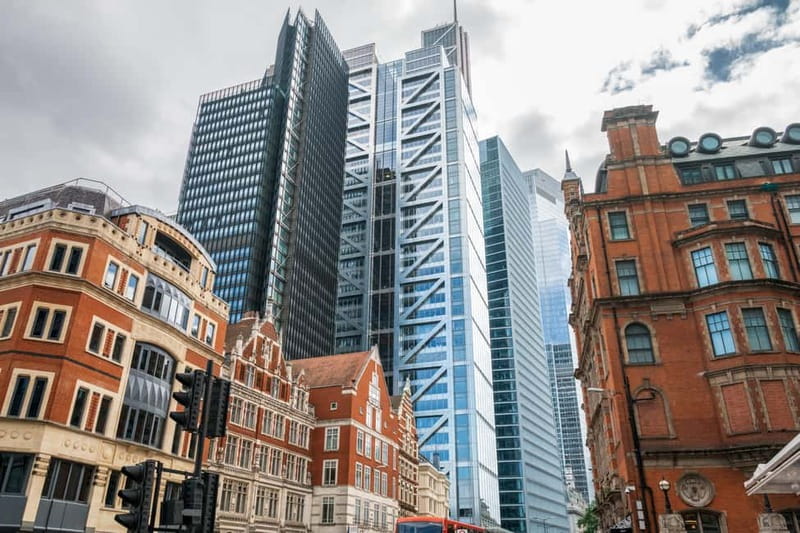
The Leadenhall Building is commonly called the Cheesegrater. Its sloping profile is not a decorative accident. It gives Sam a chance to explain how design responds to the city around it, including sightlines and the need to work within a crowded central district.
The Gherkin offers another clear contrast. Its rounded form is instantly recognizable, and seeing it alongside the angular Cheesegrater and the more mechanical-looking Lloyd’s creates a compact lesson in modern commercial architecture.
You will not enter any of these buildings. That is worth stressing because the route is about external inspection, street-level views, and explanation. If you want a public interior or a high-level outlook, you will need to arrange that separately.
The Can of Ham and the details you might miss
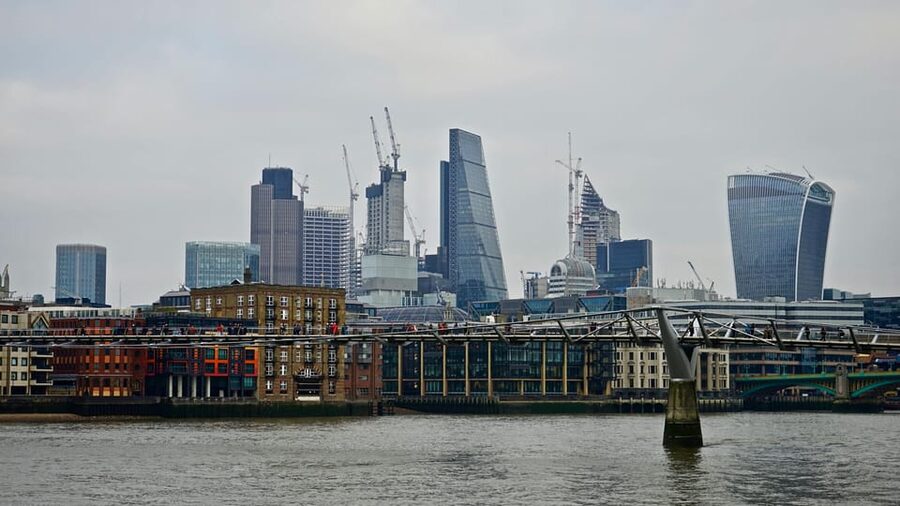
The stop at 70 St Mary Axe, known as the Can of Ham, helps keep the walk from becoming a greatest-hits tour of only the most famous towers. Its nickname reflects its shape, and it gives you another way to compare how modern office buildings use curves, angles, and glass.
This is where a guide can add real value. On your own, you might photograph the Gherkin and move on. With Sam, you can pay attention to how nearby buildings differ, how they meet the pavement, and how a dense office district keeps adding new forms without starting over.
The tour’s appeal for non-specialists comes through here. One person can ask about construction techniques while another asks why the building has that name. The explanations are intended to stay clear and engaging, not become a technical lecture.
Liverpool Street Station and the city below
Liverpool Street Station shifts the focus from towers to transport. It is a useful stop because London’s buildings cannot be understood apart from its rail and underground systems.
Sam discusses major past and present engineering projects beneath London. The supplied details do not name each project, so you should not expect a fixed list of specific tunnels or works. You can expect the conversation to connect the visible City above ground with the infrastructure below it.
That underground focus adds value to the tour. London’s skyline attracts attention, but much of the city’s engineering challenge happens where you cannot see it. Rail stations, tunnels, foundations, utilities, and restricted working space all affect what can be built at street level.
Liverpool Street also marks a change in the route’s mood. Instead of simply looking up at towers, you begin to think about movement, access, and the hidden systems that keep the central district operating.
The Barbican brings modernism into the route
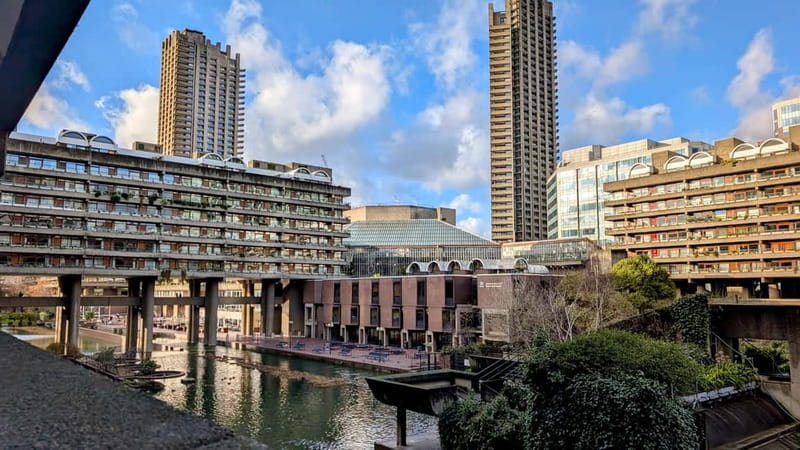
The Barbican is a useful final architectural stop because it does not look like the glass office towers earlier in the walk. Its concrete modernist design, large-scale planning, and relationship to public space add another chapter to the story of modern London.
The stop is described as sightseeing, so plan to view the complex from outside rather than tour its interiors. It gives you a chance to compare a broad residential and cultural development with the vertical commercial buildings around the Square Mile.
This part of the route may appeal most if you want more than corporate towers. The Barbican shows that modern architecture in London includes housing and public life as well as offices. It also gives Sam room to discuss how large projects shape movement through a district.
Finishing at the NLA and reading the skyline as a model
The advertised route finishes at the NLA, inside The London Centre. Entry is free, and the center has information and scaled models of London City. Allow an extra 15 to 30 minutes after the two-hour walk if you want time to look around.
The models are a worthwhile finish because they let you see relationships that are hard to grasp from pavement level. A tower that seems isolated when you stand beneath it may make more sense when you see its position among rail lines, older blocks, river corridors, and planned developments.
The NLA is open Tuesday through Saturday until 17:00. Sunday, Monday, and evening tours cannot enter, so check the starting time before booking if the models are important to you. The walking portion still gives you the building stops, but the final indoor visit is not available on every departure.
What the $52.53 price gives you

At $52.53 per person, this is not the cheapest way to see London from the outside. You can walk around the City on your own for free, and many of the buildings are easy to spot without a guide.
The value comes from the interpretation. You are paying for Sam’s time, route planning, construction background, building stories, and explanations of future development and underground engineering. That is a fair proposition if you want to understand what you are seeing rather than collect photographs.
The price is less convincing if you mainly want access inside buildings. No entry tickets are included, and the tour does not promise an observation deck, office interior, or special building access. Think of it as a guided urban study rather than an attraction pass.
It is also a useful choice for a mixed group. One person can ask technical questions while someone with only a mild interest in architecture can still follow the story. The available feedback describes Sam as personable, clear, and able to keep the two hours moving quickly without losing the chance to ask questions.
Free cancellation up to 24 hours before the tour and the option to reserve now and pay later reduce the risk of booking around uncertain plans. Those policies are helpful, but the bigger decision is still whether you want a walking tour focused on architecture and construction.
Practical details before you book
Bring water, a camera, comfortable shoes, and clothing suited to the forecast. The tour runs in normal weather and only stops in extreme conditions, so rain or a cold day will not usually cancel your plans.
There is no stated transport between stops. Treat this as a continuous city walk, not a hop-on, hop-off route. The duration is about two hours, followed by optional time at the NLA when that center is open.
The tour is not suitable for wheelchair users or people with mobility impairments. If you need a fully step-free or specially adapted route, this is not the right choice based on the available information.
The language is English. Since the experience depends on spoken explanations, make sure that format suits everyone in your group.
Who will enjoy this tour most
I would recommend it to anyone who likes architecture, engineering, city planning, or the practical side of construction. It is also a good fit if you have already seen London’s major landmarks and want to understand the modern City rather than repeat the usual royal and museum circuit.
It can work for a casual interest, too. The clear pace and stories help keep the subject approachable, while Sam’s background gives him the ability to answer more technical questions.
I would skip it if you dislike walking in changeable weather, need wheelchair access, or want to enter the buildings. It is also less suitable if your main goal is a panoramic view from the top of a tower.
Should you book it?
Book this tour if you want London’s skyline explained from street level, with a guide who can connect bold designs to construction methods, underground engineering, and future development. The combination of the Shard, Walkie Talkie, Lloyd’s, Cheesegrater, Gherkin, Can of Ham, Liverpool Street, Barbican, and NLA models gives you a broad two-hour look at the modern City.
The strongest reason to choose it is Sam’s construction management background and the balance between technical detail and plain explanations. The clearest reason to pass is that every building is viewed from outside. For curious walkers who value context over entry tickets, the price is reasonable. For visitors seeking interiors or a high-level skyline view, spend the money elsewhere.
FAQ
How long does the London modern architecture tour last?
The guided walking tour lasts approximately two hours. You should allow another 15 to 30 minutes if you want to look around the NLA afterward.
Where does the tour start?
The tour starts at Sugar Quay Jetty near the Tower of London, on the northern side of the River Thames.
Where does the tour finish?
The route finishes at the NLA, inside The London Centre, according to the detailed route information.
Which buildings can I see?
Stops include City Hall, the Shard, the Walkie Talkie, Lloyd’s of London, the Leadenhall Building or Cheesegrater, the Gherkin, the Can of Ham, Liverpool Street Station, and the Barbican.
Do I go inside the buildings?
No. Entry into the buildings seen on the tour is not included. The experience focuses on exterior views and guided explanations.
Can I visit the NLA after the walk?
Yes, when the NLA is open. It is open Tuesday through Saturday until 17:00, and entry is free. Sunday, Monday, and evening tours cannot enter.
What should I bring?
Bring comfortable shoes, water, a camera, and clothing suitable for the weather. The tour proceeds in normal weather conditions.
Is the tour suitable for wheelchair users?
No. The activity is listed as unsuitable for wheelchair users and people with mobility impairments.
What language is the tour in?
The live guided tour is in English.
Just added around London
- London: “Queen” Highlights Walking Tour★ 4.3 · 48 reviews
- Couple’s photo: Romantic photoshoot in London★ 4.8 · 22 reviews
- London: Private Tour with Locals – Highlights & Hidden Gems★ 5.0 · 8 reviews
- Luxury Private Tour in London with Lunch★ 5.0 · 7 reviews
- London 1- or 2-Hour Professional Photo Shoot★ 4.9 · 6 reviews
- London: Private Black Cab Night Tour with Hotel Pick Up★ 5.0 · 11 reviews
- London: Christmas Lights Tour – With Christmas Music★ 4.8 · 9 reviews
- London: Private Pub Tour★ 4.5 · 4 reviews
London Walking Tours, compared.

Magical London: Harry Potter Guided Walking Tour
Read our review →

Tour for Muggles The Ultimate Harry Potter Walking Tour in London
Read our review →

Harry Potter Movies Walking Tour (Kids Go Free)
Read our review →
Changing of the Guard Guided Walking Tour in London
Read our review →
The Great British Rock and Roll Music Walking Tour
Read our review →
Jack the Ripper Walking Tour – Ripper Vision Tours
Read our review →Browse the lists this tour appears in