
Reviewed · CITY TOURS
The Roman City of St Albans Private Tour
The Roman City of St Albans tour takes you from London to one of England’s most layered towns, where Roman walls, an Anglo-Saxon church, a medieval clock tower, and a major cathedral all fit into a walkable day. Verulamium Park and the Roman Theatre make the ancient city easy to picture, while St Albans Cathedral gives the day its emotional center.
I like the private format, which lets your guide adjust the pace and explain small details you would likely miss alone. I also like the direct hotel pickup and the chance to travel with a guide such as Kevin, who is especially good at connecting Roman, medieval, and modern St Albans. The main drawback is the packed six-hour schedule, plus the town’s hills and considerable walking.
Key points to know before booking
- Roman ruins beneath a city park: Walk over the old Roman town at Verulamium Park and see surviving walls, a mosaic, and a theatre.
- A cathedral with an early Christian story: St Albans Cathedral traces its story to Alban, England’s first Christian martyr.
- A truly private day out: Only your group participates, so the guide can adapt the pace and focus.
- Public transport is part of the experience: Hotel pickup is offered, but the return train fare costs about £15 and is not included.
- Allow for hills and walking: The schedule includes many short stops, a museum visit, and up to 80 minutes in the cathedral.
- A strong local guide matters: Kevin has been praised for his enthusiasm, patience, and ability to bring the town’s long past to life.
Why St Albans makes such a good London side trip
St Albans is only about 20 minutes from London by train, yet it feels far removed from the capital. The old city grew from Roman Verulamium, and later became an important Christian center around its abbey and cathedral. Today, you get an appealing mix of ancient ruins, medieval buildings, pubs, shops, and a working market town.
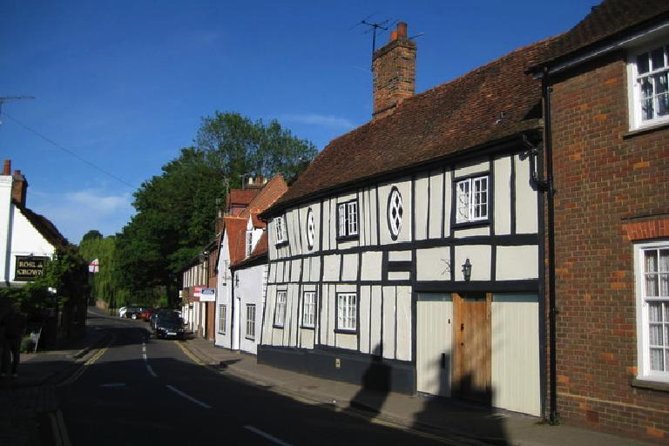
I like this tour because it does not treat the Roman remains as isolated museum pieces. You see them in the setting of a living English city. The old walls sit beside a park. The cathedral remains an active place of worship. Ye Olde Fighting Cocks still serves customers. The market, clock tower, cafés, and shops show that St Albans is not simply a preserved historic site.
The private arrangement is important here. St Albans has many separate sights, and the connections between them are not always obvious. A good guide can explain why the Roman city lies below the modern center, how the abbey became a cathedral, and where the medieval town fits into the story.
The day begins at 8:30 a.m. and lasts about six hours. That gives you enough time to see the principal sights, but not enough time for a slow, unplanned wander at every stop. You should expect a structured day with plenty of walking and short visits mixed with longer periods in the museum and cathedral.
More City Tours:
- City Sightseeing London Hop-On Hop-Off Bus Tour & Bookable Extras
★ 4.0 · 1,224 reviews - London: Go City Explorer Pass® – Tickets for 2-7 Attractions
★ 4.3 · 1,111 reviews - London: Speedboat Tour Through Heart of the City
★ 5.0 · 387 reviews
From the Holy Well to Verulamium Park
The first stop is the Holy Well, a small but atmospheric place tied to St Alban, the town’s famous martyr. Local tradition also links its waters with Uther Pendragon, the legendary King Arthur’s father. You do not need to accept every medieval legend literally to enjoy the way these stories reveal how people have connected the town’s springs, saints, and heroes over the centuries.
The visit lasts only about 10 minutes, so this is more of an introduction than a long stop. Your guide’s explanation matters here, since the site itself is modest and its importance comes from the stories attached to it.
From there, you reach Verulamium Park. The park occupies much of the old Roman city, while modern St Albans sits on the hill above it. That physical arrangement helps you understand the town at a glance. Roman Verulamium was not simply erased and replaced. Its remains are spread through the park and surrounding area.
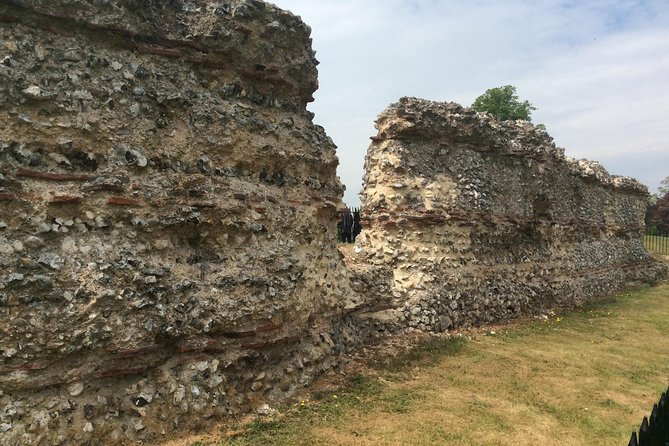
You will see sections of the Roman city wall, with time to picture the scale of the settlement. The walls are exposed ruins rather than a reconstructed theme park, so you need to use your imagination. That is also what makes them appealing. The guide fills in the missing pieces without pretending that every stone tells a complete story.
Roman walls, a mosaic, and the old theatre
The Roman Walls of St Albans provide another quick look at Verulamium’s defenses and urban scale. This is a short 10-minute stop, but it adds useful context before the more detailed remains.
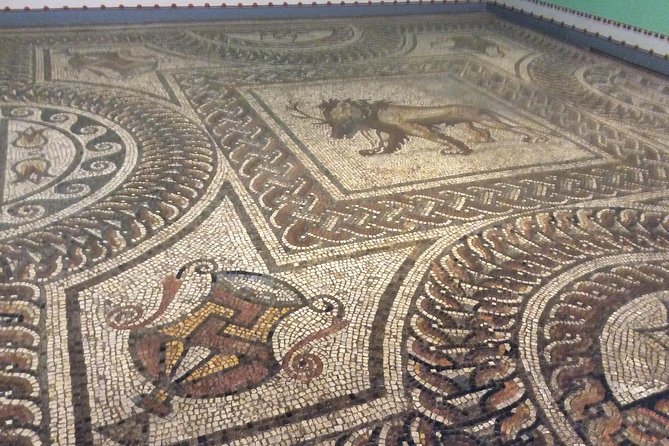
The Hypocaust and Roman Mosaic are among the day’s strongest Roman sights. A hypocaust was part of a Roman underfloor heating system, and the mosaic is described as one of the finest in Britain. The short visit means you will not linger for long, but the combination of decorative art and household engineering gives you a better sense of daily Roman life than walls alone.
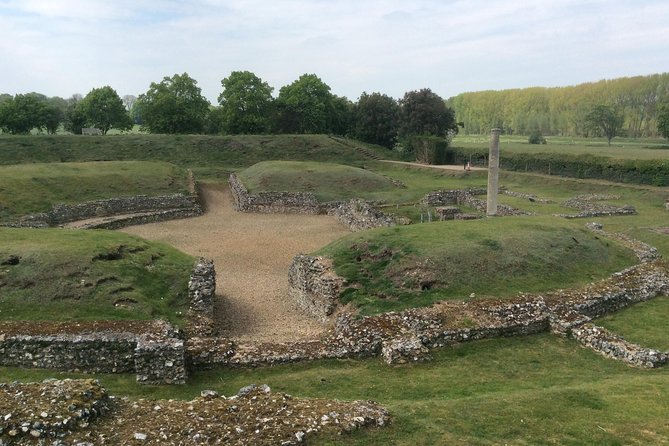
The Roman Theatre of Verulamium is more substantial. You get about 25 minutes to explore the ruins of the theatre and associated shops. This is a useful contrast with the walls and mosaic, since it shows public entertainment and commercial life rather than only military or domestic remains.
Do not expect a complete theatre like the best preserved examples in Italy. The value here is in the remains and the setting. Your guide can help you read the foundations and understand how the theatre fitted into the Roman town.
St Michael’s Church and a thousand years of worship
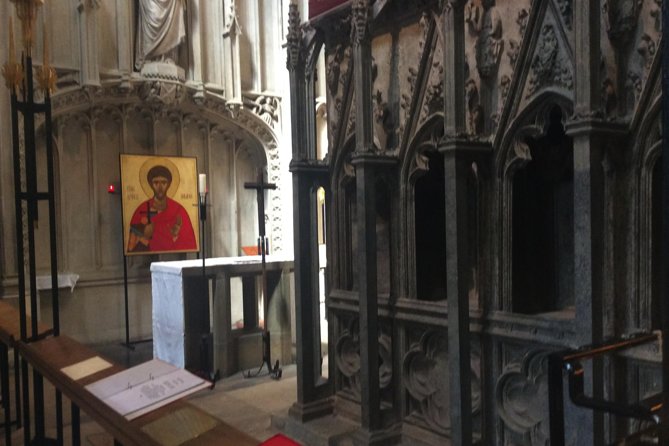
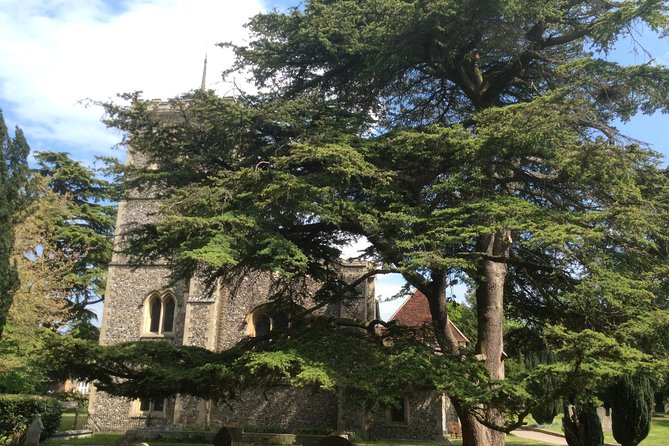
St Michael’s Church is an Anglo-Saxon foundation and is about 1,000 years old. It is still used today, which gives the visit a sense of continuity that a purely archaeological site cannot provide.
The church is a 15-minute stop, so you will not have endless time for quiet inspection. Still, it offers an important bridge between Roman Britain and medieval England. The building’s age and continued use make it more than another old structure on a sightseeing route.
This is one reason I prefer seeing St Albans with a guide. The town’s story can otherwise feel like a series of disconnected dates: Roman, Anglo-Saxon, medieval, Tudor, and modern. The stops make more sense when someone explains how each period left traces in the same compact city.
More Private:
- The Premier Classic London: Private 4-Hour Tour in a Black Cab
★ 5.0 · 2,737 reviews - Stonehenge Inner Circle Private Tour from London with Bath Visit
★ 5.0 · 1,909 reviews - London: Tower of London Entry & Beefeater Private Audience
★ 4.4 · 1,441 reviews - Private Tour: Black Taxi Tour of London
★ 5.0 · 1,153 reviews
Verulamium Museum: the best place to make sense of the ruins
You spend about an hour at the Verulamium Museum, which is the longest museum stop on the tour. Its collection includes Roman objects found in and around the park and city.
This is where the scattered ruins begin to come together. After seeing the wall, mosaic, theatre, and hypocaust outdoors, you can look at objects that show how people lived, worked, worshipped, and decorated their homes. The museum gives the Roman part of the day its clearest structure.
An hour is a sensible amount of time for a guided visit, though you may wish you had longer if you enjoy museums. Because the overall tour is private, you can ask your guide to spend more time on the Roman material that interests you most. If you want a leisurely visit to every display, the schedule may feel tight.
Old pubs, a monastery gateway, and the medieval center
Ye Olde Fighting Cocks is a five-minute stop, but it adds character. The pub claims a place among Britain’s oldest, and it has served patrons and pilgrims since a period not long after the Romans. The stop is mainly about seeing the building and hearing its connection to the town’s past, not sitting down for a drink.
The Great Gateway of the Monastery is another brief visit. This imposing gatehouse points to the importance of St Albans Abbey before the religious changes under Henry VIII. It is easy to hurry past a gateway, but this one helps explain how the medieval religious center shaped the town around it.
The short stops work well for orientation, but they also explain why the six-hour schedule can feel full. You cover a lot of ground, and some places receive only five or ten minutes. If you prefer to settle into one site for hours, this is not that kind of tour.
St Albans Cathedral and the story of Alban
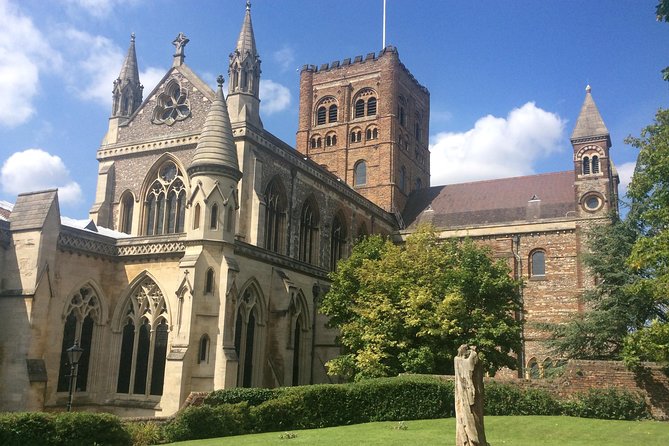
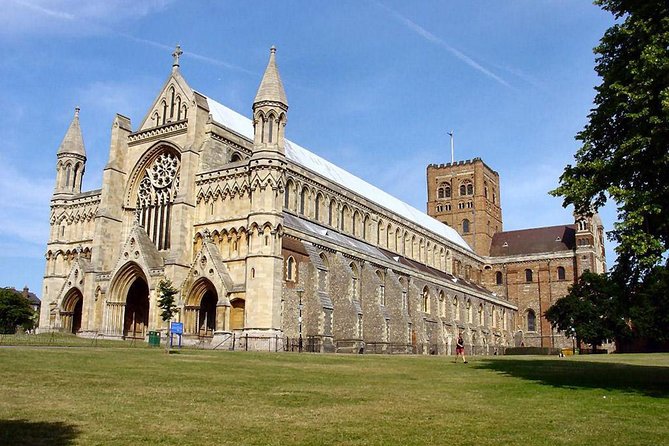
The cathedral visit lasts about 80 minutes and is the day’s centerpiece. You learn about Alban, traditionally regarded as England’s first Christian martyr, and see the church that grew from his local significance.
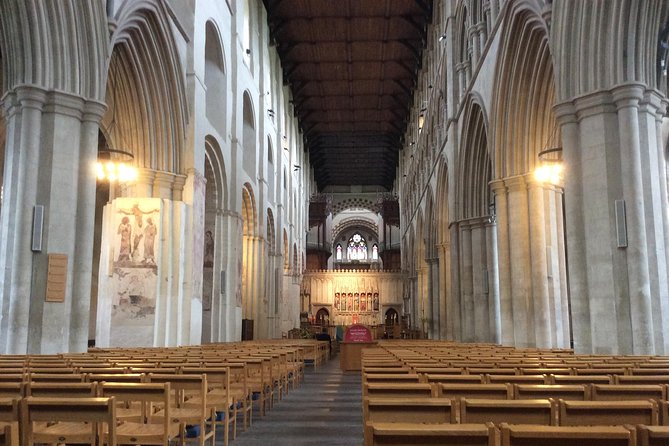
St Albans Cathedral was once an important abbey and pilgrimage destination. Its story reaches from Roman Britain through medieval religious life and into the period of Henry VIII. The building is also one of the finest cathedrals in Europe, with layers of construction and use that reward a guided explanation.
I would plan your energy around this stop. It is long enough to explore properly, but the day already includes considerable walking. The cathedral asks for smart-casual dress, so avoid treating this as a casual day in sportswear if you plan to enter.
The cathedral is especially valuable for people who want more than Roman ruins. You get the Roman martyr story, but also a view of how medieval England remembered, honored, and built around that story. The active religious setting gives the visit a present-day purpose, not just a historical one.
Verdun Tree, the market, and modern St Albans
The Verdun Tree is a small stop with a powerful connection to the First World War. It is described as living history from the battlefields of Verdun. You will spend only about five minutes here, but the tree adds a much later chapter to the town’s story.
St Albans Market sits near the Clock Tower, and the market does not operate every day. Even when stalls are not running, the area remains useful for understanding the town center. The 1403 Clock Tower is the only free-standing belfry in Britain, and it gives the historic center a distinctive landmark.
You also get about an hour to enjoy central St Albans. This is your chance to slow down after the more structured sights. The center includes old pubs, crêperies, higher-end shops, and a relaxed local feel. Food and drinks are not included, so this is the natural point to buy something at your own expense.
The final hour matters because it prevents the tour from becoming only an archaeological exercise. You see how people use St Albans now, not just how the Romans and medieval church shaped it. If you want a taste of everyday England close to London, this part of the day may be as appealing as the formal attractions.
How the private transport arrangement works
Hotel pickup and drop-off are offered, but you should read the transport details carefully. The experience includes travel from your London hotel, and the guide may accompany you by Underground and train, as happened with Kevin on one day. The return train fare, about £15, is not included.
That arrangement has two benefits. First, you do not have to work out the route on your own. Second, public transport lets you see how easily St Albans connects with London instead of spending the day in a private vehicle.
The tradeoff is that the transport is not fully covered by the tour price. Ask about the exact meeting and return arrangements before departure, especially if your hotel is outside central London or your group needs extra time moving through stations.
The experience is private, so only your group participates. That is a major advantage for families, couples, or friends with different interests. You can ask for more Roman detail, more cathedral time, or a slower pace if the schedule allows.
Is $377.07 per person good value?
At $377.07 per person, this is not a budget day trip. You are paying for a private guide, hotel pickup and drop-off, entry tickets, and a full six-hour visit rather than simply buying a train ticket and walking around St Albans alone.
The value depends heavily on your group size and interest in history. A solo visitor or couple may find the price high. A small group that would otherwise need several separate tickets, route planning, and a paid guide may find the convenience more reasonable. Group discounts may also change the calculation.
You could visit St Albans independently for less. The train fare is modest, and several outdoor sights are free. What you would lose is the continuous explanation linking the Roman city, cathedral, monastery, churches, pubs, and modern center.
The strongest value comes from the guide. Kevin is described as enthusiastic, flexible, and willing to keep explaining as long as your energy holds out. He also helped adjust the day when one person became tired and found a suitable place for food. That kind of human attention is difficult to price, but it matters on a walking tour with many stops.
Who will enjoy this tour most?
I would choose this tour if you want a serious history day without spending time on research or transport planning. It suits first-time visitors to St Albans, people interested in Roman Britain, cathedral architecture, and those who want a smaller English city beyond central London.
It is also a good fit for families or groups who want a private pace. The guide can explain complex history in a way that follows your questions, rather than delivering a fixed speech to a large crowd.
You should think twice if you dislike hills, walking, or frequent changes of scene. The day includes many short stops, and even a helpful guide cannot remove the physical demands. Dress for the weather, since the tour operates in all conditions, and wear practical shoes.
The experience is generally suitable for most participants, and service animals are allowed. It operates near public transportation, but the supplied details do not promise a fully step-free route, so anyone with mobility concerns should confirm the arrangement before booking.
Should you book the Roman City of St Albans Private Tour?
Book it if you want St Albans explained rather than merely visited. The combination of Verulamium’s ruins, the museum, St Albans Cathedral, medieval buildings, and the modern town gives you a fuller picture than a quick independent walk.
The clearest reasons to book are the private guide, hotel pickup, and the chance to connect details that are easy to miss alone. Kevin’s patient, enthusiastic style is a real plus if he is available for your date.
Skip it if your priority is the lowest possible cost or a slow day with no fixed schedule. You will pay more than you would for a self-guided visit, and the six-hour plan is active. For a history-minded visitor who values context, though, this is one of the more useful short trips you can make from London.
FAQ
How long does the Roman City of St Albans Private Tour last?
The tour lasts approximately six hours and begins at 8:30 a.m.
Does the tour include hotel pickup and drop-off?
Yes. Hotel pickup and drop-off are included, with the activity beginning from the arranged meeting point.
Is the return train fare included?
No. The return train fare is not included and costs about £15.
Is this a private tour?
Yes. Only your group participates in the activity.
What language is the tour offered in?
The tour is offered in English.
Which major attractions are included?
The tour includes the Holy Well, Verulamium Park, Roman walls, the Hypocaust and Roman Mosaic, St Michael’s Church, the Roman Theatre, Verulamium Museum, the Great Gateway of the Monastery, St Albans Cathedral, the Verdun Tree, St Albans Market, the Clock Tower area, and the city center.
Is entry to St Albans Cathedral included?
Yes. Entry tickets are included, along with admission to the Roman Theatre and Verulamium Museum.
Is food included?
No. Food and drinks are not included. You have time in central St Albans to buy food at your own expense.
Can I cancel for a full refund?
Yes, if you cancel at least 24 hours before the experience’s start time. Cancellations or changes made less than 24 hours before departure are not accepted for a refund.
Just added around London
- Kensington Palace VIP Garden Tour with Royal High Tea★ 4.5 · 71 reviews
- Up at The O2:Twilight Climb with Guided Tour with Panoramic Views★ 5.0 · 50 reviews
- Private Chauffeur-London Heathrow from/to Southampton Cruise Port★ 5.0 · 9 reviews
- Up at The O2: Sunset Climb with Guided Tour with Panoramic Views★ 5.0 · 110 reviews
- Secrets of the London Underground Small Group Walking Tour★ 4.5 · 38 reviews
- Urban Canvas: Exploring Shoreditch’s Vibrant Street Art★ 5.0 · 36 reviews
- Ultimate introduction to photography in Central London★ 5.0 · 19 reviews
- Full-Day Self-Guided Paris Tour from London by Eurostar with Seine River Cruise★ 3.5 · 22 reviews
City Tours, compared.

City Sightseeing London Hop-On Hop-Off Bus Tour & Bookable Extras
Read our review →
Go City Explorer Pass® – Tickets for 2-7 Attractions
Read our review →
Upside Down House Westfield White City Entry Ticket
Read our review →
Westminster Abbey Priority Access & Guided City Tour
Read our review →
Eating London: The Heart of ‘The City’ Food Tour
Read our review →
London Luxury Dinner Experience with Panoramic City Views
Read our review →
Go City London Explorer Pass: 2-7 Things To do including Shard
Read our review →Browse the lists this tour appears in