Reviewed · LONDON WALKING TOURS
London Mystical and Dragons Walking Tour
London’s oldest stories do not sit only in museums. They appear in stones, church carvings, lost rivers, dragon figures, Roman ruins, and the odd symbol you have passed without noticing. This walking tour follows that less familiar side of the City of London, from London Stone to the dragon at Temple Bar Memorial.
I like the small group of no more than eight, which gives Arjun room to answer questions and adjust his explanations for adults, teenagers, or younger children. I also like the way the walk links solid history with folklore, especially at the Mithraeum, Temple Church, and the old river routes beneath the streets. The main drawback is that this is a long walking route, and churches or other sites may be closed on Sundays, bank holidays, or certain dates.
Key points before you book
- Twelve stops from London Stone to Temple Bar Memorial: The route crosses the City of London and finishes near the Royal Courts of Justice.
- Roman, medieval, and mystical themes: Expect lost rivers, Mithraic worship, dragon lore, phoenix symbolism, church history, and sacred stones.
- Small groups capped at eight people: Arjun can make the discussion personal and handle questions without rushing.
- A steady 2 to 3 hour walk: The pace includes frequent stops, but comfortable walking shoes still matter.
- Free admission at the listed stops: Access inside churches and other sites is not guaranteed, so closures can change the experience.
- PDF included after the tour: You receive a reference to the locations visited, useful if you want to return later.
Why this London walk feels different
Most City of London walks point you toward famous buildings and explain the obvious dates. This one asks you to look again at what is already in front of you. A church weathercock becomes part of a dragon story. A buried river becomes a clue to the shape of the city. A familiar cathedral takes on the image of a phoenix.
Arjun leads the tour in English and brings a personal interest in symbolism, mythology, and London’s past. His approach is not simply a list of facts. He connects water, trees, sacred ground, Roman beliefs, Christian imagery, and old legends across the route.
That can be the tour’s greatest pleasure, but it also explains why it is not for everyone. If you want only firmly documented dates and conventional sightseeing, some of the mystical interpretations may feel speculative. If you enjoy comparing ancient beliefs and spotting repeated symbols, the walk gives you plenty to think about.
The small-group format helps. With a maximum of eight people, you are not trying to hear a guide over a crowd. Children and teenagers can ask questions, and Arjun has shown that he can adjust the material for families as well as adults interested in mythology.
More London Walking Tours:
- Magical London: Harry Potter Guided Walking Tour
★ 4.7 · 22,044 reviews - London: The Original Jack the Ripper Walking Tour
★ 4.7 · 7,833 reviews - Tour for Muggles The Ultimate Harry Potter Walking Tour in London
★ 5.0 · 4,684 reviews
From London Stone to the lost Walbrook
The tour begins at 113 Cannon Street, close to London Stone. The stone itself is not large or showy, but it carries an outsized place in London folklore. It is described as a sacred object whose presence protects the city, and it gives the walk an immediate sense of older London beneath the modern streets.
You spend about ten minutes here. That is enough time to set the tone without pretending the stone is a grand monument. This opening works best if you enjoy the tension between physical evidence and old belief.
From here, the route moves toward Bloomberg Arcade and the forgotten Walbrook river. The walk treats the river as more than a buried watercourse. It helped shape the development of modern London, and its path becomes part of the tour’s wider idea of dragon lines, sacred rivers, and places where old beliefs remain tied to the city’s layout.
The stop is brief, about five minutes, but it gives you useful context. London can feel built entirely from stone and concrete. Remembering the streams beneath it changes how you read the streets.
The Mithraeum and Roman London’s secret side
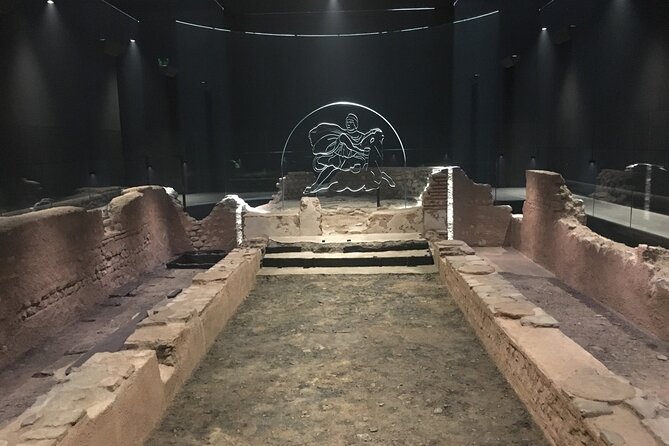
The Roman temple of Mithras is one of the most compelling points on the route. Mithras was a Roman sun god, and the temple offers a direct link to religious practices that once took place beneath the city.
The tour presents the Mithraeum as a place where ancient belief and mystery meet. This is one of the stops most likely to appeal to you if Roman London interests you more than royal palaces or famous monuments. The location also helps explain how much of the Roman city survives below today’s financial district.
Access can vary, so do not assume that every interior will be open during your visit. At times, the guide has used photographs or spent longer at another stop when a site was closed. That is practical, but it means the exact balance between outdoor explanation and indoor viewing can change.
The Bank of England and the City’s dragon
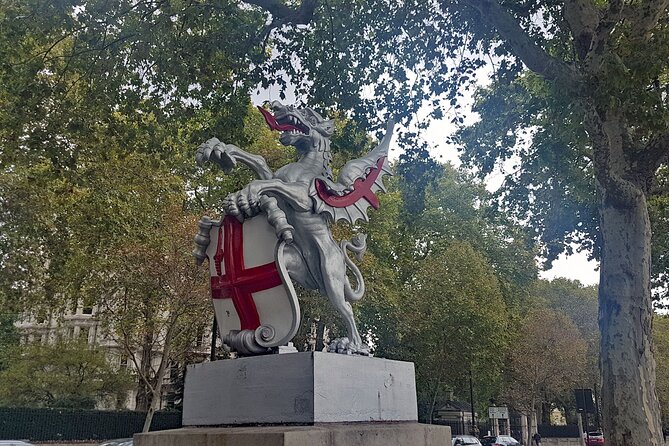
The next section brings you to the Bank of England, described on the walk as a seat of power connected with the City of Dragons and the buried river below. You spend only about five minutes here, so the point is not an extended architectural visit.
Instead, this is a symbolic pause. The Bank of England represents authority, money, and the modern power of the City. The dragon theme gives the site a second layer, linking civic identity with protective creatures from older stories.
You do not need to accept every mystical connection to enjoy this section. I find its value in the questions it raises: why do cities use animals as guardians, and why do dragon images appear so often around places of power?
A different sort of day out in London altogether:
- From London: Harry Potter Warner Bros Studio Tour
★ 4.7 · 26,588 reviews - London: Westminster to Greenwich River Thames Cruise
★ 4.5 · 22,836 reviews - London: Madame Tussauds London
★ 4.6 · 20,915 reviews - Stonehenge, Windsor Castle, and Bath from London
★ 4.5 · 18,662 reviews
Bow Bells, Cheapside, and lost trees
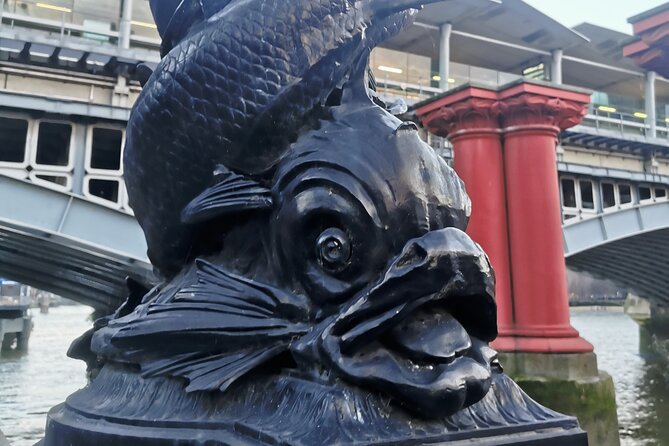
At St. Mary-le-Bow, the tour turns to the symbolism associated with Bow Bells. The church is best known to many people through the traditional idea of a Cockney, but this walk looks beyond the familiar phrase and examines sidelined symbols connected with the church.
The stop lasts around ten minutes. As with several churches on the route, the experience depends partly on what you can see on the day. Even when the doors are shut, the exterior and the guide’s explanation keep the church relevant.
Cheapside offers another short pause. Here, the focus is an old tree and the many trees that have disappeared from the City over time. This may sound like a small detail, yet it fits the route’s broader interest in what London has covered, moved, or forgotten.
The walk is strongest when these modest details are allowed to connect. A tree, a river, and a stone can all become reminders that the modern City replaced an older world rather than simply building on empty ground.
St. Paul’s Cathedral and the phoenix idea
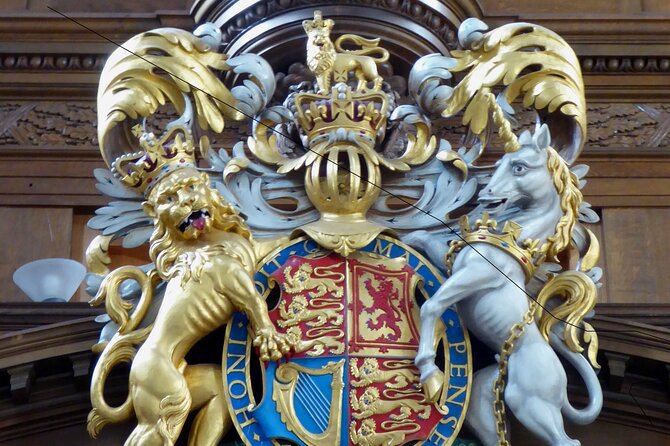
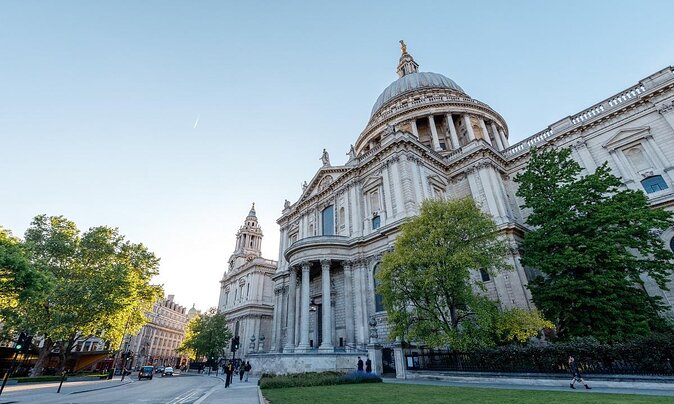
St. Paul’s is the grandest landmark on the route, but this tour does not treat it as a standard cathedral visit. You spend roughly ten minutes looking at its role as a place of ceremony and the image of the phoenix associated with it.
The phoenix gives the stop a clear theme of destruction and renewal. London has repeatedly suffered fire, war, demolition, and rebuilding, so the symbol fits the city’s long cycle of loss and recovery.
Keep your expectations clear. This is not a full guided tour of St. Paul’s Cathedral, and the stop is listed as free. You are examining its place in the story of London and its symbolism, not receiving an extended interior visit.
Medieval churches and the old Ludgate route
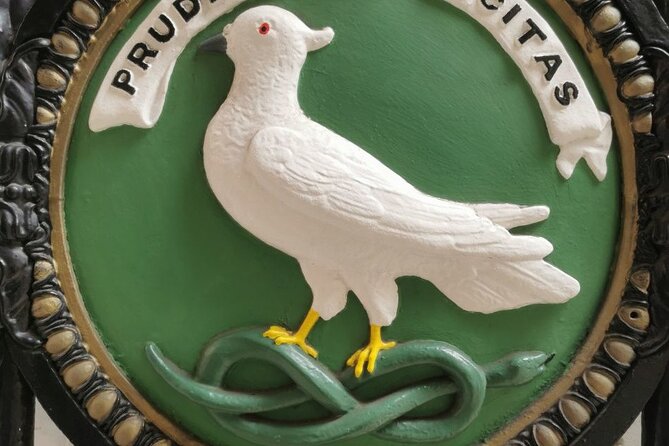
St. Martin-within-Ludgate receives more time than many of the earlier stops, about twenty minutes. Its long church history and older enigmas make it a useful place to slow down and consider how religious buildings can preserve layers from different periods.
After that, the route passes Ludgate Circus, where another lost river enters the story. The walk also recalls the king said to have given London its name. This is a short five-minute stop, but it helps connect geography, legend, and political memory.
The route does include a fair amount of church material. If you are mainly interested in dragons and Roman sites, the number of churches may be more than expected. On the other hand, these churches are exactly the kind of places you might pass without entering or even noticing, and their carvings and layouts provide much of the tour’s visual evidence.
St. Bride’s well and the older layer beneath Christianity
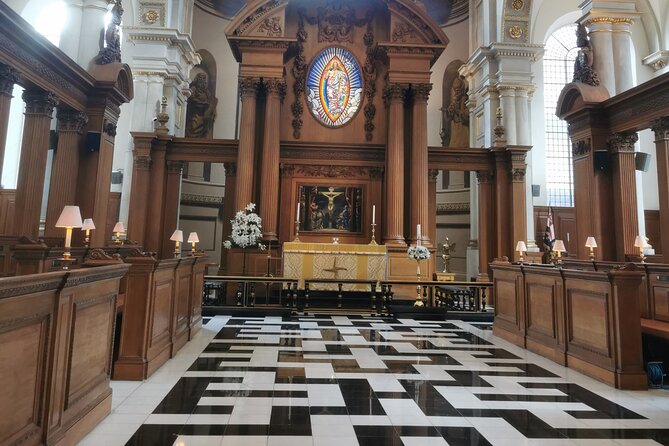
St. Bride’s Church is given about twenty minutes. The church has a pagan past in the tour’s telling and contains a well, making it one of the clearest places to consider how older sacred customs can continue beneath later religious structures.
This is where the tour’s spiritual side becomes most pronounced. Arjun discusses symbols and traditions without forcing you to accept one fixed meaning. You can listen, compare the ideas with what you already know, and decide how much weight to give each interpretation.
That open approach matters. The tour is not presented as a conventional academic lecture, but it also does not require you to treat every legend as fact. You are encouraged to think about how symbols survive, change, and gather new meanings.
St. Dunstan, Temple Church, and the Knights Templar
St. Dunstan in the West is another short stop, lasting around five minutes. Its medieval character and older symbolism fit the walk’s pattern of finding unusual clues in familiar parts of London.
Temple Church receives about twenty minutes and offers one of the route’s strongest historical anchors. Built by the Knights Templar, it was modeled on the Church of the Holy Sepulchre and is linked on the tour with esoteric ideas.
The church is also one of the places where timing matters. It may be closed to visitors, and a closure can change the experience from seeing the interior to hearing an explanation outside or viewing images on a phone. If entering Temple Church is essential to you, check conditions before booking.
Even without interior access, the site remains important. The Templars bring together crusading history, religious architecture, medieval power, and later speculation about secret knowledge. It is an ideal stop for anyone who enjoys the meeting point of documented history and legend.
Temple Bar Memorial and the final dragon
The tour ends at Temple Bar Memorial, beside the Royal Courts of Justice. This is the finishing point near City of London, London EC4A 2LT, rather than back at Cannon Street, so plan your onward journey from the western end of the route.
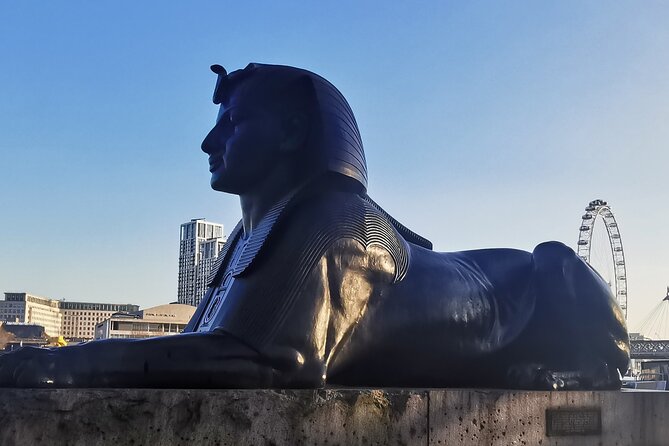
The memorial’s dragon is presented as the fiercest protector of the City. Its story reaches toward Beowulf, Tiamat, and St. George, bringing together different dragon traditions from literature, ancient mythology, and Christian legend.
It is a fitting final stop because the walk has spent the afternoon building a network of symbols. The dragon at the end is not just a figure to photograph. It gathers the tour’s main ideas: protection, power, ancient stories, city boundaries, and the way old images remain in public view.
Pace, walking effort, and practical value
The advertised duration is about two to three hours, with a 1:30 pm start. The route covers substantial ground across the City, but the frequent stops keep it from becoming a nonstop march.
You should still wear good walking shoes. One particularly useful feature is the rhythm of short explanations followed by movement, then longer pauses at places such as St. Martin-within-Ludgate, St. Bride’s, and Temple Church.
At $29.48 per person, the price is fair if you want a focused small-group experience rather than a broad introduction to London. You are paying for a guide’s research, interpretation, and time, not for a series of costly admission tickets. The free entry at the listed stops helps keep the overall cost down.
The value is strongest for repeat visitors and curious first-time visitors who have already seen the major sights. You receive a PDF of the locations afterward, which gives you a useful way to revisit places you could not enter or examine more closely.
The published rating is 4.9 out of 5 from 41 ratings, with 98 percent of customers recommending it. That high score fits the tour’s strongest qualities: Arjun’s enthusiasm, the intimate group size, the unusual subject, and the chance to see London through symbols rather than only dates and buildings.
There are two cautions. First, bank holidays and Sundays can mean that several interiors are closed. Second, the tour depends on good weather and a minimum number of bookings. If the operator cancels for either reason, you are offered another date or a full refund. You can also cancel for a full refund up to 24 hours before the start time.
Who should book this walk?
I would recommend it to anyone interested in folklore, Roman religion, sacred geography, church symbolism, dragons, or the parts of London most standard tours skip. Families can enjoy it too, especially if children like asking questions and looking for visual clues.
It is less suitable if you want a short, flat stroll with little discussion, or if you prefer only firmly established historical facts. The route asks you to consider interpretation as well as evidence.
Book it early if your schedule is fixed, since the experience is often reserved about 24 days ahead. Most of all, arrive ready to walk, listen, and look up at details you might otherwise miss. If that sounds like a good afternoon, this is an unusual and worthwhile way to spend three hours in London.
FAQ
Where does the London Mystical and Dragons Walking Tour start?
The tour starts at 113 Cannon Street, London EC4N 5AW, UK.
Where does the tour finish?
It ends at Temple Bar Memorial in the City of London, near the Royal Courts of Justice, at London EC4A 2LT.
What time does the tour begin?
The scheduled start time is 1:30 pm.
How long does the walking tour last?
The tour lasts approximately two to three hours.
How many people can join the tour?
The group has a maximum of eight travelers, allowing for a more personal experience with the guide.
Is the tour offered in English?
Yes. The tour is offered in English and uses a mobile ticket.
What happens if a site is closed or the weather is poor?
Churches and other locations may be closed on certain days, including bank holidays, so the guide may use images or spend more time at other stops. If poor weather causes the tour to be canceled, you are offered another date or a full refund. You can cancel for a full refund up to 24 hours before the start time.
Just added around London
- Up at The O2:Twilight Climb with Guided Tour with Panoramic Views★ 5.0 · 50 reviews
- Private Chauffeur-London Heathrow from/to Southampton Cruise Port★ 5.0 · 9 reviews
- Kensington Palace VIP Garden Tour with Royal High Tea★ 4.5 · 71 reviews
- Up at The O2: Sunset Climb with Guided Tour with Panoramic Views★ 5.0 · 110 reviews
- Secrets of the London Underground Small Group Walking Tour★ 4.5 · 38 reviews
- Urban Canvas: Exploring Shoreditch’s Vibrant Street Art★ 5.0 · 36 reviews
- Ultimate introduction to photography in Central London★ 5.0 · 19 reviews
- Full-Day Self-Guided Paris Tour from London by Eurostar with Seine River Cruise★ 3.5 · 22 reviews
London Walking Tours, compared.

Magical London: Harry Potter Guided Walking Tour
Read our review →

Tour for Muggles The Ultimate Harry Potter Walking Tour in London
Read our review →
Harry Potter Movies Walking Tour (Kids Go Free)
Read our review →
Changing of the Guard Guided Walking Tour in London
Read our review →
The Great British Rock and Roll Music Walking Tour
Read our review →