
Reviewed · THAMES RIVER CRUISES
Thames Beachcombing
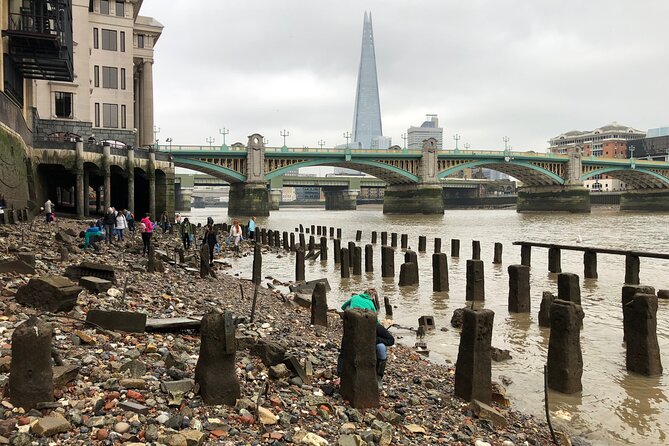
The best part of Thames Beachcombing is that London’s past is under your boots, not behind glass. At low tide, you walk the stony foreshore and look for clay pipes, pottery fragments, tiles, and other objects that have washed out of the riverbank. Guide Robert helps sort the useful clues from ordinary rubble and explains what each piece may tell you.
I like the hands-on search and the chance to hold an object linked to earlier Londoners. I also like the relaxed, small-group format, which gives you time to ask questions rather than simply follow a guide from one sight to the next.
The main drawback is that the exact foreshore location and start time change through the year, and your haul is never guaranteed. You need good footwear, a willingness to get muddy, and enough patience to enjoy searching even if your best find is a small tile fragment.
Key points at a glance
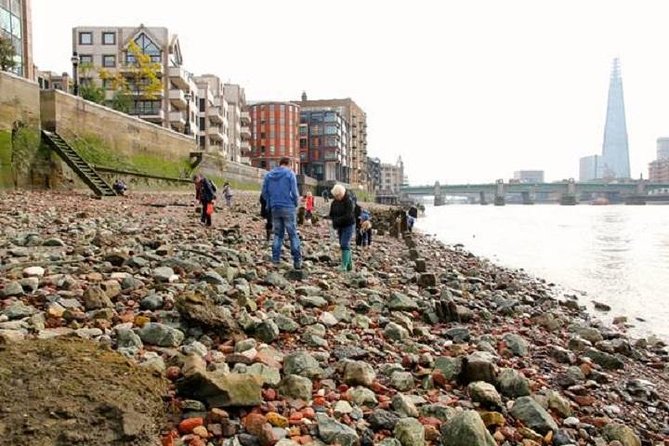
- Search the Thames at low tide: Spend roughly 1.5 hours looking along the foreshore for objects exposed by the falling water.
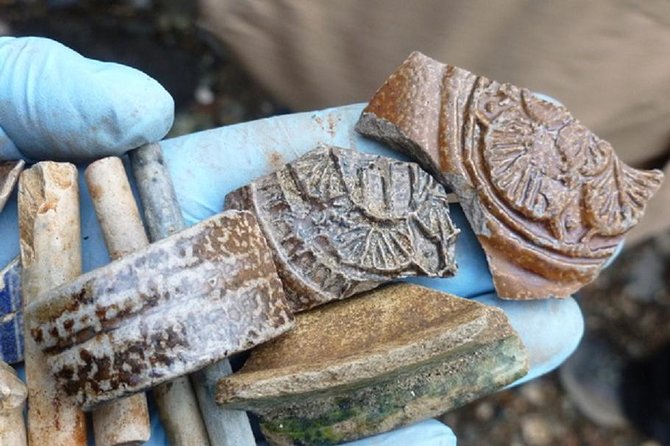
- Finds can include old clay pipes and tiles: Past participants have found pieces dating from before the Great Fire of London, along with pottery and roof tiles.
- Robert provides practical help: He shows you what to look for, helps identify objects, and adds historical context at the end.
- The location changes: Foreshore access varies by season and tide, so you receive the meeting place and time from the guide.
- Bring serious footwear: Wellington boots or hiking boots are recommended because the ground is stony and can be muddy.
- Good for families with older children: Children under 16 need an adult, and children as young as five have enjoyed the search, though the supplied gloves may be too large.
Why searching the Thames feels different from a normal London tour
Most London history tours ask you to look up at churches, bridges, and grand buildings. This one asks you to look down. The Thames foreshore is a rough, shifting place, and the objects you notice may be tiny: a curved bit of pottery, the stem of a clay pipe, or a patterned tile worn smooth by water.
That change in scale makes the activity work. You are not only hearing about London’s past. You are scanning the ground for physical traces of it. A simple fragment can prompt a discussion about household goods, building materials, trade, or the people who lived beside the river.
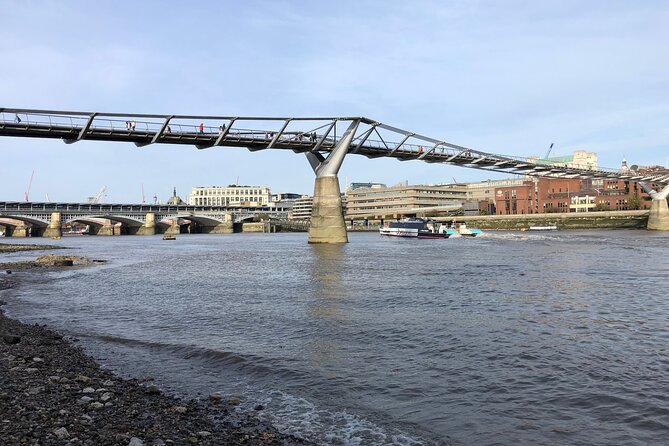
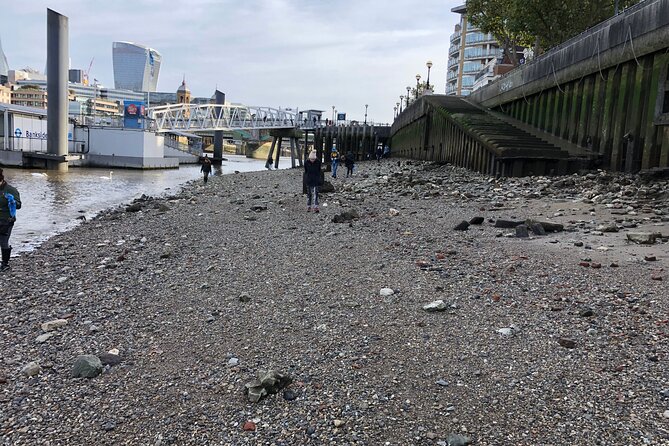
The experience is called mudlarking, though the exact ground may be more stony than muddy. You walk during low tide, when the receding river exposes parts of the foreshore that are hidden at higher water. The guide provides gloves and plastic bags, then gives you practical pointers on what may be worth a closer look.
You should set your expectations correctly. This is not a treasure hunt with a guaranteed prize at the end. You might find several interesting pieces, or you might spend much of the time learning how to spot the difference between an old fragment and modern debris. The pleasure comes from the search and the story attached to small discoveries.
More Thames River Cruises:
- London: Westminster to Greenwich River Thames Cruise
★ 4.5 · 22,836 reviews - London Big Bus Hop-On Hop-Off Tour with Optional River Cruise
★ 3.5 · 10,803 reviews - London: Westminster to Tower Bridge River Thames Cruise
★ 4.5 · 6,127 reviews
Meeting the Thames foreshore at low tide
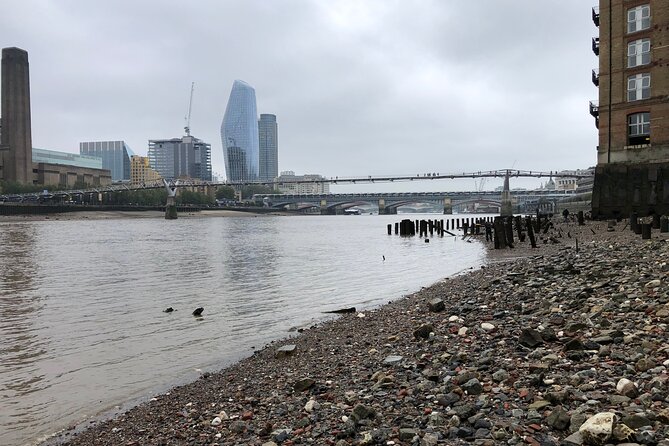
The activity lasts about two hours, with approximately 1.5 hours spent searching. The remaining time is used for introductions, guidance, and examining the objects found by the group.
The meeting place is in London, but the precise foreshore site changes during the year. Locations have included areas near Cannon Street, Putney Bridge, and other stretches of the river. That variety matters because different sections can produce different types of material, and the appearance of the shore depends on tides, weather, and recent river movement.
You are contacted with the exact location and start time. Do not plan this as a casual drop-in activity. Leave room in your schedule for the possibility that the timing will not fit neatly beside another fixed booking, since low tide controls the outing.
Once you arrive, you make your own way to the meeting point. The tour ends back there, rather than at a separate London attraction. The activity is near public transportation, but you still need to check the final location and allow time to reach it.
The first few minutes are important. Robert has used pictures to show families and other participants the kinds of objects they might spot. That simple briefing helps you get your eyes working before you start. Without it, the foreshore can look like a field of stones and broken brick.
What you actually do during the 1.5-hour search
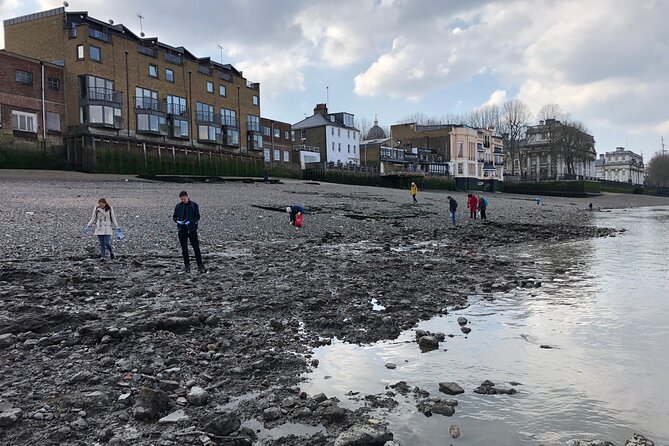
The search is leisurely rather than strenuous in the conventional sense, but the ground makes it a physical activity. You walk over uneven stones, bend down often, and may spend long periods crouching or standing in one place. A moderate level of fitness is recommended.
Your basic equipment is supplied: gloves and a plastic bag. The gloves protect your hands from sharp edges and wet grit, while the bag gives you somewhere to place possible finds as you continue. Since the standard gloves may be too large for a five-year-old, I would bring smaller child-sized gloves if you are taking a young child.
The guide does not promise that each object is old or valuable. Instead, you learn to inspect shape, material, color, and surface. A curved ceramic edge may be more interesting than a larger but newer-looking piece. A fragment that seems plain can become memorable once you learn that it may predate the Great Fire of London.
You are allowed to search with your eyes only, according to the activity details. That is an important point. This is careful beachcombing along the exposed shore, not an invitation to excavate the riverbank or dig into the mud. Keep your attention on what is visible on the surface and follow the guide’s instructions.
The pace gives you time to search without feeling hurried. One participant described the experience as almost meditative, which is a fair way to understand it. You may spend several minutes scanning a narrow patch, then move on when the tide or guide’s route requires it.
The objects you might find
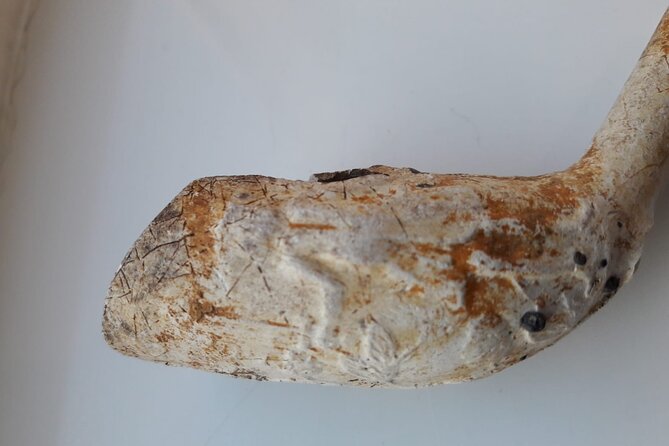
The possible finds are modest but full of character. Clay pipes are among the most appealing because even a broken stem can suggest how people used tobacco in earlier periods. Pottery fragments and roof tiles are also common examples, and their shape, glaze, or fabric can help with identification.
Some finds carry a more direct connection to a known moment in London’s story. Pieces of tile found on the foreshore have been identified as dating from before the Great Fire of 1666. That does not mean every tile you pick up has such an age, but it shows why a small, ordinary-looking piece can deserve attention.
One especially memorable type of discovery is an imprint left by a maker’s fingers while shaping a bowl handle. A mark like that changes the object from a nameless fragment into evidence of a person’s work. You are not just seeing an old piece of pottery. You are seeing the trace of a hand that touched it centuries ago.
At the end, Robert looks at the group’s finds and helps identify them. This is one of the strongest parts of the experience because the explanation continues after the searching stops. You can compare your piece with what others found and hear why one fragment matters more than another.
The guide also helps separate interesting objects from ordinary junk. That is useful if you are new to mudlarking and tempted to keep every unusual stone or bit of brick. You leave with a better eye, not simply a bag of random fragments.
A different sort of day out in London altogether:
- From London: Harry Potter Warner Bros Studio Tour
★ 4.7 · 26,588 reviews - Magical London: Harry Potter Guided Walking Tour
★ 4.7 · 22,044 reviews - London: Madame Tussauds London
★ 4.6 · 20,915 reviews - Stonehenge, Windsor Castle, and Bath from London
★ 4.5 · 18,662 reviews
Robert’s role makes the difference
The guide’s main job is not to march you around the river. It is to help you notice what is in front of you. Robert has been praised for being approachable, helpful, and good at identifying finds as they are picked up. That matters because the objects can be hard to interpret without context.
You can ask questions as you go, then return to the group at the end for a closer look at your discoveries. The best guide interaction here is informal. You search independently, but you are not left guessing when something catches your eye.
Most of the feedback about Robert is strongly positive, with repeated praise for his explanations and his ability to make the activity accessible. One account described a less energetic guide at Putney Bridge, so the quality of the outing may depend somewhat on who leads your particular session. Still, the experience is designed around direct guidance, and Robert is the named guide associated with many of the strongest experiences.
The group size is intended to be small, with no more than 15 people described for the activity. The additional booking information gives a maximum of 20, so the practical group size may vary. Either way, ask yourself how much personal attention you need. A smaller group is helpful when everyone wants individual help identifying finds.
Why this works for families
Mudlarking has a rare advantage for families: the activity gives children a simple mission. Look carefully, pick up only what is safe and allowed, and bring it back for identification. That is easier for many young children to follow than a long indoor talk about London history.
Children under 16 must be accompanied by an adult. Families with children aged five, eight, and nine have enjoyed the search, and even a five-year-old stayed involved for the full activity. The guide’s opening pictures help children understand what they are seeking before the group starts.
There are a few practical limits. The shore is uneven, the gloves may not fit small hands, and children need to manage mud and wet surfaces. You should also be ready to supervise closely near the river. The provided details call for a moderate fitness level, and this is not a pushchair-friendly sightseeing walk.
For families, the activity works best when you treat the finds as clues rather than prizes. A child may be thrilled by a clay pipe fragment, while an adult may be more interested in a tile from before 1666. The group discussion gives everyone a chance to learn from each other’s discoveries.
Clothing, comfort, and timing
Wear Wellington boots or hiking boots. Ordinary trainers are a poor choice for a stony, muddy foreshore, especially if the weather has been wet. Clothing that can tolerate dirt is also sensible, though the stated dress guidance focuses on footwear.
The tour requires good weather and may be canceled if conditions are poor. In that case, you are offered another date or a full refund. Keep this in mind when planning it as the centerpiece of a tightly scheduled London day.
The changing tide controls the start time. You should wait for the guide’s contact with the exact time and location rather than relying on a general London meeting point. Confirmation is sent within 48 hours of booking, subject to availability.
The activity is mobile-ticketed and has no extra admission charge listed. You make your own way to the meeting point, receive the gloves and bag there, search for around 1.5 hours, and finish at the same meeting area.
Is $41.41 a fair price?
At $41.41 per person, this is not the cheapest way to spend two hours in London, but the comparison should not be with a free walk along the river. You are paying for a guide who can explain the foreshore, help identify finds, organize the search around the tide, and provide equipment.
The value is strongest if you care about history and enjoy active discovery. The price is harder to justify if you expect a major artifact, a formal museum-style lecture, or a famous landmark at every stage. The site changes, the ground is plain, and the experience depends on what the tide has exposed.
I think the price works for people who want something personal and unusual. You are not buying a polished attraction with a fixed display. You are buying time, guidance, and the chance to connect a small object with London’s past.
The activity is often booked well in advance, around 67 days on average. That suggests you should reserve early if the timing matters to you, especially since the low-tide schedule limits the available sessions.
Who should book this experience
I would choose Thames Beachcombing for:
- History fans who prefer handling real fragments to reading labels
- Families with children who enjoy searching and collecting clues
- Visitors who have already seen the major central sights and want a different side of London
- People who like slow, focused activities rather than packed sightseeing
- Anyone curious about how the river has shaped the city and carried its discarded objects
I would skip it if you dislike mud, uneven walking, bending down, or uncertain results. It also may not suit a traveler who needs a fixed start time, a fully accessible surface, or a guaranteed collection of impressive finds.
The experience is at its best when you accept that the smallest object may be the most interesting. A worn tile, a pottery handle with a fingerprint, or a broken clay pipe can carry more meaning than a large but anonymous souvenir.
Should you book Thames Beachcombing?
Book it if you want a two-hour London activity with real participation, a flexible attitude, and a taste for small discoveries. Robert’s help with identification is a major part of the value, and the chance to find pottery, tiles, or clay pipes linked to earlier London can make the outing memorable.
Before booking, check the weather, allow flexibility for the tide-based meeting time, and bring proper boots. If you are traveling with young children, bring smaller gloves. For the right person, this is one of the more unusual ways to meet London’s past: look down, search slowly, and let the river show you what it has carried.
FAQ
How long does Thames Beachcombing last?
The experience lasts approximately two hours. Around 1.5 hours is spent searching the Thames foreshore, with the rest used for guidance and identifying finds.
Where does the activity take place?
It takes place at different sections of the Thames foreshore in London during the year. The guide provides the exact meeting location and time because they change.
What can I find on the foreshore?
You might find clay pipes, pottery fragments, roof tiles, and other objects visible on the surface. Some participants have found tiles dating from before the Great Fire of London.
Are gloves and bags provided?
Yes. The activity includes gloves and plastic bags for the search.
What should I wear?
Wear Wellington boots or hiking boots because the foreshore is stony and may be muddy. You should also wear clothing suitable for outdoor conditions.
Can children join the activity?
Yes. Children under 16 must be accompanied by an adult. Children as young as five have taken part, though the supplied gloves may be too large for very young children.
Is the exact start time fixed?
The time changes during the year because the activity takes place at low tide. The guide contacts you with the specific time and location.
What happens if bad weather cancels the tour?
If poor weather causes a cancellation, you are offered a different date or a full refund. You can also cancel for a full refund if you do so at least 24 hours before the start time.
Just added around London
- Up at The O2:Twilight Climb with Guided Tour with Panoramic Views★ 5.0 · 50 reviews
- Private Chauffeur-London Heathrow from/to Southampton Cruise Port★ 5.0 · 9 reviews
- Kensington Palace VIP Garden Tour with Royal High Tea★ 4.5 · 71 reviews
- Up at The O2: Sunset Climb with Guided Tour with Panoramic Views★ 5.0 · 110 reviews
- Secrets of the London Underground Small Group Walking Tour★ 4.5 · 38 reviews
- Urban Canvas: Exploring Shoreditch’s Vibrant Street Art★ 5.0 · 36 reviews
- Ultimate introduction to photography in Central London★ 5.0 · 19 reviews
- Full-Day Self-Guided Paris Tour from London by Eurostar with Seine River Cruise★ 3.5 · 22 reviews
Thames River Cruises, compared.

Westminster to Greenwich River Thames Cruise
Read our review →
London Big Bus Hop-On Hop-Off Tour with Optional River Cruise
Read our review →
Westminster to Tower Bridge River Thames Cruise
Read our review →
London Eye, River Cruise, & Hop-on Hop-off Bus Tour
Read our review →
Tootbus Hop-on Hop-off with optional River Cruise
Read our review →
Thames River Cruise with Optional London Eye Ticket
Read our review →
Big Bus Hop-on, Hop-off with Optional River Cruise
Read our review →Browse the lists this tour appears in