
Reviewed · LONDON WALKING TOURS
Secrets of Underground Walking Tour with London Transport Museum
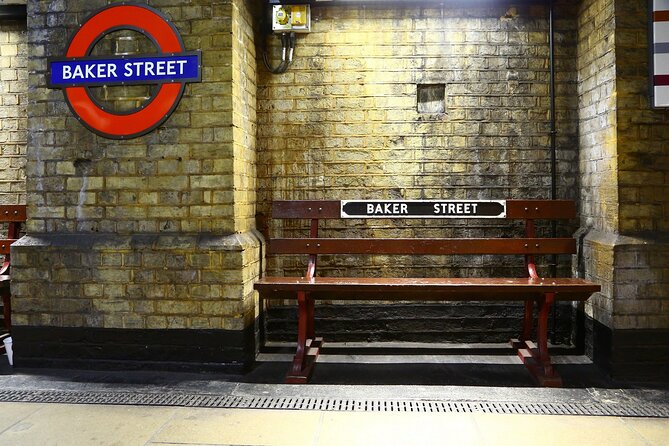
The best part of this tour is seeing the Tube as a living piece of London history, not just a way to get across town. You follow the line from Baker Street to Westminster, hear stories through a personal headset, and examine former stations such as Down Street, which closed in 1932.
I like the clear route through central London and the fact that the London Transport Museum is included afterward. I also like that guides such as John bring the stations to life with practical stories and humor. The main drawback is important: you do not enter every so-called ghost station, and the museum ticket has caused confusion for some visitors, so check the redemption details before you go.
Key points to know before you book
- Start at Baker Street: Meet at 1:00 pm by the Sherlock Holmes statue outside Baker Street Underground Station.
- See former station sites: Down Street is discussed from outside, rather than explored as an open underground station.
- Hear every word: A personal audio headset is supplied for the walking portion.
- Finish at Westminster: The guided route ends around 3:30 pm at Westminster Station.
- Continue to Covent Garden: The London Transport Museum visit is independent, and you make your own way there.
- Budget for Tube travel: You need an Oyster card, Travelcard, or contactless payment card for Zone 1.
Why this Tube tour is worth your afternoon
London’s Underground can feel like a maze of tiled corridors, escalators, and hurried commuters. This tour gives those places a story. Baker Street connects to the first underground railway, Oxford Circus reveals the planning behind the Victoria line, and Westminster shows how the Tube was built into one of London’s most important political districts.
The format suits anyone who wants more than a quick museum visit. You spend about two and a half hours moving between stations with a guide, then have time for the transport museum at your own pace. That combination gives you street-level context first and displays, vehicles, and objects afterward.
The price is about $32, which is fair if you use both parts of the experience. The guided walk, headset, and museum entry together offer solid value, but the calculation changes if you only want the walking tour. You must also pay for your own Zone 1 transport, and lunch is not included.
The tour group can contain up to 25 people. That is not a tiny private walk, but the headset should help you follow the commentary even when the group is near a busy station.
More London Walking Tours:
- Magical London: Harry Potter Guided Walking Tour
★ 4.7 · 22,044 reviews - London: The Original Jack the Ripper Walking Tour
★ 4.7 · 7,833 reviews - Tour for Muggles The Ultimate Harry Potter Walking Tour in London
★ 5.0 · 4,684 reviews
Baker Street and the railway beneath London
The meeting point is easy to identify: the Sherlock Holmes statue outside Baker Street Station. Arrive with enough time to find the statue and settle in before the 1:00 pm start.
Baker Street is an excellent opening stop because it links directly to the birth of underground rail travel. It was one of the original stations on the Metropolitan Railway, opened in 1863 as part of the world’s first underground railway.
You will not simply be told that the Tube is old. You will see how the station’s location and design connect to the early growth of London’s railway network. This gives the rest of the tour a useful starting point. The Underground was not created all at once. Different companies built different lines, stations changed names, and connections grew as London expanded.
The first stop lasts about 30 minutes. The admission note says no separate ticket is included, but you are using the public station as part of the walking tour. Your Zone 1 travel payment is required for the route.
Oxford Circus and the logic of interchange
Oxford Circus is a good place to understand how the Tube developed for a changing city. The Victoria line platforms opened on March 7, 1969, as part of the second extension from Warren Street to Victoria.
The station was planned with cross-platform interchange in mind. That means passengers could change trains across the platform rather than climb through a complicated passage system. It is a small piece of transport design, but it explains why some Tube stations feel easy to navigate while others feel like underground puzzles.
This stop lasts roughly 30 minutes. Expect a focus on construction, connections, and the way the railway was adapted over time. You are still in one of London’s busiest shopping districts, so this is also a reminder that the Underground works under a city that never stops changing.
I find stops like Oxford Circus more useful than a simple parade of old stations. They show you how engineers tried to solve everyday problems: moving people between lines, managing limited space, and keeping an old network useful.
Down Street, the former station near Green Park
At Green Park, the tour turns to Down Street Station, one of the places that gives the experience its secrets of the Underground title. Down Street opened in 1907 on what became the Piccadilly line. It sat between Dover Street, now Green Park, and Hyde Park Corner.
The station closed in 1932 because it had little use and was too close to neighboring stations. Its story is a useful lesson in London transport. A station could be beautifully placed on a line and still fail if another stop served the same area more conveniently.
There is a detail here you should understand before booking. The tour does not provide general access to a network of abandoned platforms and underground rooms. The former station is discussed and viewed from outside, along with other disused station locations. If you are expecting to walk through sealed platforms, you may feel the description promises more than the actual route delivers.
Still, Down Street is a worthwhile stop because it shows that the Tube is full of places most passengers pass without noticing. The guide can explain what was there, why it closed, and how the surrounding stations affected its future.
More British Museum Tours:
- Tower of London and Crown Jewels Exhibition Ticket
★ 4.5 · 6,677 reviews - London: Chelsea Football Club Stadium and Museum Tour
★ 4.8 · 4,576 reviews - Chelsea FC Stadium Tours and Museum
★ 5.0 · 1,908 reviews - London: British Museum Guided Tour
★ 4.3 · 1,182 reviews
Piccadilly Circus and the early Tube companies
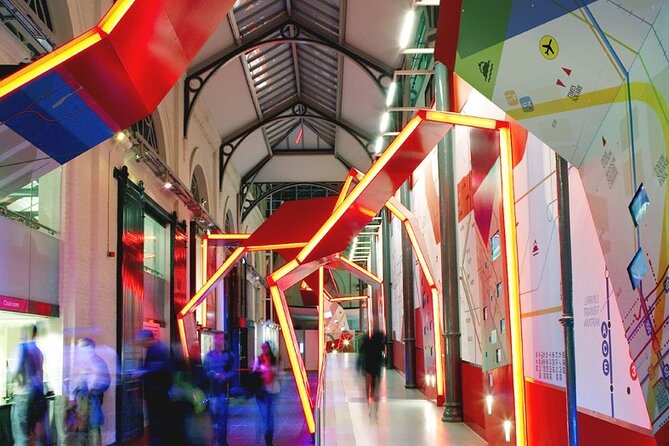
Piccadilly Circus brings you to another famous central station. It opened in two stages: the Baker Street and Waterloo Railway section began service on March 10, 1906, while the Great Northern, Piccadilly and Brompton Railway platforms opened on December 15 of that year.
The names may sound like a tangle, and that is part of the point. London’s Underground was built by several railway companies, later joined into the network you know today. The modern line names hide a complicated past of mergers, extensions, and competing routes.
This stop works well for visitors who want to understand why Tube stations differ so much from one another. One station may reflect an early railway company, another a later upgrade, and another a major interchange built around new passenger needs.
Piccadilly Circus is also a practical place to notice the difference between a famous London landmark above ground and the transport system below it. The tour treats the station as a piece of infrastructure with its own story, rather than using it only as a route between attractions.
Embankment and the Thames-side railway
The route continues to Victoria Embankment and Embankment Station. The Embankment itself runs along the north bank of the Thames from Westminster toward the City of London. Much of this riverfront was developed in the 19th century by reclaiming marshy land along the river.
That setting matters because London’s Underground was shaped by the city’s rivers, streets, and limited building space. The station is not an isolated engineering project. It belongs to a wider effort to make central London more usable, connected, and accessible.
You will spend about 30 minutes here. The stop adds a change of scenery after several busy central interchanges. It also gives the guide room to connect transport development with the reshaping of the riverfront.
Bring comfortable shoes. The tour is described as requiring a moderate level of fitness, and you will be walking between stations and spending time on your feet. The experience is not a strenuous hike, but it is not a seated sightseeing trip either.
Westminster and the first underground railway
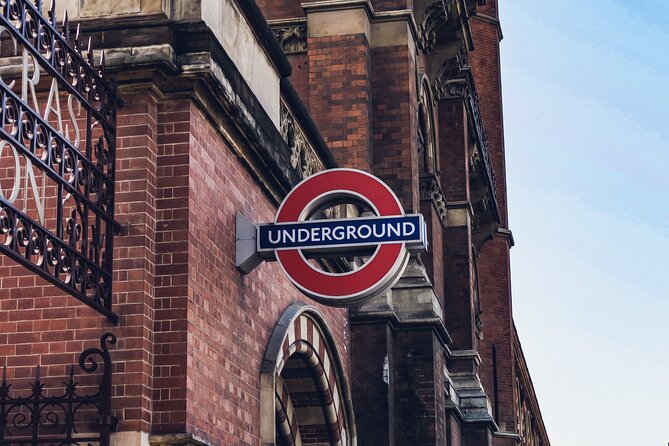
Westminster is the final guided stop and one of the most striking places to end. Westminster Station first opened as Westminster Bridge on December 24, 1868. It was operated by the steam-powered District Railway, now part of the District line, when the line first opened from South Kensington.
The early station was reached by a passage from Bridge Street and a pedestrian subway beneath the road. That detail helps explain how different early underground travel was from the system you use today. Stations had to fit into existing streets and buildings, and passenger access was often more awkward than modern London visitors expect.
The guided walk finishes at Westminster Underground Station at about 3:30 pm. This is not the end of your London transport day, though. The museum visit is separate, and you must make your own way to Covent Garden.
That split is worth noting when you plan your afternoon. You are not escorted from Westminster to the museum. You will need to allow time for your own Tube journey and use your Oyster card, Travelcard, or contactless payment card.
London Transport Museum at Covent Garden
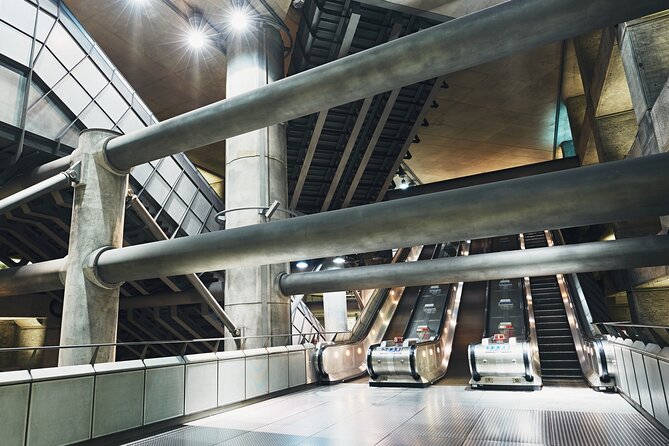
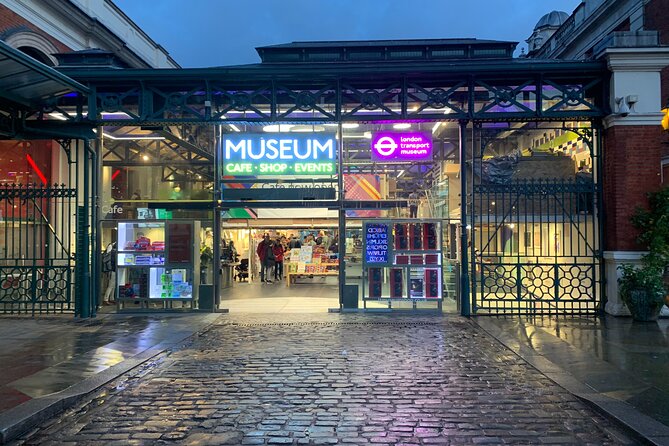
Your admission to the London Transport Museum is included, but the museum visit is independent. The address is Covent Garden Piazza, and the nearest station is Covent Garden. It is also within about a 4 to 10 minute walk of Leicester Square, Holborn, Charing Cross, and Embankment stations.
The museum portion is scheduled for about an hour and a half. That is enough time for a focused visit, though you may want longer if transport history is your main interest.
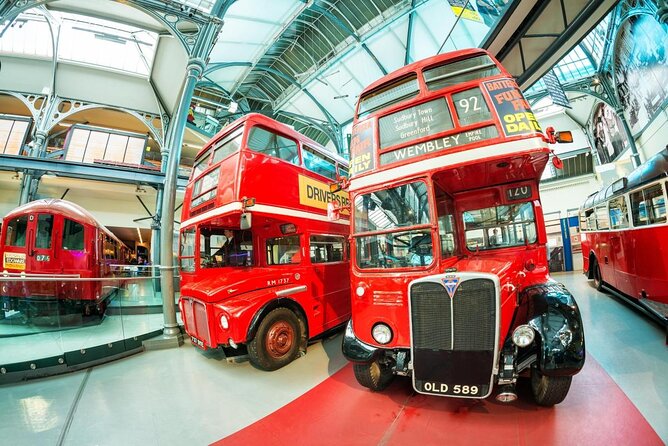
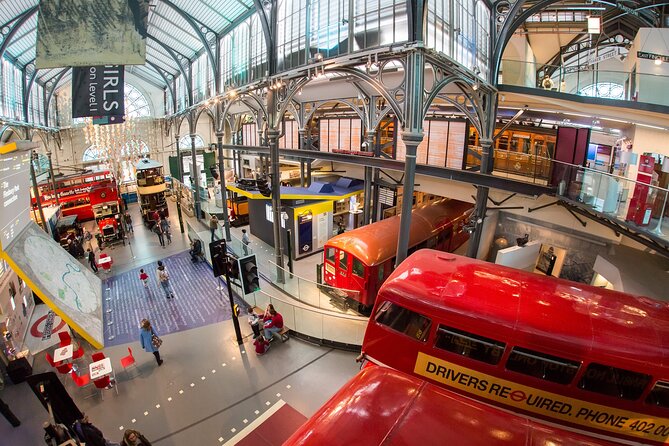
Inside, you can explore London’s transport over the last 200 years, including the people who worked on and used the system. The displays also look toward future transport technology, so the museum is not limited to old trains and vintage signs.
I like having the museum after the walking route. By then, you have heard the story of the Underground in the places where it developed. Museum displays can make more sense when you already understand the difference between the early Metropolitan Railway, later lines, and former stations such as Down Street.
There is one practical warning. Some ticket holders have had trouble redeeming the included museum admission and were asked to pay an additional amount. The official arrangement says museum entry is included, but I would confirm the redemption process with the tour provider before the day. Keep your booking details available, and do not assume that the museum staff will automatically recognize a third-party voucher.
What the guide and headset add
The guide is central to the experience. John has led departures and is described as entertaining as well as well informed about the Underground. A good guide can make a station entrance, a closed platform, or a line change feel significant rather than ordinary.
The personal audio headset is provided for the Underground tour only. That matters in a group of up to 25, especially near busy streets and station entrances. You can keep listening without standing directly beside the guide.
The museum has no guide. You visit it on your own after the walking portion. This gives you freedom to move quickly or linger, but it also means the experience becomes less structured after Westminster.
Timing, transport, and what to bring
The guided section begins at 1:00 pm and ends around 3:30 pm. The full experience takes about five and a half hours when you include the museum and the time needed to reach Covent Garden.
You need your own Zone 1 payment method. An Oyster card, Travelcard, or contactless payment card is accepted for participating in the tour. This cost is not included in the $32 price.
Plan a light meal before or after the walk, since lunch is not provided. Wear shoes suited to a few hours on foot, and keep your schedule flexible enough to travel from Westminster to Covent Garden before entering the museum.
The tour does not include hotel pickup or drop-off. You meet at Baker Street and finish at Westminster, so it works best if you are already comfortable using central London’s public transport.
Who should book this experience?
I would recommend it to first-time London visitors who want a clear introduction to the Underground, transport fans, and anyone who enjoys the stories behind ordinary city places. It is also a good choice if you would rather learn through a moving walk than spend an entire afternoon in a museum.
Families may enjoy the abandoned station stories and the visual variety, though younger children must be comfortable walking for several hours. The group size and city setting mean this is not a private, slow-paced outing.
You should think twice if you specifically want access inside sealed platforms or former stations. The route visits sites connected with disused stations, but the experience does not offer broad public access to ghost platforms.
The tour also may not suit you if you dislike changing plans between a guided walk and an independent museum visit. The museum is included, but getting there and handling the admission process is your responsibility.
Should you book the Underground tour?
Book it if you want a practical introduction to how London’s Tube was built, changed, and fitted into the city. The strongest parts are the route from Baker Street to Westminster, the station-by-station commentary, and the chance to continue at the London Transport Museum.
At $32, the experience is good value when you use the museum entry and appreciate guided context. It is less compelling if you only want to see abandoned stations, since the former sites are not generally entered.
Before booking, confirm the museum voucher instructions and make sure you have Zone 1 transport payment ready. With those details handled, this is a useful, unusual way to spend an afternoon beneath and around central London.
FAQ
Where does the Secrets of the Underground tour begin?
It begins at 1:00 pm at the Sherlock Holmes statue outside Baker Street Underground Station, on Marylebone Road.
Where does the guided walking tour finish?
The guided portion finishes at Westminster Underground Station at approximately 3:30 pm.
Is entry to the London Transport Museum included?
Yes, admission to the London Transport Museum is included. The museum visit is independent, without a guide.
Where is the London Transport Museum?
The museum is at Covent Garden Piazza, London, WC2E 7BB. Covent Garden is the nearest Underground station, and the museum is also within about a 4 to 10 minute walk of several other central stations.
Is transport from Westminster to the museum included?
No. You make your own way from Westminster Station to Covent Garden, and the transport cost is not included.
Do I need an Oyster card or contactless payment card?
Yes. You need an Oyster card, Travelcard, or contactless payment card for Zone 1 to take part in the tour.
Are former ghost stations entered during the tour?
No general access to ghost stations is provided. The route includes information about disused stations and views of some former station sites from outside.
Is a headset provided?
Yes. A personal audio headset is provided for the Underground walking portion of the tour.
How large can the group be?
The tour can include a maximum of 25 people.
Can I cancel for a full refund?
You can cancel up to 24 hours before the experience for a full refund. Cancellations or changes made within 24 hours are not refunded or accepted.
Just added around London
- Up at The O2:Twilight Climb with Guided Tour with Panoramic Views★ 5.0 · 50 reviews
- Private Chauffeur-London Heathrow from/to Southampton Cruise Port★ 5.0 · 9 reviews
- Kensington Palace VIP Garden Tour with Royal High Tea★ 4.5 · 71 reviews
- Urban Canvas: Exploring Shoreditch’s Vibrant Street Art★ 5.0 · 36 reviews
- Up at The O2: Sunset Climb with Guided Tour with Panoramic Views★ 5.0 · 110 reviews
- Secrets of the London Underground Small Group Walking Tour★ 4.5 · 38 reviews
- Ultimate introduction to photography in Central London★ 5.0 · 19 reviews
- Full-Day Self-Guided Paris Tour from London by Eurostar with Seine River Cruise★ 3.5 · 22 reviews
London Walking Tours, compared.

Magical London: Harry Potter Guided Walking Tour
Read our review →

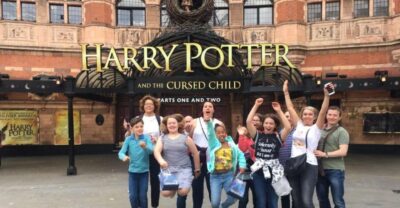
Tour for Muggles The Ultimate Harry Potter Walking Tour in London
Read our review →
Harry Potter Movies Walking Tour (Kids Go Free)
Read our review →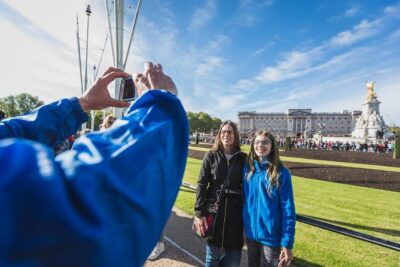
Changing of the Guard Guided Walking Tour in London
Read our review →
The Great British Rock and Roll Music Walking Tour
Read our review →
Jack the Ripper Walking Tour – Ripper Vision Tours
Read our review →Browse the lists this tour appears in