Reviewed · TOURS
London: Architecture Tour of Benjamin Franklin House
Benjamin Franklin’s London home is not a grand palace. It is a narrow, five-storey townhouse on Craven Street, close to the Thames, where Franklin lived for 16 years. That modest setting is exactly the appeal. You get a close look at the rooms, stairs, and domestic life behind one of America’s best-known founders.
I like the way the tour links Franklin’s political life with the building itself, rather than treating the house as a simple biography museum. I also like the chance to try the glass armonica, an unusual instrument Franklin invented. The main drawback is practical: the house has steep, uneven stairs, no wheelchair access, and a slightly awkward entrance that may interrupt the start of the tour.
Key points about the Benjamin Franklin House tour
- Franklin’s only remaining home: He rented space here for 16 years, from the 1730s-era townhouse until he left London in 1776.
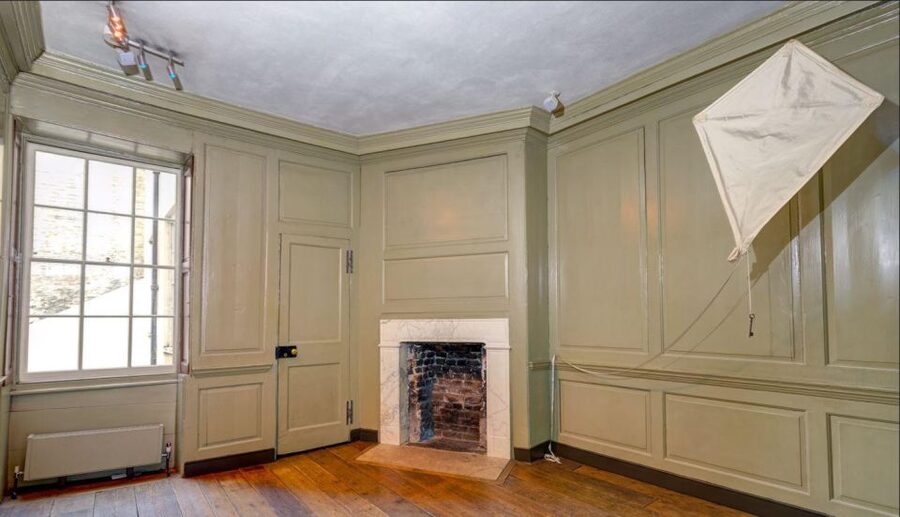
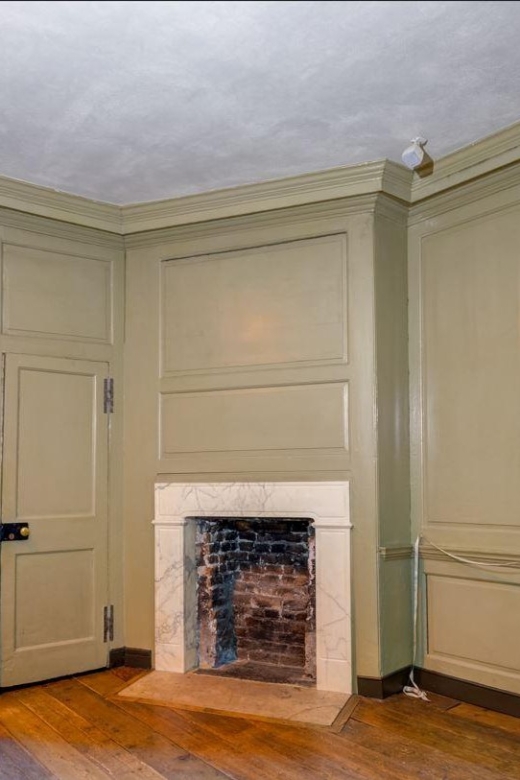
- A real Georgian interior: The Grade I listed building retains original Georgian and Victorian features, with rooms spread across five floors.
- Craven Street Bones: Learn how surgeon Hewson used part of the house for an anatomy school and why human bones were found beneath it.
- Franklin’s London circle: Hear about Margaret Stevenson, her family, and the political visitors who met Franklin in her parlour.
- An instrument you can play: The tour ends in the Glass Armonica Room, where you may try a tune on Franklin’s unusual invention.
- A short, focused visit: The guided tour lasts about one hour, with questions welcomed at the end and time for photographs.
Finding Franklin at 36 Craven Street
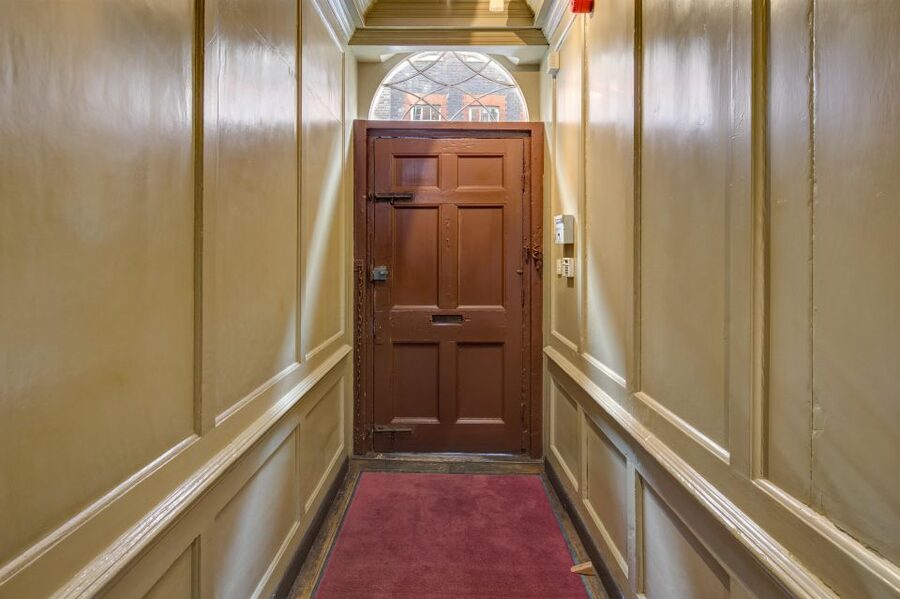
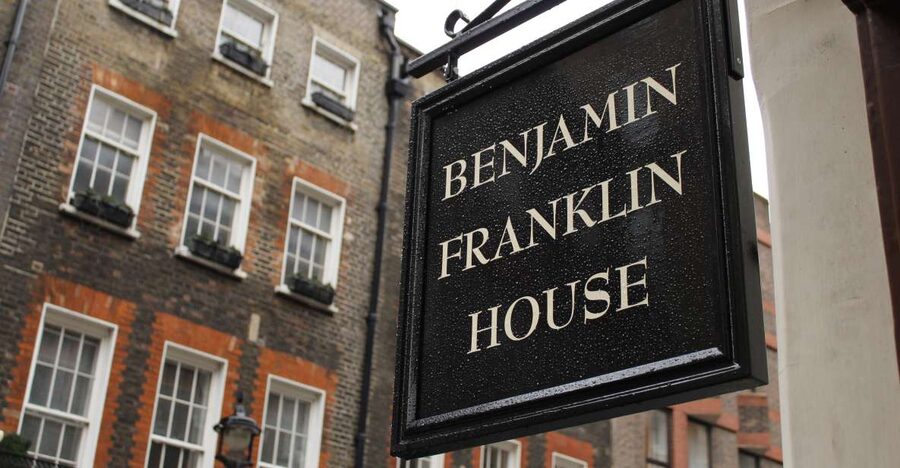
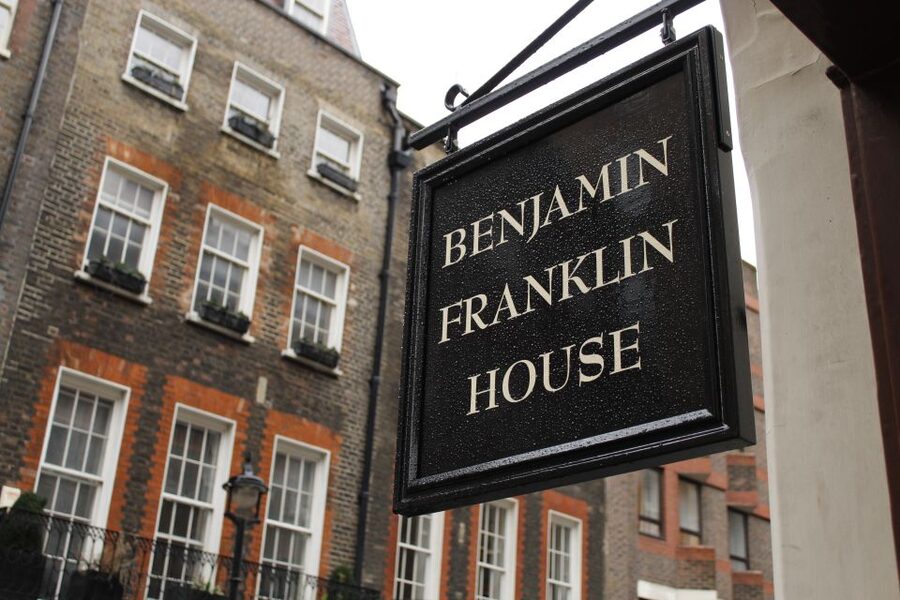
The tour begins at 36 Craven Street, where you knock on the door beneath the Benjamin Franklin House sign. The address is easy to miss if you are hurrying along the street, so give yourself a few minutes to locate it.
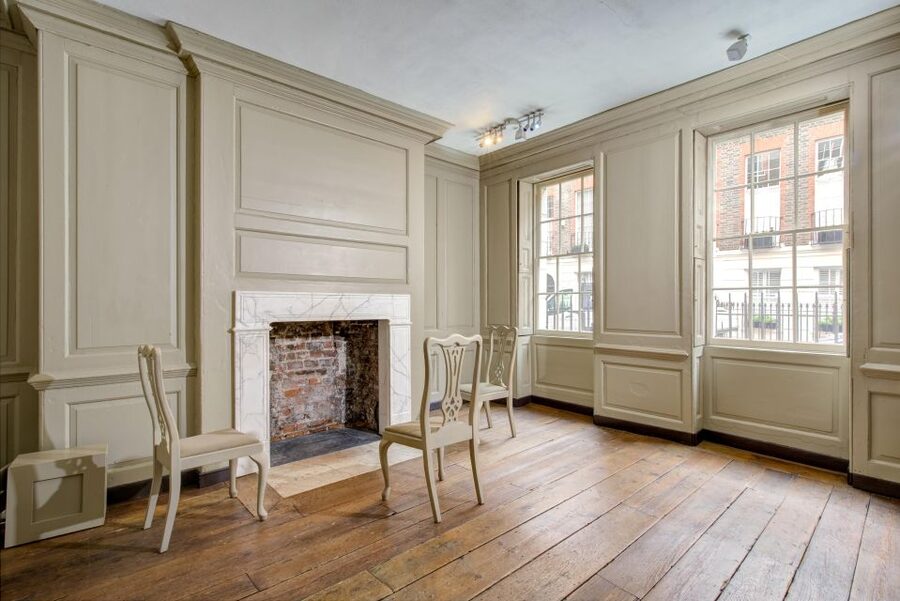
This is a useful place to reset your expectations. You are not entering a huge museum with broad galleries and dozens of displays. You are entering a preserved townhouse, and the building itself carries much of the story. Narrow rooms, compact stairways, sloping floors, and changing levels give you a feel for the house as a place where people lived and worked.
The home is Grade I listed, a designation reserved for buildings of exceptional architectural interest in England. That status also explains some of the limits. The house has been conserved rather than rebuilt for modern convenience, so the floors and stairs are uneven. Handrails are fitted on all staircases, and seating is available in each historic room.
The entry can be a little awkward. One person specifically noted that the way into the house occasionally interrupted the tour. It is a minor issue, but it is worth knowing so you do not expect a polished, large-museum entrance.
Other London outings people book alongside this one:
- From London: Harry Potter Warner Bros Studio Tour
★ 4.7 · 26,588 reviews - London: Westminster to Greenwich River Thames Cruise
★ 4.5 · 22,836 reviews - Magical London: Harry Potter Guided Walking Tour
★ 4.7 · 22,044 reviews
The kitchen and Franklin’s London diet
The tour begins by setting the house in its earlier Georgian context. In the kitchen, the guide brings in the subject of food, including Franklin’s opinions about the London diet.
This is a smart way to start because it takes Franklin off the monument pedestal. You begin with ordinary concerns: what people ate, how a townhouse functioned, and what daily life may have felt like. The kitchen also helps explain the difference between reading about Franklin in a book and seeing the physical setting where his domestic life unfolded.
The tour does not treat architecture as a list of dates. Instead, the guide connects the rooms to the people who used them. As you move through the building, you learn how the house changed from the 1730s to the modern conservation project that allowed it to open in 2006.
That makes the visit useful for two kinds of readers. If you are interested in Franklin, the rooms give his London years a clear setting. If you care more about historic buildings, his story provides a reason to examine the structure closely.
Margaret Stevenson’s parlour and Franklin’s London life
Upstairs, the story turns to Margaret Stevenson, the wealthy widow from whom Franklin rented rooms. Her parlour is one of the most important stops because it shows that Franklin’s London life was not spent in isolation.
Franklin met influential people there and discussed current affairs. The guide also covers his relationship with the Stevenson family and the connection between his London household and his family in America. This adds a personal layer to what could otherwise become a dry political biography.
I particularly like this part of the tour because it shows Franklin as a resident and family friend, not only as a scientist, printer, diplomat, or future statesman. The house had a social life. Conversation, family ties, and political discussion all occupied the same rooms.
The parlour is also where the architecture and biography meet most naturally. You are looking at a room that served as a domestic and social setting while hearing about the people who gathered there. The experience is intimate rather than spectacular, so it rewards visitors who enjoy close observation and careful storytelling.
Franklin’s parlour and 16 years in London
The next major stop is Franklin’s own parlour, the floor he rented for 16 years. This is the heart of the visit.
Here, the guide covers his experiments, political beliefs, political actions, and eccentric personality. The long period matters. Franklin was not simply passing through London for a brief diplomatic mission. He lived at Craven Street for a significant part of his adult life, and the house became his London base.
You also learn why he came to London and how his time there fitted into his wider career. The tour follows him from his role in London through to his departure in 1776, when he returned to America to sign the Declaration of Independence. He never returned to London.
That ending gives the house a strong sense of change. Franklin left behind the Stevenson family and the rooms where he had spent so many years. A small domestic address is placed against a major political turning point, without losing sight of the personal details.
The scale of the room helps. You are not standing in a grand ceremonial hall. You are in the compact space Franklin rented, which makes his London life feel practical and lived-in. Expect interpretation and discussion rather than a long line of original objects or theatrical effects.
A different sort of day out in London altogether:
- London: Madame Tussauds London
★ 4.6 · 20,915 reviews - Stonehenge, Windsor Castle, and Bath from London
★ 4.5 · 18,662 reviews - London: Warner Bros. Studio Tour with Transfers
★ 4.7 · 17,586 reviews - London: Tower Bridge Entry Ticket
★ 4.7 · 15,560 reviews
The Craven Street Bones and Hewson’s anatomy school
One of the more surprising parts of the house is the story of the Craven Street Bones. The building is linked to surgeon Hewson’s anatomy school, and the tour explains how human bones came to be associated with the site.
This subject is not treated as a gimmick. It adds another layer to the building’s past and shows that the house had a life beyond Franklin’s residence. The anatomy-school story may be especially interesting if you like the less tidy side of historic properties, where a single address can hold several different uses across time.
It also gives you a better sense of why conservation work matters. Historic buildings rarely preserve one story in perfect isolation. They accumulate changes, repairs, occupants, and sometimes uncomfortable discoveries. At Benjamin Franklin House, the bones help connect the physical structure to a later chapter in its history.
The tour presents this material as part of the house’s architectural and social development. If you prefer purely political history, this section may feel like a detour. I think it is one of the reasons the visit is more memorable than a standard Franklin biography.
The Glass Armonica Room
The final stop is the Glass Armonica Room. Franklin invented the instrument, and you are invited to try playing a tune.
That hands-on moment gives the tour a welcome change of pace. Much of the hour involves listening, looking, and moving carefully through historic rooms. Here, you can take part in the subject directly, even if only briefly.
The glass armonica also fits Franklin’s character as presented throughout the tour. His interests ranged from politics and diplomacy to experiments and music. The instrument is an unusual reminder that his public reputation covers only part of what he did.
If you want photographs, the tour allows them, but flash photography is not permitted. You can also ask questions, with time for questions at the end. English is the tour language, and the quality of the guide matters because the house depends so heavily on spoken explanation.
The guides named in the available information include Ron and Brian. Ron is described as enthusiastic and well informed about both the house and Franklin, while Brian is noted for adding many extra details about Franklin. Ewelina also received praise for being friendly and well informed. Those comments point to a tour where the guide’s delivery is a major part of the value.
What the one-hour format gives you
The tour lasts about an hour. That is long enough to cover the house’s main rooms and stories, but short enough to fit into a larger London sightseeing day.
I see the length as a strength. You get a focused visit rather than an entire afternoon devoted to one small townhouse. It would work well before or after other central London plans, especially if you want a historical stop that does not consume half your day.
The short format does mean the tour cannot explore every detail at great length. If you enjoy reading every label in a museum or asking extended questions about architecture, you may want additional time at the end. The stated format includes questions, and photographs are welcome, but the main experience is a guided walk through the rooms.
Children under 12 enter free, which makes the tour easier to fit into a family budget. The subject may suit older children best, especially those interested in inventions, American history, or unusual stories about old buildings.
Is the $16 price good value?
At $16 per person, the price is reasonable for a guided visit to a Grade I listed historic house, especially because admission and the one-hour tour are included. You are paying for access to a building that is not a general public space, plus a guide who explains how its architecture and occupants fit together.
The value depends on what you want. If you are looking for a large collection, lavish rooms, or many objects to examine, this is not the right purchase. The house is small, the visit is short, and the experience depends more on interpretation than on a large display.
If you enjoy historic homes, political biography, and unusual details such as an anatomy school and glass armonica, the price works well. You are getting a concentrated story in an authentic setting rather than a broad museum visit.
The option to reserve now and pay later is useful if your London plans are still shifting. You can cancel up to 24 hours ahead for a full refund. Those terms do not change the character of the visit, but they make it easier to add to a flexible itinerary.
Stairs, access, and what to plan for
You should take the building’s physical demands seriously. Benjamin Franklin House is a five-storey townhouse, with a staircase between each floor. The stairs and floors are uneven and sloping, although handrails and seating are available.
There is no wheelchair access because of the building’s Grade I listed character and its different levels. The restroom is downstairs in the basement, and there is no accessible restroom. Carers enter free, and visitors with disabilities can use concessionary tickets.
Guide dogs and hearing dogs are allowed throughout the house. Other pets are not permitted. Smoking, vaping, drinks, alcohol, and drugs are prohibited indoors. Bare feet are not allowed, and audio recording is not permitted.
These rules are straightforward, but they shape the visit. Wear comfortable shoes and avoid bringing expectations suited to a modern attraction. The house has survived in a form that includes its awkward corners and old stairways, so comfort and access are not the same as in a purpose-built museum.
Who will enjoy Benjamin Franklin House most?
I would recommend this tour to you if you like:
- Historic houses where the building is part of the story
- Franklin’s inventions, political career, and years in London
- Georgian domestic life and the way older homes changed over time
- Small museums with live explanation instead of large exhibition halls
- Unusual historical details, including the Craven Street Bones
- A compact one-hour activity that fits around other London plans
It is less suitable if you need step-free access, dislike narrow staircases, or want a long self-guided museum visit. It may also disappoint if you expect a grand residence. The townhouse is valuable because it is personal and compact, not because it is lavish.
Should you book this London architecture tour?
Book it if the idea of standing inside Franklin’s only remaining home appeals to you and you are comfortable with five floors of uneven stairs. The combination of architecture, family life, politics, anatomy, and music gives the hour more range than the small size of the building suggests.
I would choose it for a London day when I wanted something specific and thoughtful rather than another major attraction. The best reason to go is not simply Benjamin Franklin’s fame. It is the chance to see how a real townhouse held a long stretch of his life, then hear how that home changed before becoming a conservation project open to the public.
Skip it if mobility is a serious concern or if you prefer grand interiors and extensive collections. For everyone else, the $16 admission is a fair price for a focused guided visit, particularly when Ron, Brian, or another strong guide brings the rooms to life.
FAQ
Where does the Benjamin Franklin House tour begin?
Meet at 36 Craven Street. Knock on the door below the Benjamin Franklin House sign.
How long does the tour last?
The guided tour lasts about one hour.
What language is the tour conducted in?
The live tour guide speaks English.
What is included in the price?
Admission to Benjamin Franklin House and the one-hour guided tour are included. You can also ask questions at the end.
Can children join the tour?
Yes. Children under 12 enter free.
Is the house wheelchair accessible?
No. The five-storey townhouse has stairs between each floor, uneven and sloping floors, and no wheelchair access.
Are restrooms available?
Yes. Restrooms are downstairs in the basement, but there is no accessible restroom.
Can I take photographs or bring a dog?
Photography is allowed, but flash photography and audio recording are not permitted. Guide dogs and hearing dogs are allowed in all areas, while other pets are not permitted.
Just added around London
- London: “Queen” Highlights Walking Tour★ 4.3 · 48 reviews
- Couple’s photo: Romantic photoshoot in London★ 4.8 · 22 reviews
- London: Private Tour with Locals – Highlights & Hidden Gems★ 5.0 · 8 reviews
- Luxury Private Tour in London with Lunch★ 5.0 · 7 reviews
- London 1- or 2-Hour Professional Photo Shoot★ 4.9 · 6 reviews
- London: Private Black Cab Night Tour with Hotel Pick Up★ 5.0 · 11 reviews
- London: Christmas Lights Tour – With Christmas Music★ 4.8 · 9 reviews
- London: Private Pub Tour★ 4.5 · 4 reviews
Tours, compared.

Magical London: Harry Potter Guided Walking Tour
Read our review →
London Big Bus Hop-On Hop-Off Tour with Optional River Cruise
Read our review →

Warner Bros. Studio Harry Potter Tour with Transfers
Read our review →