
Reviewed · LONDON PHOTOGRAPHY TOURS AND PHOTO SHOOTS
Private Night Photography Tour in London
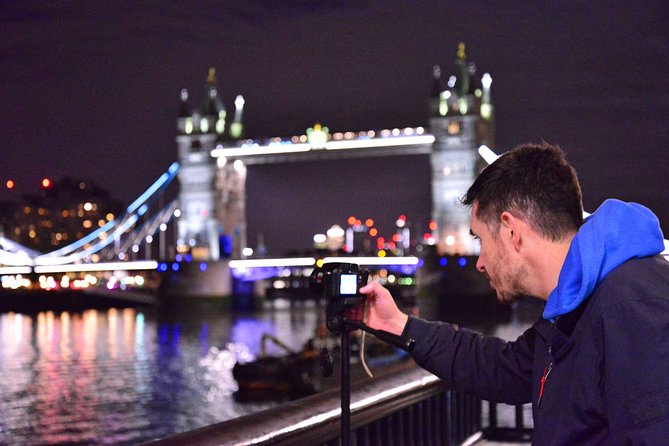
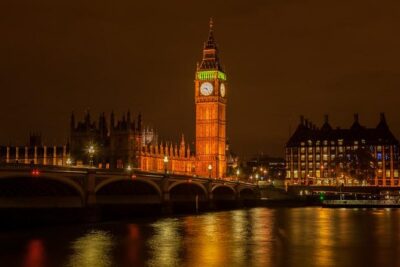
London after dark is made for photography. River reflections, glowing landmarks, red buses, passing boats, and ribbons of car lights give you far more to work with than a simple postcard view. On this roughly two-and-a-half-hour walk, photographer David helps you turn those sights into deliberate images using a DSLR, another camera, or your phone.
I especially like the hands-on teaching, since you practice settings rather than simply follow a guide from one viewpoint to the next. I also like the way the route mixes famous sights with less obvious angles, including creative views around the Thames and the City of London. The main consideration is equipment: a tripod is strongly useful for the long exposures, and the experience may feel less like private instruction if other participants join your booking.
Key points at a glance
- Learn with the camera you already own: David has helped people use both Canon cameras and iPhones, so you do not need expensive gear.
- Work with real night photography techniques: Practice long exposures, light trails, reflections, blurred boats, and creative zoom effects.
- See four major London areas: The route includes the London Eye, St. Paul’s Cathedral, the City of London, and Tower Bridge.
- Expect active instruction: You adjust camera controls, frame scenes, and shoot repeatedly instead of merely watching demonstrations.
- Bring a tripod if you can: It gives you more freedom during long exposures, though a spare tripod may sometimes be available.
- Get help after the walk: The photography e-guidebook gives you tips to keep using at home.
Why London at night makes a fine classroom
The best part of this experience is that London supplies the subject matter. You are not practicing on a plain street corner and then hoping to apply the lesson later. You are working with bright landmarks, dark water, moving traffic, and changing reflections from the start.
Night photography can be frustrating on your own. Your camera may choose a blurry shutter speed, your phone may flatten bright lights into white patches, or your skyline may look dull despite appearing dramatic in person. David’s role is to show you which controls matter and how small changes can alter the result.
The tour suits a wide range of experience. A beginner can learn the basics of exposure and camera control, while a more experienced photographer can try multiple exposures, zoom effects, and unusual framing. It is also useful if you know your camera during the day but have never felt comfortable after sunset.
You should expect a photography lesson with sightseeing attached, not a traditional London history walk. David’s focus is on getting the shot and finding a strong angle. He does share city knowledge, but the main reward is learning how to work with light.
More London Photography Tours and Photo Shoots:
- London: Private Photoshoot with Video Clip Option
★ 4.8 · 182 reviews - Professional Photoshoot in London Photographer
★ 5.0 · 102 reviews - Private landmarks photoshoot for families and couples
★ 5.0 · 92 reviews
David’s teaching style and the value of personal help
David is the named photographer and guide for the experience. The strongest praise centers on his patience, practical instruction, and ability to suggest good places to shoot. He helps with both technical matters, such as settings and framing, and creative choices, such as where to stand and what to include in the frame.
That personal help matters most when you are using unfamiliar equipment. One participant arrived with a Fuji camera and found that David was less familiar with that particular model, but this caused no real problem because the photographer already knew how to operate the camera. The useful lesson is simple: bring a camera you can at least partly control, and know how to reach its basic menus.
David has also taught people using an iPhone and a Canon on the same outing. That makes this a good choice for couples or families with mixed equipment. You will not be pushed toward buying specialist gear before you can take part.
The instruction is not only about making one attractive image in London. You learn ideas that can carry into ordinary photography: how a small setting change affects brightness, how to control blur, how to frame a landmark, and how to look for reflections or movement. The supplied e-guidebook gives you something to consult after the tour, which is helpful when the settings begin to blur together later.
Starting at Caffè Nero near Westminster
The meeting point is Caffè Nero at Unit B, Portcullis House, 1 to 2 Bridge Street, London SW1A 2JH. The walk returns to this meeting point at the end.
The opening section is important because David begins with camera controls and technique before sending you out to photograph the city. You may work through settings, test what your camera can do, and get comfortable with low-light shooting. If you are new to photography, this gives you a gentler start than arriving at a landmark and being asked to change several controls at once.
This early practice also benefits experienced photographers. One participant discovered that a camera could make multiple-exposure images and learned that zooming the lens during a long exposure could create a special effect. Those are the sorts of techniques that can add personality to a familiar view.
Give yourself enough time to reach the café and prepare your equipment. The published duration is about two hours and thirty minutes, while the description also refers to a three-hour night tour. In practical terms, allow an evening for the experience and confirm the exact start time when booking.
The London Eye and the first burst of light
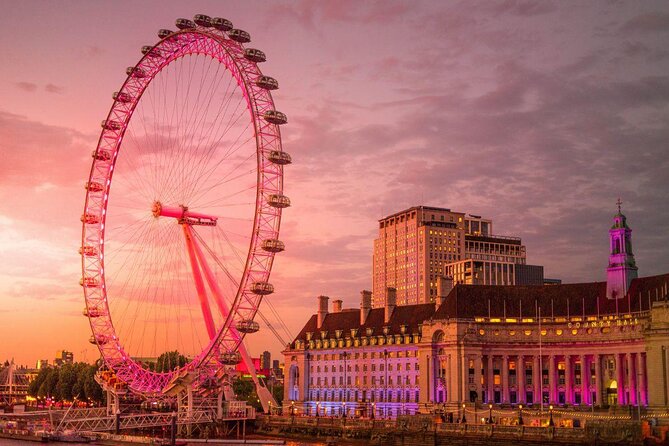
The London Eye is the opening landmark listed for the route, and it offers an immediate lesson in handling bright, repeating shapes against a dark sky. Its illuminated capsules and circular structure can work as a clean architectural subject, a frame for the river, or part of a wider city view.
This is also a good place to begin experimenting with creative effects. Long exposures can turn moving lights into lines and smooth the appearance of motion. With the right framing, the London Eye becomes more than a landmark record. It can anchor an image while the surrounding lights and water provide movement.
The area can be visually busy, so you may need to pay attention to composition rather than simply point at the wheel. David’s help with angles and framing is valuable here. He can direct you toward a more distinctive view instead of the most obvious snapshot.
If you are using a phone, the lesson still applies. Modern smartphones offer night modes and exposure controls, but you need to understand how steady the phone must remain and how bright lights affect the final image. The tour does not require a DSLR, which keeps the experience accessible to casual photographers.
More Evening Experiences:
- London: London by Night Sightseeing Open-Top Bus Tour
★ 4.5 · 5,516 reviews - London: River Thames Evening Cruise with Bubbly and Canapés
★ 4.4 · 2,493 reviews - London by Night Bus Tour with Christmas Lights and Live Guide
★ 4.5 · 2,040 reviews - London: Jack the Ripper Evening Walking Tour
★ 4.9 · 1,449 reviews
St. Paul’s Cathedral and long exposures
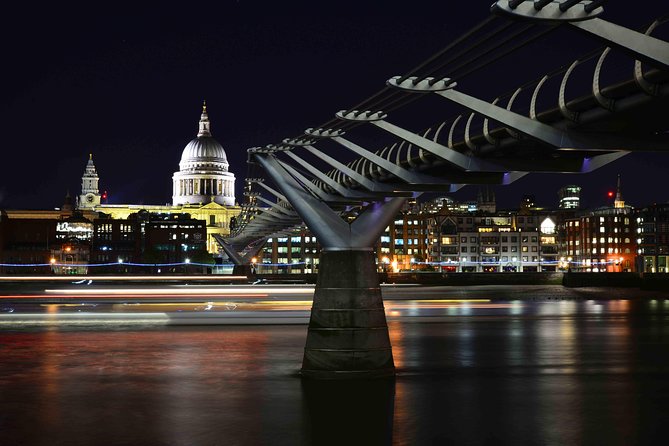
St. Paul’s Cathedral is one of the route’s strongest subjects for learning how to balance a bright structure with a dark evening sky. Its dome and classical lines give you a clear shape to frame, while the surrounding streets add opportunities for passing headlights and light trails.
This is where a tripod becomes especially useful. Long exposures require the camera to stay still, and even a small movement can soften the building. One participant had a tripod lost with airline luggage and was able to use a spare tripod brought by David, sharing it with another person. That may not always be possible, so bring your own if you have one.
The cathedral also gives you a chance to work on restraint. Night photography is not simply a matter of making everything bright. You want to preserve the mood of the evening while keeping enough detail in the architecture. David’s demonstrations and personalized practice can help you compare different settings rather than settle for the camera’s first suggestion.
You may spend less time learning architectural history here than you would on a cathedral tour. That is not a weakness if photography is your aim. The stop is about lines, exposure, scale, and finding a composition that works after sunset.
The City of London and less obvious viewpoints
The City of London section adds variety after the major landmarks. Here, David can guide you toward small corners, unusual angles, and details that are easy to miss when you are simply walking between famous sights.
This part of the tour is useful for developing your own eye. A recognizable landmark gives you a ready-made subject, but a side street, reflection, doorway, or fragment of illuminated architecture asks you to make more decisions. You may find that the strongest picture is not the most famous view.
The City also offers chances to photograph movement. Passing vehicles can become streaks of color, while people and street activity may register as soft motion during a longer exposure. These effects work best when you first understand how shutter speed changes the picture.
The route is active rather than sedentary. You should have a moderate level of physical fitness and be ready to walk between stops while carrying your camera and perhaps a tripod. Food and drinks are not included, so plan to eat before or after the experience.
Tower Bridge, the Thames, and moving water
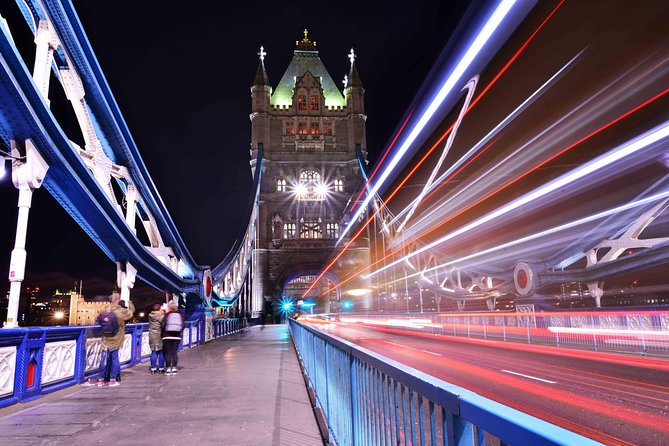
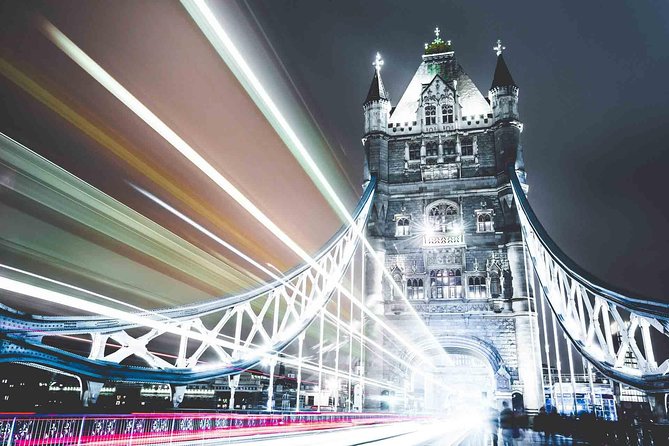
Tower Bridge is the final listed stop and one of the most rewarding subjects for night photography. Its illuminated towers, suspension lines, and position beside the river create several strong compositions. You can work with the complete bridge, isolate architectural details, or use the Thames as a reflective foreground.
The water is particularly useful for learning how a long exposure changes a scene. Reflections can become smoother, while a passing boat may blur into a soft streak. Car lights on nearby roads provide another moving element, allowing you to compare different types of motion in one location.
This is also where the city can feel most cinematic, though you do not need to force an effect. A sharp bridge with gentle reflections may work better than an image filled with artificial blur. David’s guidance helps you decide how much movement and creative effect suit your own taste.
The route has been used to photograph several major sights beyond the four listed stops, including Westminster Abbey and Big Ben. The exact views and order may vary with conditions, timing, and the group. You should think of the route as a guided search for good images rather than a fixed checklist of every London landmark.
What to bring for better results
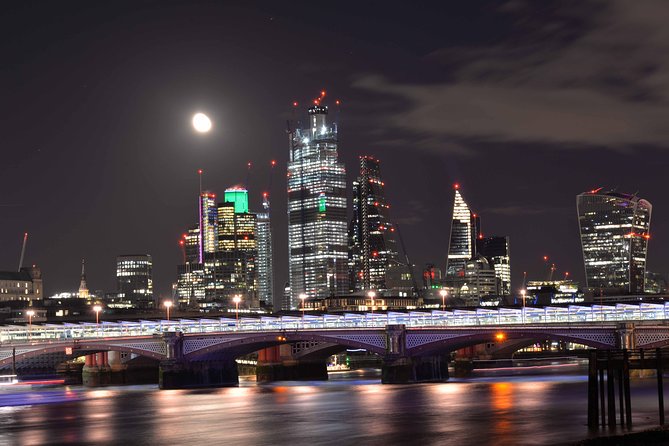
Your camera choice is flexible, but your preparation affects how much you get from the evening.
- Bring a tripod if possible. It gives you more control during long exposures and lets you work independently instead of waiting to share one.
- Charge your battery fully. One participant’s camera battery died during the tour, though the session continued with an iPhone. A spare battery or power bank is sensible.
- Know your basic controls. You do not need advanced skills, but being able to change key settings will leave more time for shooting.
- Bring clothing for changing weather. The route is outdoors, and rain affected at least one outing. An umbrella was purchased for a participant, but you should not rely on that.
- Use the camera you want to improve with. A phone is welcome, and the instruction can help you get better results from everyday travel photos.
The tour includes group photos and a photography e-guidebook. The group photos are a pleasant extra, while the guidebook has more lasting value if you want to repeat the techniques on your own.
Private format, group size, and price
The listed price is $164.52 per person, with group discounts available. For a private experience, that can be reasonable if you value direct coaching and want a route shaped around your group’s interests. The price covers the guide, instruction, tour photos, and e-guidebook, but not food, drinks, or camera equipment.
There is one point to clarify before booking. The experience is described as private, meaning only your group should participate, yet one account describes a three-person group and says it felt more like a group tour than private instruction. Another account describes an outing with only the guide and one participant. Ask how your booking will be handled if private teaching is important to you.
The value depends on your goal. If you only want to see London at night, a standard sightseeing walk may cost less. If you want useful camera instruction, help with composition, and access to several strong viewpoints in one evening, the fee is easier to justify.
The tour is booked, on average, 22 days ahead, so do not leave it until the final night of a short London visit. Free cancellation is available if you cancel at least 24 hours before the start time. Changes or cancellations inside that window are not refunded.
Who will get the most from this experience
I would recommend this tour to beginners who want a friendly introduction without buying special equipment. It is also a good fit for couples or families where one person uses a phone and another carries a dedicated camera.
Intermediate photographers may enjoy the creative exercises, especially multiple exposures, zoom effects, reflections, and light trails. If you already shoot night scenes regularly, the value will depend on how much you want a guide to suggest London viewpoints and offer a second opinion on composition.
This is less suitable if you want a relaxed sightseeing walk with little instruction. You will stop to adjust settings, repeat shots, and think about what the camera is doing. It is also not ideal if you dislike carrying equipment or walking outdoors after dark.
Should you book the London night photography tour?
Book it if you want to return from London with more than standard landmark snapshots. David’s patient instruction, flexible approach to cameras, and eye for unusual viewpoints are the main reasons to choose it. You can use a phone, but a tripod, charged battery, and willingness to practice will improve the evening.
I would be more cautious if you expect a guaranteed one-to-one lesson. Confirm the group arrangement before paying, since the experience can include other participants. If that detail works for you, this is a practical way to learn night photography while seeing the London Eye, St. Paul’s Cathedral, the City, and Tower Bridge in a new light.
FAQ
How long does the night photography tour last?
The stated duration is approximately two hours and thirty minutes. The tour description also refers to a three-hour night tour, so confirm the exact timing when booking.
Where does the tour start and finish?
It starts at Caffè Nero, Unit B, Portcullis House, 1 to 2 Bridge Street, London SW1A 2JH. The activity ends back at the meeting point.
Can I use a smartphone instead of a DSLR?
Yes. The experience is designed for DSLRs, other cameras, and smartphones. Instruction has included both an iPhone and a Canon camera during the same outing.
Do I need to bring a tripod?
A tripod is strongly useful for long exposures, but it is not stated as a required item. A spare tripod was available during one outing, though you should bring your own if you can.
What locations are included?
The listed stops are the London Eye, St. Paul’s Cathedral, the City of London, and Tower Bridge. The route may also include views of places such as Westminster Abbey and Big Ben.
What is included in the price?
The price includes the photography e-guidebook, the tour, and group photos. Food and drinks are not included unless specifically stated.
Just added around London
- Up at The O2:Twilight Climb with Guided Tour with Panoramic Views★ 5.0 · 50 reviews
- Private Chauffeur-London Heathrow from/to Southampton Cruise Port★ 5.0 · 9 reviews
- Kensington Palace VIP Garden Tour with Royal High Tea★ 4.5 · 71 reviews
- Up at The O2: Sunset Climb with Guided Tour with Panoramic Views★ 5.0 · 110 reviews
- Secrets of the London Underground Small Group Walking Tour★ 4.5 · 38 reviews
- Urban Canvas: Exploring Shoreditch’s Vibrant Street Art★ 5.0 · 36 reviews
- Ultimate introduction to photography in Central London★ 5.0 · 19 reviews
- Full-Day Self-Guided Paris Tour from London by Eurostar with Seine River Cruise★ 3.5 · 22 reviews
London Photography Tours and Photo Shoots, compared.
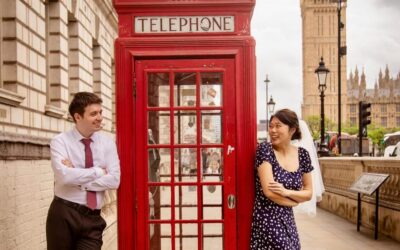
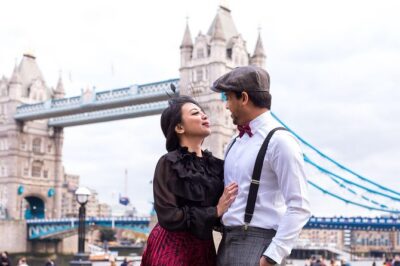
Professional Photoshoot in London Photographer
Read our review →
Browse the lists this tour appears in