
Reviewed · LONDON SELF-GUIDED AND AUDIO TOURS
London’s Alternative History: A Self-Guided Audio Tour
London’s strangest stories often sit beside its most familiar sights. This walk links Covent Garden, old theatres, Somerset House, the Thames, Waterloo Bridge, and the Savoy, adding tales of punch-ups, ghosts, sewer gas, courtroom oddities, and early electric light along the way.
I like the GPS-based audio because it tells you when to look, where to turn, and what matters at each stop. I also like the freedom to pause for photos, coffee, or a longer look at a building, then carry on without holding up a group.
The main trade-off is simple: there is no live guide to answer questions or adjust the route. You need a charged smartphone and earphones, and your pace, attention, and ability to follow the map will shape the walk.
Key points to know before you go
- The route begins at Covent Garden Piazza and ends near the Savoy on the Strand.
- The walk takes about one hour to 90 minutes, though you can pause the audio and make it longer.
- The stories go beyond standard sightseeing, covering a medieval convent garden, theatrical ghosts, courtroom curiosities, and sewer gas.
- VoiceMap gives you turn-by-turn help, with audio, maps, and geodata available offline.
- The walk is priced at $9.99 per person, a low cost for a private, flexible route through central London.
- You get lifetime access, so you can repeat the walk later or revisit a favorite section.
What this Covent Garden to Savoy walk feels like
This is not a museum tour with long explanations at every doorway. It is a compact city walk built around sharp, unusual facts. You move through some of central London’s busiest sights, but the commentary keeps pulling your attention toward details you could easily miss.
The route is private in the practical sense: only your own group takes part. You do not wait for strangers, match a guide’s pace, or worry about arriving late at a fixed departure time. The listed hours run all day, so you can use the tour when it suits your plans.
The audio is in English, and the narrator’s delivery is calm and carefully paced. That matters on a walking tour. You want enough time to look up, cross a street, and take in a building without feeling that the story is racing ahead.
I would allow closer to 90 minutes if you like photos or stop to talk. The basic recording lasts about an hour to an hour and a half, but the route is designed for pausing. You can stop the audio at any point, then resume when ready.
More London Self-Guided and Audio Tours:
- London: Emirates Stadium Entry Ticket and Audio Guide
★ 4.7 · 5,513 reviews - Westminster Abbey Entrance Ticket Including Audio Guide
★ 4.0 · 661 reviews - London: British Museum Audio Tour & Priority Entrance Ticket
★ 4.5 · 631 reviews
Starting at Covent Garden’s former convent garden
The walk starts at The Piazza in Covent Garden, at 1 to 7 Covent Garden, WC2E 8HD. This is a useful starting place because you are already in one of London’s most recognizable public spaces, yet the first fact sends you back before the market stalls and street performers.
The name comes from Convent Garden, referring to the medieval garden belonging to a convent. That small piece of history changes the way you look at the district. The current market atmosphere is lively and commercial, but the name preserves an older religious connection.
This opening stop gives you a quick sense of the tour’s style. You are not simply told what a building is. You are shown how an ordinary place name can carry a clue to London’s past.
Covent Garden can be crowded, so keep your phone and earphones secure and stay alert as you follow the route. The audio may guide you through a busy public area, but it cannot manage the people around you.
The Actors’ Church and London’s first recorded punch-up
The next stop is St. Paul’s Church in Covent Garden, known as the Actors’ Church. Many well-known actors have been memorialized here, making the church a natural stop on a route that spends much of its time around London’s theatre world.
The unexpected story is the church’s link to London’s first recorded punch-up. That detail gives the stop a lighter tone and keeps the tour from becoming a list of dates and monuments. It also fits the neighborhood, where theatre, public spectacle, and colorful behavior have long overlapped.
You do not need a ticket or entrance fee for the audio tour itself. The route may take you past places where you could choose to look inside, but any museum or attraction admission is separate and not included.
Drury Lane, ghosts, and the old theatre circuit
The route continues to the oldest theatre site in London. This stop is about performance, but also about the stories that gather around old stages after the curtain falls.
The best-known tale here concerns the Man in Grey, an alleged ghostly apparition associated with the theatre. You can treat that as theatrical folklore rather than hard evidence, but it gives the building a memorable character. A good audio tour knows when to leave room for mystery.
This is also a useful stop for understanding how London’s theatre district developed. The building is not just a venue for shows. It is part of a long chain of performances, audiences, actors, rumors, and backstage stories.
The downside is that the walk does not include a theatre performance or an admission ticket. If you want to see a show, you will need a separate booking and enough time beyond the audio route.
A different sort of day out in London altogether:
- From London: Harry Potter Warner Bros Studio Tour
★ 4.7 · 26,588 reviews - London: Westminster to Greenwich River Thames Cruise
★ 4.5 · 22,836 reviews - Magical London: Harry Potter Guided Walking Tour
★ 4.7 · 22,044 reviews - London: Madame Tussauds London
★ 4.6 · 20,915 reviews
The Old Bailey and London’s stranger legal cases
From theatre, the route moves toward legal London and the Old Bailey. Here, the tone shifts from stage ghosts to actual trials and unusual court cases.
This stop works because it presents legal history through memorable incidents rather than legal procedure alone. You hear about cases that reveal the odd, human side of London’s courts. The city’s past was not made only by kings and major political events. It was also shaped by people who found themselves before a judge under unusual circumstances.
The Old Bailey is a working court, so it is best viewed as an exterior landmark during this walk. The audio gives you context without requiring you to spend hours inside a formal institution.
If you enjoy crime history or unusual court stories, this may be one of the strongest sections. If you prefer architecture and royal history, it may feel less visually rewarding than Somerset House or the Thames section.
The Lyceum Theatre and the arrival of electric light
The Lyceum Theatre brings the route back to performance. It is famous today for productions including The Lion King, but the older story concerns the development of electric lighting in theatres.
That connection gives the building more depth than its current marquee. Theatre lighting changed what audiences could see and how performances could be staged. A modern show may feel effortless, but the move from older forms of illumination to electricity was a major technical change.
This is one of the tour’s strongest habits: it connects a familiar modern attraction with an earlier piece of technology. You may know the theatre for its current production, yet the audio gives you another reason to notice the building.
The commentary is heard from the street, so you should not expect a backstage tour or an explanation of the current show. The value is in the setting and the story attached to it.
Somerset House, from Tudor palace to Navy office
Somerset House is one of the route’s grandest buildings. Its past includes a transformation from a Tudor palace into a Navy office, along with a role in the development of the British postal system.
That sequence makes the building useful for understanding how London’s major institutions changed over time. A royal residence could take on an administrative role, and an imposing civic building could become part of the systems that connected the country.
Give yourself a little time here. The audio may take around an hour to 90 minutes in total, but there is no reason to rush this stop if the architecture catches your eye. You can pause the recording, look around, and resume once you are ready.
A route like this works best when you treat the timing as a guide, not a deadline. One person may finish quickly. Another may stop at Somerset House, take photos, and spend more time with the river views later.
The Victoria Embankment and the Thames beneath your feet
The walk then reaches the riverside promenade along the Victoria Embankment. The story here concerns the construction of the Embankment, including the diversion of the River Thames and the hidden secrets revealed during the work.
This is a good point to shift your attention from buildings to the ground beneath you. The promenade looks orderly now, but its creation required major changes to the river edge. The audio helps you picture the work that made this part of London possible.
The river section also gives you a physical break from the tighter streets around Covent Garden and the theatres. You have more space to look across the water and take in the city from a different angle.
Keep your volume low enough to remain aware of your surroundings. The route includes public streets and a riverside promenade, and the audio cannot replace normal care near traffic, steps, or crowds.
Waterloo Bridge, the Ladies’ Bridge
Waterloo Bridge is one of the route’s most distinctive stops. It is known as the Ladies’ Bridge because women carried out much of its construction during World War II.
That detail gives the bridge a human scale. Instead of seeing only a crossing with a broad view, you are reminded of the workforce behind its construction and the changes brought by wartime labor shortages.
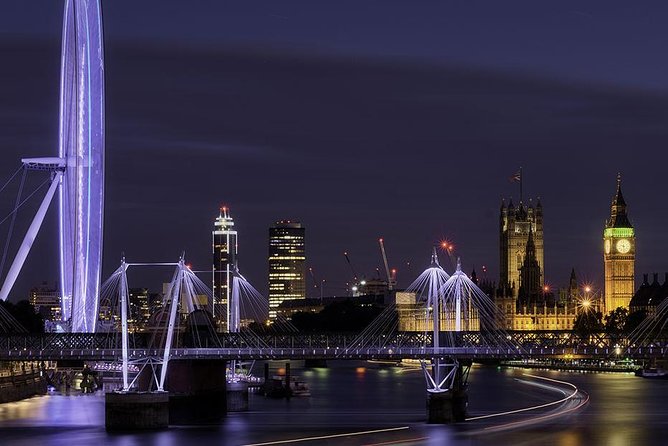
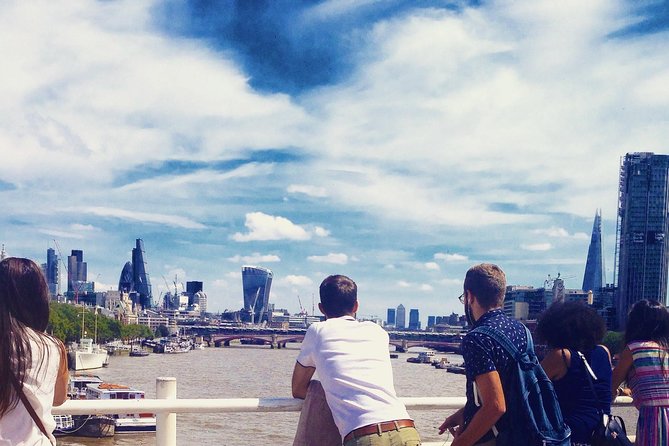
The views are a major reason to linger. The bridge offers a wide look over London, making it one of the best places on the route for photographs. If the weather is poor, the crossing may feel less inviting, but the story still gives it purpose.
This is also a good place to pause the tour and simply look around. The self-guided format is useful here because you do not need to keep walking while the commentary continues.
The Savoy’s gas lamp that lights itself
Near the Savoy, the route takes a wonderfully odd turn. You hear about London’s last remaining Victorian gas lamp, powered by sewer gas.
Its nickname, The Lamp that Lights Itself, is hard to forget. The story links urban engineering with a strange bit of practical ingenuity. It is exactly the sort of detail you could pass without noticing if you were simply walking from Covent Garden to the Strand.
This stop also shows why the tour is more than a basic route between major sights. You are not only ticking off famous buildings. You are being directed toward small pieces of infrastructure with an unusual story.
The lamp may be less visually dramatic than a palace or theatre, so listen closely for the context. The interest comes from what powers it and why it remains notable, not from its size.
The Savoy and the first fully electric public building
The tour ends at the Savoy, on the Strand, WC2R 0EZ. The building is associated with luxury, famous visitors, and notorious parties, but its technical history is just as notable.
The Savoy was the first public building in the world to be lit entirely by electricity. That fact makes a strong final stop because it connects with the earlier story about theatre lighting at the Lyceum. Across the route, electricity appears not as an abstract invention, but as something that changed theatres, hotels, and city life.
The Savoy section also provides a fitting contrast with the sewer-gas lamp. One stop looks at an older, improvised form of urban lighting. The final stop points toward the modern electric city.
The finish near the Savoy is convenient if you want to continue along the Strand, find food, or connect with nearby public transport. Transportation, meals, and any attraction tickets are not part of the $9.99 price.
How the VoiceMap format works in practice
You use the VoiceMap application on your own smartphone. The tour includes offline access to the audio, maps, and geodata, which is useful if you do not want to rely on a constant mobile signal.
The GPS tagging is the key feature. The audio is linked to locations, so the app can prompt you as you reach the right point. It also provides directions, including where to turn and where to look, which makes the walk easier to follow than a simple written route.
You still need to pay attention. GPS can help with orientation, but it does not remove the need to check your surroundings or confirm that you are safely crossing a street. Download the tour and make sure your phone is ready before setting off.
The calm narration and measured pace are important strengths. If you normally find map directions difficult, the spoken guidance should make this route less stressful. You can also pause whenever you need to, a useful feature for groups who walk at different speeds.
Is $9.99 good value?
At $9.99 per person, this is inexpensive for a central London activity. You get a full route, location-based narration, offline maps, and lifetime access rather than a single use at a fixed time.
The value is best if you plan to visit the main sights along the route anyway. Covent Garden, the theatres, Somerset House, Waterloo Bridge, the Embankment, and the Savoy are all in a compact central area, so the tour adds stories without requiring a separate excursion.
It is less useful if you want a personal conversation with a guide, detailed access inside each building, or help choosing restaurants and other stops. You are paying for a prepared audio route, not a private historian.
Lifetime access improves the deal. You can repeat the walk on another visit, share the route with your own plans, or return to a section you rushed the first time. The booking also allows free cancellation if you cancel at least 24 hours before the start time. Changes or cancellations within 24 hours are not refunded.
Who should book this audio walk?
I would recommend it to independent visitors who like unusual facts, central London history, and a flexible pace. It suits solo walkers, couples, and small private groups who want an easy activity between other plans.
It is also a smart choice if you have only a spare hour or two. You can fit it into a day that already includes Covent Garden or the Strand, then pause when you need a break.
Families with older children may enjoy the ghost story, punch-up, courtroom cases, and lamp powered by sewer gas. The route is not described as a children’s tour, though, so younger children may lose interest during the institutional and architectural sections.
You should choose a live walking tour instead if questions, personal stories, or spontaneous changes matter most to you. This format rewards people who are happy to manage their own pace and phone.
Should you book London’s Alternative History?
Book it if you want a low-cost way to see central London while hearing stories that go beyond the usual royal and political highlights. The route is compact, the audio is easy to pause, and the GPS guidance helps you stay on course.
The best reasons to choose it are the unusual subject matter and the freedom to walk at your own speed. The main limitation is the lack of a human guide and included admission to any attraction.
For $9.99, I think it works especially well as a first-day orientation walk or a spare-time activity between bigger London plans. Start at Covent Garden, allow 90 minutes if you like to stop, and finish at the Savoy with a better eye for the city’s theatres, bridges, lamps, courts, and river edge.
FAQ
Where does the tour start?
The tour starts at The Piazza, 1 to 7 Covent Garden, London WC2E 8HD, UK.
Where does the tour end?
It ends at the Savoy on the Strand, London WC2R 0EZ, UK.
How long does the audio tour take?
The approximate duration is one hour to 90 minutes. You can make it longer by pausing for photos, conversation, or extra time at the stops.
Is the tour guided by a live person?
No. This is a self-guided audio tour accessed through the VoiceMap application. The commentary is GPS-based and linked to each location.
What is included in the price?
The $9.99 price includes lifetime access to the tour, the VoiceMap application, and offline access to the audio, maps, and geodata.
Can I cancel for a refund?
Yes. You can receive a full refund if you cancel at least 24 hours before the experience start time. Cancellations or changes made less than 24 hours before the start time are not refunded.
More Historical Tours
- London Small Group Tour of Historical Pubs
★ 5.0 · 10,422 reviews - Soho Music & Historic Pubs Tour
★ 5.0 · 1,993 reviews - London: Historic Pubs of Central London Walking Tour
★ 4.9 · 1,065 reviews - London: Soho Music and Historic Pubs Walking Tour
★ 4.9 · 836 reviews
Just added around London
- Up at The O2:Twilight Climb with Guided Tour with Panoramic Views★ 5.0 · 50 reviews
- Private Chauffeur-London Heathrow from/to Southampton Cruise Port★ 5.0 · 9 reviews
- Kensington Palace VIP Garden Tour with Royal High Tea★ 4.5 · 71 reviews
- Up at The O2: Sunset Climb with Guided Tour with Panoramic Views★ 5.0 · 110 reviews
- Secrets of the London Underground Small Group Walking Tour★ 4.5 · 38 reviews
- Urban Canvas: Exploring Shoreditch’s Vibrant Street Art★ 5.0 · 36 reviews
- Ultimate introduction to photography in Central London★ 5.0 · 19 reviews
- Full-Day Self-Guided Paris Tour from London by Eurostar with Seine River Cruise★ 3.5 · 22 reviews
London Self-Guided and Audio Tours, compared.

Emirates Stadium Entry Ticket and Audio Guide
Read our review →
Westminster Abbey Entrance Ticket Including Audio Guide
Read our review →
British Museum Audio Tour & Priority Entrance Ticket
Read our review →
Windsor Castle Tour from London with Transportation & Audio Guide
Read our review →
London Panoramic Open Top Bus Tour with Audio Guide
Read our review →
Royal Walking Tour and Buckingham Palace Audio Tour
Read our review →
Self-Guided Notting Hill Walking Tour with an APP
Read our review →
Emirates Stadium and Arsenal Museum Entrance Ticket Including Audio Guide
Read our review →Browse the lists this tour appears in