Reviewed · LONDON WALKING TOURS
London Crimes And Punishment Private Walking Tour
London’s darker past comes alive on this three-hour private walk from Whitechapel to Borough. You’ll trace Jack the Ripper’s streets, hear about the Krays at the Blind Beggar pub, pass old prisons and execution sites, and finish among Dickensian streets south of the Thames.
I like two things right away: the route links crime with everyday London life, and the private format lets your guide adjust the pace and level of detail for your group. The stories cover poverty, immigration, religion, politics, war, and social reform, not just grisly murders.
The main drawback is the sheer number of stops. Thirty locations in about three hours means many talks happen outside and last only five to ten minutes. Expect a brisk urban walk, not a relaxed pub crawl or a series of museum visits.
Key points at a glance
- Follow a one-way route through two historic districts: Start in Whitechapel and finish near Borough High Street, crossing central London on foot.
- See Jack the Ripper locations without entering a dedicated Ripper attraction: The Ten Bells, the White Hart, Brick Lane, and nearby streets form the core of the East End section.
- Hear the Krays story at the Blind Beggar: This Whitechapel pub is linked to a notorious 1960s gangland shooting.
- Connect crime to wider London history: The route includes the Great Fire, the Blitz, the Peasants’ Revolt, religious migration, poverty, and Charles Dickens.
- Travel privately with a guide: Only your party takes part, with hotel pickup and drop-off offered on foot or by London Underground.
- Prepare for an outdoor history lesson: The tour operates in all weather, and a moderate level of physical fitness is recommended.
Whitechapel starts with gangsters, bells, and Jack the Ripper
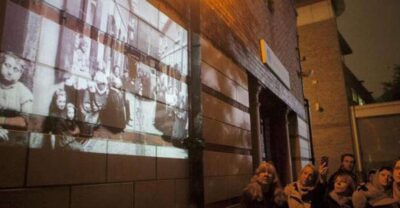
The meeting point is at 277 Whitechapel Road, with a 9:30 am start. The first section sets the tone quickly. You begin at the Whitechapel Bell Foundry, where your guide explains the connection to Big Ben and the Liberty Bell, along with how Big Ben got its name.
This is a useful opening because it gives you more than a murder-story checklist. London’s old trades, industry, and crowded neighborhoods shaped the streets you are walking through. The foundry stop is short, about ten minutes, and admission is not included, so expect an outside explanation rather than a full museum visit.
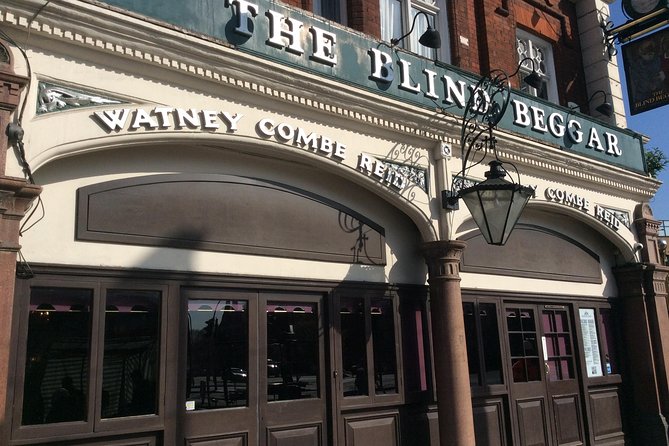
The next stop is the Blind Beggar public house. This is where the tour turns to the Kray twins and a famous 1960s gangland shooting. The pub is linked with London’s answer to Al Capone, and the guide uses the setting to explain how organized crime became part of the East End’s public image.
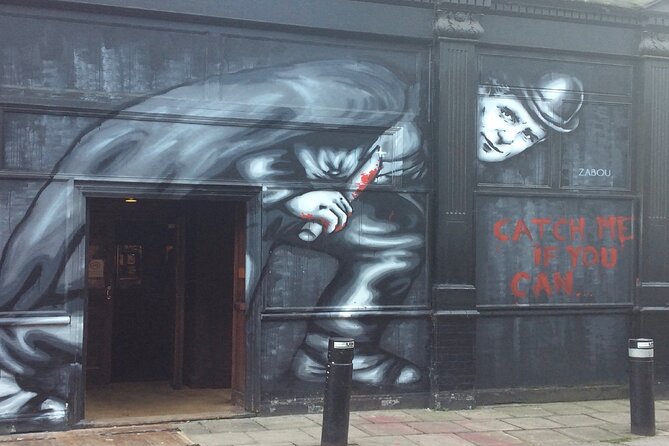
From there, you reach the Ten Bells, the pub most closely tied to the Jack the Ripper story. You’ll hear about its connection to the murders and the nearby streets, including the possibility that the killer lived close by. The stop lasts only about five minutes, so the value rests heavily on the guide’s storytelling rather than on anything you do inside the pub.
The White Hart follows. It is another pub associated with Jack the Ripper, and the route then continues toward a possible murder site. If you are fascinated by Victorian crime, this stretch will likely be the strongest part of the tour. If you prefer firm evidence over disputed theories, pay attention to what is known, what is possible, and what remains uncertain.
More London Walking Tours:
- Magical London: Harry Potter Guided Walking Tour
★ 4.7 · 22,044 reviews - London: The Original Jack the Ripper Walking Tour
★ 4.7 · 7,833 reviews - Tour for Muggles The Ultimate Harry Potter Walking Tour in London
★ 5.0 · 4,684 reviews
Brick Lane shows the people behind the crime stories
Brick Lane adds needed social context. Today, it is known for curry restaurants, markets, and a long stretch of independent food businesses. During the Victorian period, the area was marked by poverty and overcrowding.
You spend around fifteen minutes walking along the lane, then stop at Brick Lane Jamme Masjid. The building has served different communities over time. It was a synagogue during the period associated with Jack the Ripper and, earlier, a Protestant church for French refugees.
That detail is one of the tour’s best features. London’s story is not one straight line. Buildings changed religious use as communities arrived, moved, and adapted. Crime makes more sense when you see the pressure created by poverty, migration, poor housing, and limited public services.
The Golden Boy of Pye Corner offers a small but memorable change of subject. This gold statue of a plump boy relates to the Great Fire of London. It is easy to pass without noticing, so having a guide point it out turns an ordinary street corner into a quick lesson about the city’s disasters and how London remembered them.
At Christ Church Spitalfields, you’ll see a grand stone church that once sat at the center of Victorian neighborhood life. The church stood near a market, a brewery, and one of London’s most notorious streets. The contrast is important: respectable civic buildings and severe poverty existed almost side by side.
The nearby Jewish soup kitchen recalls efforts to feed the East End’s poor. The tour identifies one of the first and one of the last Jewish soup kitchens in the area. Old Spitalfields Market then adds a more cheerful note. Its Victorian roof and changing market stalls make it a practical place to pause, though the tour does not turn into a shopping session.
From Smithfield to Old Bailey, punishment becomes public
The route then moves toward Smithfield Market, long associated with London’s meat trade. The stop covers a much harsher past, when not only animals were butchered in the area. Your guide uses the site to explain how public punishment and public commerce once shared the same urban spaces.
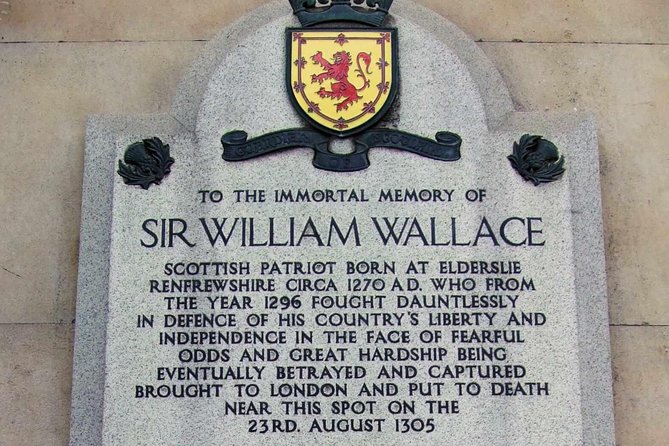
At the William Wallace Memorial, you’ll hear about Wallace, known to many through the Braveheart story, and his execution by hanging, drawing, and quartering. The stop also brings in other nearby episodes of punishment. It is a short talk, about ten minutes, and the subject is graphic by nature.
The Peasants’ Revolt plaque shifts the focus from individual crime to social unrest. Your guide explains the revolt and its effect on later ideas about government and life in Western countries. This is a valuable change of scale. You are no longer hearing only about killers and victims, but about how ordinary people challenged the system around them.
At the Church of St. Bartholomew the Great, the small graveyard becomes the setting for more local stories and secrets. The church itself is a good reminder that the route is not limited to famous crime locations. It also uses old religious sites to show how death, worship, and daily life once occupied the same few streets.
You then see St. Paul’s Cathedral from outside. The guide discusses the building’s survival during the Second World War. Because the stop lasts only five minutes and does not include entry, you should treat it as a historical viewpoint rather than a cathedral visit.
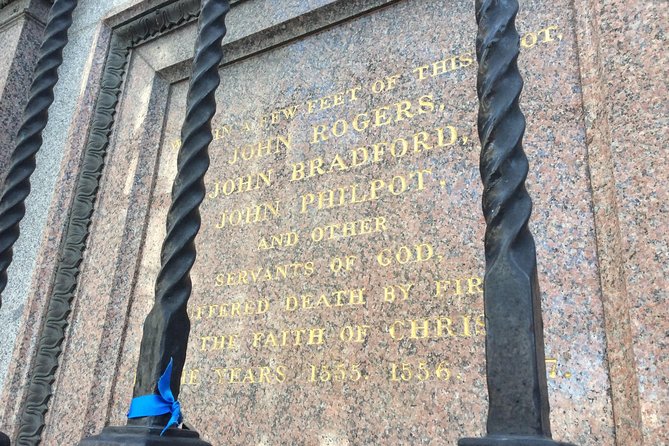
The Viaduct Tavern is another particularly atmospheric stop. It sits beside an old execution site, and its cellars were used as holding cells for condemned men spending their last night before execution. You will not be taking part in a cellar tour based on the supplied details, but the exterior and the story provide one of the clearest links between an ordinary London pub and the justice system of the past.
The Church of the Holy Sepulchre brings more grim church history. Then comes the Old Bailey, still one of London’s major criminal courts. The tour explains its long role in trying serious offenders. Again, you should expect to view it from outside rather than enter for a court hearing.
The City’s fires and the Blitz add a wider view
The small garden at Christchurch Greyfriars recalls the Blitz. Ruins and memorial plantings mark a place shaped by wartime destruction. The National Firefighters Memorial later honors firefighters who died protecting London and other cities during bombing and fires caused by the Luftwaffe.
These stops are useful because they prevent the tour from becoming a simple parade of Victorian murders. London’s difficult past also includes war, public service, and the loss of whole neighborhoods. The route keeps returning to one central idea: the city’s streets carry several layers of danger and survival.
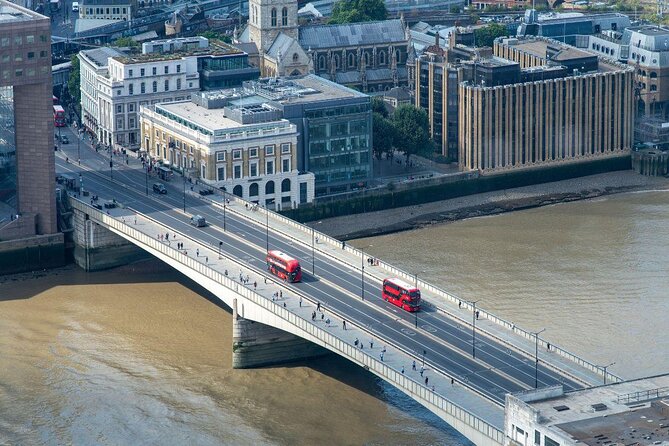
At London Bridge, the guide discusses the ceremonial spike once used to display the heads of executed people as a warning to those entering the city. The modern bridge is not the medieval structure, but the location gives you a strong sense of how punishment was made visible to the public.
The Millennium Bridge offers a different kind of story. From here, you can see the location of what was once one of London’s leading suicide spots, along with the sexist restrictions connected with it. The stop is brief and contains difficult subject matter, so this is not a light sightseeing walk.
A different sort of day out in London altogether:
- From London: Harry Potter Warner Bros Studio Tour
★ 4.7 · 26,588 reviews - London: Westminster to Greenwich River Thames Cruise
★ 4.5 · 22,836 reviews - London: Madame Tussauds London
★ 4.6 · 20,915 reviews - Stonehenge, Windsor Castle, and Bath from London
★ 4.5 · 18,662 reviews
Shakespeare, the Clink, and the road into Dickensian London
At Shakespeare’s Globe, the guide explains how different this part of London was in Shakespeare’s day. The district was associated with theaters, drinking, prostitution, and other rough entertainments. The comparison to Amsterdam’s less respectable side gives you a quick sense of its reputation, though the tour remains focused on the historical setting rather than a theater performance.
The Clink Prison Museum is next. You see the outside of the museum, not the interior collection. The exterior is authentic enough to support a talk about why this part of Southwark became associated with prisons, vice, and punishment.
Winchester Palace follows. Much of it was destroyed by one of London’s major fires, but the ruins recall the former home of the Bishop of Winchester. The guide discusses the bishop’s harsh or troubling conduct, adding another example of how authority and punishment were connected.
Borough Market marks the entry into Dickensian London. There has been a market here since roughly Roman times, and the area appears in the world associated with Oliver Twist. It is now a popular food market, but the tour concentrates on the older streets and the people who lived and worked around them.
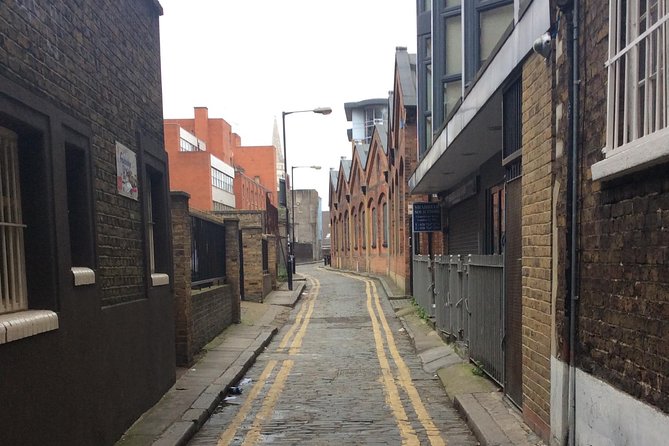
The route ends near the old Marshalsea Prison, with the surviving south wall. This debtors’ prison had a major effect on Charles Dickens, whose father was imprisoned there. The stop gives the tour a strong final theme: poverty could become a legal trap, and prison was not reserved only for violent criminals.
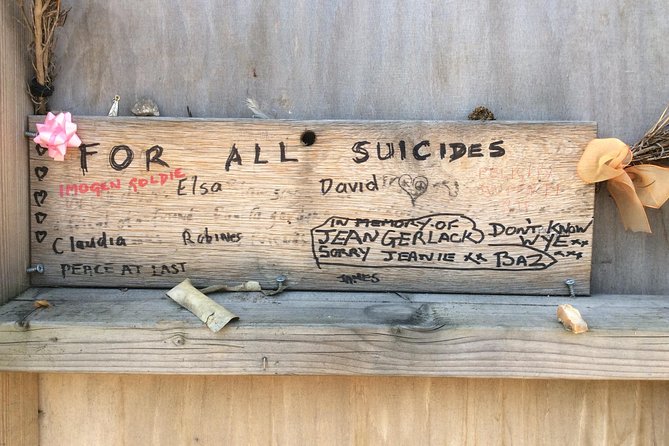
Crossbones Graveyard and Garden of Remembrance is one of the most affecting locations on the route. It was used for centuries as a burial place for criminals, prostitutes, plague victims, and people who died by suicide. The garden remembers people who were often excluded from respectable burial grounds.
Red Cross Cottages and Garden completes the social story. The site recalls an early effort to improve life for London’s poor. Ending here, rather than at a sensational crime scene, gives the tour a more humane finish.
What the private format is worth at $247.73
At $247.73 per person, this is expensive if you think of it as a standard walking tour. It becomes easier to justify when you value a private guide, hotel pickup and drop-off, and a route that covers East London, the City, and Southwark in one morning.
The private setup matters most for the storytelling. Your party can ask questions, slow down at a location, or move on when a subject is not holding your attention. That flexibility is hard to get in a large group.
The guide is the deciding factor. Stephen Liddell is named in the supplied tour feedback, and the strongest praise focuses on his care, detail, and ability to make stories hold your attention rather than simply reciting dates. If he leads your walk, you can expect a guide who takes the narrative seriously. Still, a particular guide is not guaranteed in the booking details, so consider confirming this before paying the private-tour price.
Hotel pickup is offered on foot or by London Underground, but transportation to and from attractions is not included. That means you should read pickup as a meeting arrangement, not a private vehicle service. The tour begins in Whitechapel and ends on Borough High Street, so plan your onward route from Southwark.
Thirty stops in three hours also affects value. You get breadth, but most locations receive only five to ten minutes. Old Spitalfields Market is listed with admission included, yet the tour does not promise extended time inside paid attractions. Wear comfortable shoes, bring water, and dress for rain or cold because the walk operates in all weather.
Who will enjoy this London crime walk?
I would choose this tour if you enjoy story-led history, old neighborhoods, and the connections between crime, poverty, religion, and politics. It suits first-time visitors who want a strong overview of several central districts, as well as repeat visitors who have already seen London’s headline sights.
It is also a good fit for families with older children or teenagers who respond well to difficult history. The subjects include murder, execution, suicide, plague, prostitution, and severe poverty, so parents should decide if that tone is suitable.
You need a moderate level of physical fitness. The experience is a three-hour walk through city streets, and the number of stops can make the pace feel brisk. There is no promise of regular indoor seating or long café breaks.
I would skip it if you want to enter major attractions, spend an hour at St. Paul’s, browse Borough Market, or take a slow pub-based tour. I would also skip it if you dislike uncertain crime theories, since Jack the Ripper stories naturally include disputed evidence.
Should you book it?
Book this private walk if you want London explained through its uncomfortable stories, not just its postcard sights. The best parts are the East End sequence, the range of social history, the old prison and execution connections, and the final movement toward Dickens and Crossbones Graveyard.
The price is high, but the private format and hotel pickup can make sense for a small group that wants personal attention. Before booking, confirm who will guide your party, understand that most stops are exterior talks, and be ready for three hours of walking in any weather.
FAQ
How long is the London Crimes and Punishment Private Walking Tour?
The tour lasts approximately three hours.
Where does the tour start?
It starts at 277 Whitechapel Road, London E1 1BY, at 9:30 am.
Where does the tour finish?
It finishes on Borough High Street, London SE1 1JX.
Is the tour private?
Yes. Only your party participates in the private activity.
Is hotel pickup available?
Yes. Hotel pickup and drop-off are offered on foot or by London Underground.
Is transportation included?
Transportation to and from attractions is not included.
Does the tour enter the Clink Prison Museum?
No. The tour visits the outside of the Clink Prison Museum.
Does the tour operate in bad weather?
Yes. It operates in all weather conditions, so you should dress appropriately.
Can I cancel for a full refund?
Yes. You can cancel at least 24 hours before the local start time for a full refund. Cancellations made less than 24 hours before the start time are not refunded.
Just added around London
- Up at The O2:Twilight Climb with Guided Tour with Panoramic Views★ 5.0 · 50 reviews
- Private Chauffeur-London Heathrow from/to Southampton Cruise Port★ 5.0 · 9 reviews
- Kensington Palace VIP Garden Tour with Royal High Tea★ 4.5 · 71 reviews
- Up at The O2: Sunset Climb with Guided Tour with Panoramic Views★ 5.0 · 110 reviews
- Secrets of the London Underground Small Group Walking Tour★ 4.5 · 38 reviews
- Urban Canvas: Exploring Shoreditch’s Vibrant Street Art★ 5.0 · 36 reviews
- Ultimate introduction to photography in Central London★ 5.0 · 19 reviews
- Full-Day Self-Guided Paris Tour from London by Eurostar with Seine River Cruise★ 3.5 · 22 reviews
London Walking Tours, compared.

Magical London: Harry Potter Guided Walking Tour
Read our review →
Tour for Muggles The Ultimate Harry Potter Walking Tour in London
Read our review →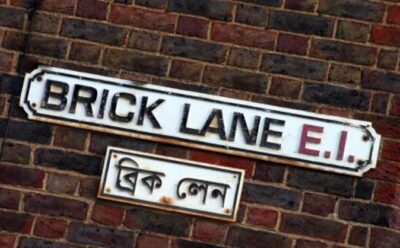
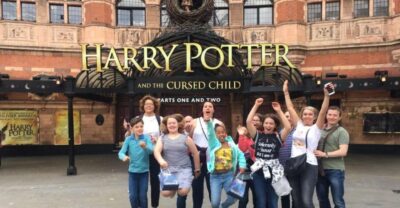
Harry Potter Movies Walking Tour (Kids Go Free)
Read our review →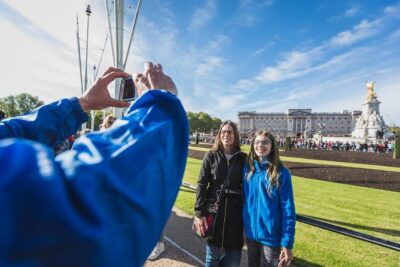
Changing of the Guard Guided Walking Tour in London
Read our review →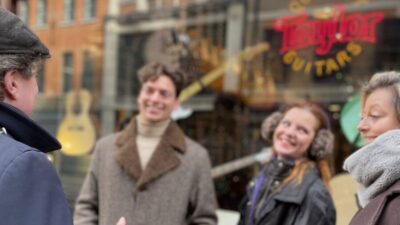
The Great British Rock and Roll Music Walking Tour
Read our review →