
Reviewed · JACK THE RIPPER TOURS
Jack the Ripper and Victorian London Beyond the Shadows
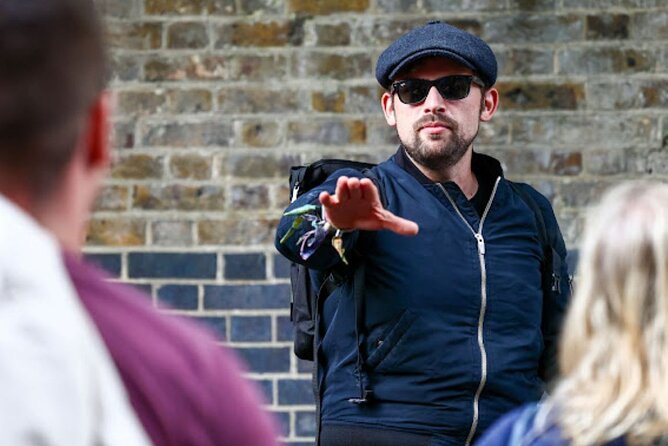
The most worthwhile part of this East End walk is its shift in focus. You do not simply chase the identity of Jack the Ripper. You hear about the women who were killed, the hard lives they led, and the Victorian conditions that made Whitechapel such a difficult place to survive. Nick’s victim-first approach gives the tour more weight than a standard crime walk.
I like the route for two clear reasons: it connects the case to real East End places, including the Ten Bells pub and Goulston Street, and it shows how Brick Lane and Spitalfields have changed since 1888. I also like the guide’s use of an iPad with historic images, which helps bring old streets and people into view.
The main thing to consider is the walking. This lasts about two and a half hours, begins at 7:30 p.m., and covers several streets in the East End. The subject is also grim, so this is best for you if you want serious social history along with the mystery.
Key points to know before you book
- A victim-focused Ripper tour: The story gives proper attention to the women killed, rather than treating them as footnotes in a famous crime tale.
- A local guide with a strong point of view: Nick is a trained historian and East End native, while Matt is also praised for an engaging, historically grounded approach.
- Four useful East End stops: Brick Lane, Spitalfields Market, the Ten Bells pub, and Goulston Street each add a different layer to the evening.
- More than a murder mystery: The walk explains poverty, social attitudes, housing conditions, and the East End’s later development.
- A small-group feel is possible: The stated maximum is 40 people, but the guide has also operated the tour for very small private groups.
- Good value at $24.98: For 2 hours and 30 minutes with a strong guide and several historic locations, the price is fair, especially for true crime and London history fans.
A Jack the Ripper tour with more substance
Jack the Ripper walks are easy to find in London. The harder task is finding one that does not reduce the East End to a gloomy backdrop and a list of gruesome murders.
This tour takes a more thoughtful route. The crimes remain central, but the setting and the victims matter just as much. You learn why the East End was poor, how women struggled to earn enough to live, and how Victorian ideas about respectability shaped the way their deaths were remembered.
That approach gives the tour a useful balance. You still get the mystery, the disputed evidence, and the famous locations. But you also get a clearer sense of the people who lived in Whitechapel in 1888. The result is less about celebrating a killer and more about understanding a place and a set of victims who are often reduced to a few lines in a crime story.
The experience runs in English and uses a mobile ticket. It begins at Braham Street at 7:30 p.m. and ends at Spitalfields Market. Since it is an evening walk, you should arrive ready to spend the whole time outdoors and on your feet.
More Jack the Ripper Tours:
- London: The Original Jack the Ripper Walking Tour
★ 4.7 · 7,833 reviews - London Jack the Ripper Guided Tour with Ripper-Vision
★ 4.5 · 4,840 reviews - London: Jack the Ripper Small Group Tour
★ 4.7 · 3,159 reviews
Brick Lane and the East End in 1888
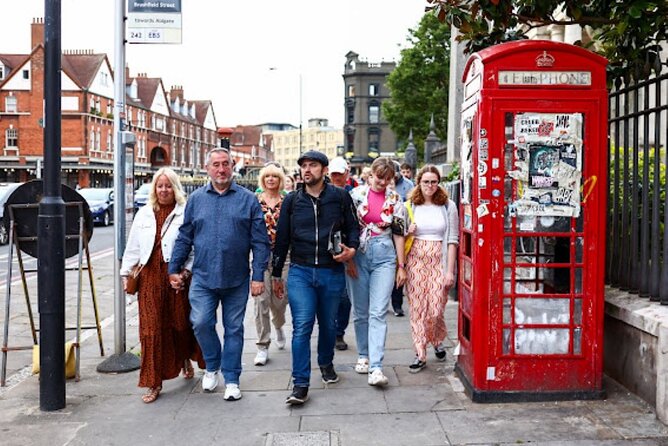
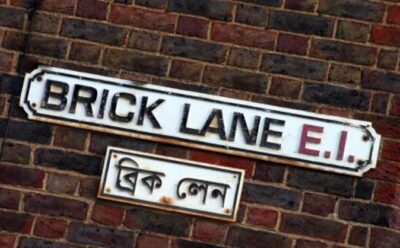
Brick Lane is a strong starting point because it lets the guide explain the wider East End before the murder cases take over.
Today, Brick Lane is known for food, shops, art, and nightlife. On this walk, you look beyond its current character and consider the social pressures that shaped the area in Victorian times. The guide connects the streets to poverty, unstable work, overcrowding, and the daily struggle faced by people living on very little.
I like this opening because it gives you a frame for the rest of the evening. Without it, the Ripper story can seem like a string of isolated events. With it, you begin to understand why certain streets mattered, why people were vulnerable, and why the police investigation unfolded in such a tense setting.
Nick’s local connection is useful here. He is described as a trained historian and a native of the East End, so he can discuss both the historical setting and the way the area has developed over time. You also hear about the East End’s later changes, which keeps the walk from treating the neighborhood as a museum piece.
Do not expect Brick Lane to look as it did in 1888. Much of the value comes from comparing the present street with the social world that once occupied it. The modern shops and restaurants are part of that story too. They show how dramatically this part of London has changed.
Spitalfields Market and a changing neighborhood
Spitalfields Market is both a stop and the finishing point. It is now a popular place for food, clothing, and music, with plenty happening around its covered market spaces and nearby streets.
That modern setting provides a sharp contrast with the East End described during the tour. You can finish the walk among people shopping and eating, while the guide has just taken you through a far harsher period in the area’s past.
The market is also a practical end point. You are not left in an obscure alley far from the rest of London. The walk finishes at 65 Brushfield Street, near public transportation, and the area gives you options for food or a further look around after the tour.
The drawback is that Spitalfields Market is not presented as a separate food tour or shopping experience. It is part of the route and a useful place to end, but the main purpose is historical context. If you want a long stop to browse stalls, plan to return another time.
The Ten Bells pub and the case’s most famous setting
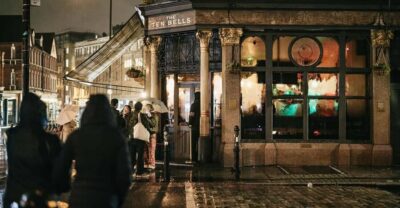
The Ten Bells pub is one of the evening’s key locations. It is linked with the Ripper case and has appeared in documentaries and films about the murders.
A stop here gives the guide a chance to separate established information from popular storytelling. That distinction matters. The Ripper case has collected legends for more than a century, and films often make the story cleaner and more dramatic than the evidence allows.
The pub also helps you understand how places become part of a crime’s mythology. A working pub, nearby streets, and a cluster of remembered names can become symbols far removed from the ordinary lives of the people who once used them.
The visit is best understood as an exterior location within a walking route, since the supplied details do not promise an indoor pub visit or time for a drink. You should also remember that this is an active part of London, not a preserved crime scene. The value is in the explanation and the setting, not in expecting the building to look exactly as it did in 1888.
A different sort of day out in London altogether:
- From London: Harry Potter Warner Bros Studio Tour
★ 4.7 · 26,588 reviews - London: Westminster to Greenwich River Thames Cruise
★ 4.5 · 22,836 reviews - Magical London: Harry Potter Guided Walking Tour
★ 4.7 · 22,044 reviews - London: Madame Tussauds London
★ 4.6 · 20,915 reviews
Goulston Street, violence, and the aftermath
Goulston Street adds another layer to the evening because it is linked both to the Ripper investigation and to the unrest that followed the double murders of Elizabeth Stride and Catherine Eddowes on September 30, 1888.
This is where the walk can move from individual crimes to the wider public reaction. The murders did not happen in a vacuum. Fear, anger, rumor, and suspicion spread through the East End, and the guide explains how the streets responded.
The stop is especially useful if you want to understand the case as a social event rather than a puzzle with one final answer. You hear about the paths of the killer and victims, but you also learn how the murders affected the people living nearby.
You should expect a serious tone here. The subject involves violence against women, and the tour does not treat it as a light ghost story. That may be a drawback for anyone looking for a playful night out. For most people interested in the period, it is an important part of the tour’s strength.
What the guides add to the evening
The guide can make or break a walking tour, and this experience appears to rely heavily on the person leading it.
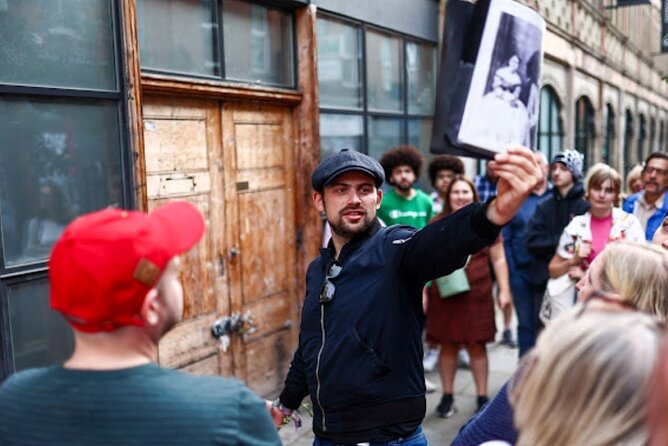
Nick receives the strongest praise. He is described as a trained historian, a local of the East End, and a careful storyteller who presents factual information while keeping the group involved. His approach is interactive rather than overly formal, so you should expect opportunities to ask questions and follow the story as it develops.
His use of an iPad with historic photographs is another useful detail. Old images can help you picture the streets, clothing, and people being discussed. They also provide a break from listening alone, which matters during a long evening walk.
The guide’s attitude toward the victims is just as important. Nick repeatedly brings the women’s lives into focus instead of labeling them simply as prostitutes. You learn about their circumstances and the pressures they faced. That makes the stories more human and avoids turning their deaths into entertainment.
Matt has also led the experience and is praised for bringing Victorian history into the discussion. Because the tour may be led by different people, the tone can vary slightly. Still, the advertised approach is clearly more educational and victim-centered than a sensational crime show.
A small group can make the experience especially personal. The tour allows up to 40 people, but it has also gone ahead for groups of two or even a single booking. If your date has a small turnout, you may get more time for questions and a more direct conversation with the guide.
Is $24.98 fair for this London walk?
At $24.98 per person, I consider this a reasonable London tour price. You receive about two and a half hours of guiding, several locations, historical explanation, and a route through one of the city’s most discussed neighborhoods.
The value depends on what you want from the subject. If you only want to hear a list of suspects, there are cheaper ways to read about the case. If you want a guided walk that ties the crimes to the victims, Victorian society, and the East End’s later changes, the price makes more sense.
The tour also offers value through its range. You are not paying for one isolated stop. You move from Brick Lane to Spitalfields, the Ten Bells, and Goulston Street, with each location serving a different purpose.
London tours can become expensive when they include only a short talk and a photo stop. Here, the length and subject matter make the fee easier to justify. The main cost is your time and energy, so make sure you want an evening walk rather than a seated presentation.
Practical details that affect your choice
The meeting point is Braham Street in London E1. The end point is Spitalfields Market at 65 Brushfield Street, London E1 6AA. The start time is 7:30 p.m., and the experience lasts about 2 hours and 30 minutes.
You should wear comfortable shoes and expect a good amount of walking. One useful tip is to avoid scheduling another fixed evening activity immediately afterward. The timing is approximate, and you will want room for questions, street crossings, and the guide’s storytelling.
The tour is offered in English and uses a mobile ticket. Confirmation is provided when you book. It is near public transportation, and service animals are allowed. Most people can participate, but you should be comfortable walking for the duration.
The tour has a maximum group size of 40. That is not especially tiny, but the experience can sometimes be much smaller. If you prefer an intimate walk, booking well ahead may help, since it is often reserved about 63 days in advance.
Free cancellation is available up to 24 hours before the start time for a full refund. Changes or cancellations inside that 24-hour window are not accepted for a refund, and the cut-off uses London local time.
Who should book this East End experience?
I would recommend it first to true crime fans who want more than suspects and shock value. It suits you especially well if you care about how crime stories treat victims and if you want to understand the social conditions behind the headlines.
It is also a good choice for London visitors who have already seen the major sights and want a more focused neighborhood walk. Brick Lane and Spitalfields give you a look at a part of London that has changed greatly, while the case supplies a clear thread through the evening.
Families with older children or teenagers may enjoy it if they are comfortable with the subject. The tour has been enjoyed by groups that included children and grandchildren, but the murders and living conditions are not suitable for very young children.
You may want to skip it if you dislike night walks, serious crime topics, or long stretches on foot. It is also not ideal if you expect a theatrical haunted tour with actors and staged effects. The strength here is the guide’s explanation, research, and human focus.
Should you book it?
Book this tour if you want the Jack the Ripper story placed in its real East End setting. The best reason to choose it is not the promise of identifying the killer. It is the chance to hear about Elizabeth Stride, Catherine Eddowes, and the other victims as people, while seeing the streets connected with their lives and deaths.
Nick appears to bring particular value through his local knowledge, historical training, photographs, and willingness to involve the group. The route is well chosen, the price is fair, and the evening gives you a useful look at both Victorian Whitechapel and modern East London.
Just bring comfortable shoes and a serious frame of mind. If that sounds right for you, this is a strong pick for an East End evening.
FAQ
Where does the tour start?
The tour starts on Braham Street in London E1.
Where does the tour end?
The tour ends at Spitalfields Market, 65 Brushfield Street, London E1 6AA.
What time does the tour begin?
The tour starts at 7:30 p.m.
How long does the experience last?
The walk lasts approximately 2 hours and 30 minutes.
Which locations are included?
The route includes Brick Lane, Spitalfields Market, the Ten Bells pub, and Goulston Street.
Is the tour offered in English?
Yes. The tour is offered in English.
Can I cancel for a full refund?
Yes. You can cancel at least 24 hours before the start time for a full refund. Cancellations or changes made less than 24 hours before the experience are not accepted for a refund.
Just added around London
- Up at The O2:Twilight Climb with Guided Tour with Panoramic Views★ 5.0 · 50 reviews
- Private Chauffeur-London Heathrow from/to Southampton Cruise Port★ 5.0 · 9 reviews
- Kensington Palace VIP Garden Tour with Royal High Tea★ 4.5 · 71 reviews
- Urban Canvas: Exploring Shoreditch’s Vibrant Street Art★ 5.0 · 36 reviews
- Up at The O2: Sunset Climb with Guided Tour with Panoramic Views★ 5.0 · 110 reviews
- Secrets of the London Underground Small Group Walking Tour★ 4.5 · 38 reviews
- Ultimate introduction to photography in Central London★ 5.0 · 19 reviews
- Full-Day Self-Guided Paris Tour from London by Eurostar with Seine River Cruise★ 3.5 · 22 reviews
Jack the Ripper Tours, compared.

London Jack the Ripper Guided Tour with Ripper-Vision
Read our review →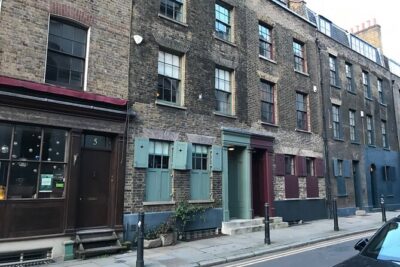
German Language : Original Jack the Ripper Tour
Read our review →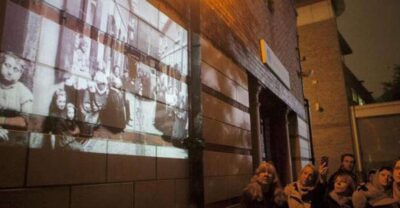
Jack the Ripper Walking Tour – Ripper Vision Tours
Read our review →
Ultimate Jack the Ripper : Guided Tour of London
Read our review →
Browse the lists this tour appears in