
Reviewed · LONDON WALKING TOURS
Slavery and City of London Walking Tour
London’s City hides a difficult story beneath its grand churches, banks, and old walls. This walk connects those familiar sights to Roman enslavement, colonial sugar, the East India Company, and the transatlantic slave trade, while also showing how abolitionists challenged the system.
I like the way the tour links big subjects to small street details, including the site of the Jamaica Coffee House and the Gilt of Cain sculpture. I also like the clear, lively guiding style of Sam, whose talks bring in Roman and Victorian London as well as slavery and abolition.
The main point to consider is that this is a history walk, not a standard sightseeing circuit. Some stops are marked by plaques, buildings, or street corners rather than dramatic ruins, so you need to enjoy listening and looking closely.
Key points to know before you book
- Roman London begins the story: See part of the old wall of Londinium and learn how enslavement in Britain goes back far beyond the Atlantic trade.
- The City’s wealth comes under scrutiny: The route links the East India Company, coffee houses, sugar, banking, and the Royal Africa Company.
- Abolition is part of the story too: Granville Sharp and John Newton help show the resistance to slavery.
- Sam leads the walk: His storytelling covers architecture, Roman London, Victorian London, oral history, and imagery gathered through his studies.
- The walk is compact: Expect about 90 minutes, with several short stops and roughly 35 people at most.
- The route is easy to join by public transport: It begins at Tower Hill at noon, with the stated finish at Aldgate Underground station, although the tour notes also refer to St Paul’s Underground station.
Why this City of London walk is different

Most City of London walks focus on finance, medieval churches, famous monuments, or the Great Fire. This one asks you to look at the same streets through the history of forced labor and colonial money.
That change in focus matters. The Bank of England is not just an impressive financial institution. The Jamaica Wine House is not simply a useful pub stop. A church is not only a place to admire architecture. Each site becomes part of a connected story about trade, power, exploitation, protest, and reform.
I find the strongest part of the experience is the way it refuses to treat slavery as a subject that happened somewhere else. The route shows how London institutions and people were tied to plantations, shipping, banking, coffee, and commercial expansion.
The tone also appears designed to be thoughtful rather than gloomy. The walk deals with an ugly part of British history, but it also gives space to people who opposed slavery and to the eventual abolition of the transatlantic slave trade. That balance should suit you if you want serious history without a lecture that becomes only bleak or angry.
More London Walking Tours:
- Magical London: Harry Potter Guided Walking Tour
★ 4.7 · 22,044 reviews - London: The Original Jack the Ripper Walking Tour
★ 4.7 · 7,833 reviews - Tour for Muggles The Ultimate Harry Potter Walking Tour in London
★ 5.0 · 4,684 reviews
Starting near the Tower and Granville Sharp
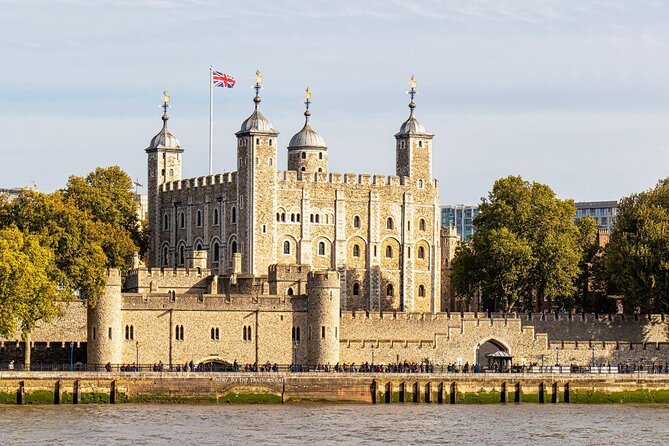
The walk begins at Tower Hill, close to the Tower of London and Trinity Square. This is a useful meeting point because it puts you near one of London’s most familiar historic areas, while the subject immediately takes you beyond the usual royal and military story.
One early connection is the Ordnance Office at the Tower. Granville Sharp worked there and became one of the leading British opponents of slavery in the 18th century. His presence helps establish an important theme: London was involved in the slave economy, but it was also home to organized opposition.
This opening works well because it gives you a human figure to follow. Instead of hearing only about companies and institutions, you begin with a person whose work helped challenge the legal and political foundations of slavery.
You do not need an entrance ticket to the Tower for this tour. The walk uses the area around it and nearby public sights, so your payment covers guiding rather than admission to a major attraction.
The Roman wall and Britain’s older history of slavery
One of the first major stops is the Roman wall of Londinium. About 2,000 years ago, the wall helped define the settlement that became London. The surviving remains are a reminder that the City is built over several layers of history, not just the medieval and Victorian buildings most visitors notice.
The talk puts Roman Britain into the wider story of slavery. The Romans enslaved Britons, and the tour uses the old Roman complaint that the local people were lazy to show how conquerors often described the people they subjugated.
This is also where the walk broadens beyond the transatlantic slave trade. You are encouraged to see Britain’s connection with slavery as a much longer story, beginning with the enslavement of people in Britain itself and continuing through later imperial and commercial systems.
A particularly striking detail from the route is the reference to an African Roman emperor connected with the building of the wall. This adds a useful correction to the usual picture of Roman Britain as a purely white European world. The walk uses the wall not simply as an old structure, but as a way to question who built London and who gets remembered in its story.
The visible remains can be modest, sometimes appearing beneath or beside later buildings. That is part of the appeal, but it also means you should not expect a large archaeological site. The guide’s explanation is what makes the stop meaningful.
East India House and the machinery of trade
The next part of the walk brings you to the former site of East India House, once the headquarters of the East India Company. The building is gone, but the site marks the reach of one of Britain’s most powerful trading organizations.
The company relied on slave labor and trafficked enslaved people from both East and West Africa. This gives the tour a chance to explain how slavery was tied to commercial networks that extended far beyond one plantation or one port.
For you, the value of this stop is the connection between an ordinary City street and a company with global power. The address does not look like a preserved monument to slavery. It is a place where you need the guide to explain what once happened there and why the site mattered.
That pattern continues throughout the walk. London’s role is often present through offices, meeting places, banks, churches, and coffee houses rather than through purpose-built monuments. You are asked to read the City as an old business district whose decisions affected people across the Atlantic, Africa, India, and the Caribbean.
A different sort of day out in London altogether:
- From London: Harry Potter Warner Bros Studio Tour
★ 4.7 · 26,588 reviews - London: Westminster to Greenwich River Thames Cruise
★ 4.5 · 22,836 reviews - London: Madame Tussauds London
★ 4.6 · 20,915 reviews - Stonehenge, Windsor Castle, and Bath from London
★ 4.5 · 18,662 reviews
Fenchurch Street and the Gilt of Cain
At Fenchurch Street, the route pauses at Fen Gardens and the Gilt of Cain sculpture. The sculpture commemorates the abolition of the transatlantic slave trade, giving the tour a visible memorial rather than only an absent building or forgotten address.
This is one of the clearest stops for understanding how modern London remembers the past. The subject is not limited to what happened during the trade. It also includes how the city marks abolition and how public spaces can acknowledge painful history.
The stop lasts about 10 minutes. That is enough time to hear the background and look at the sculpture without turning the walk into a long museum visit.
I also like the location because it sits among the everyday movement of the City. You are not removed from modern London while discussing the past. Offices, roads, and commuters continue around you, making the link between old institutions and present-day life feel direct.
Jamaica Wine House and London’s coffee culture

The Jamaica Wine House marks the site of London’s first coffee house, the Jamaica Coffee House. Its name and location provide a direct link to sugar, the West Indies, plantation labor, and the commercial culture that grew around colonial goods.
Coffee houses were places to meet, exchange news, discuss business, and build commercial relationships. Here, the tour shows how a familiar London institution could also be part of a trade network supported by slavery.
The stop is especially effective because it complicates the pleasant image of old coffee-house London. Coffee, sugar, rum, and other goods were not abstract products. Their supply depended on labor systems that enriched merchants and institutions while denying freedom to enslaved people.
This is not presented as a separate Caribbean history lesson. Instead, the guide places it in the middle of the City, beside buildings and streets you might otherwise pass without asking how they were connected to plantation economies.
St Mary Woolnoth and John Newton’s divided legacy
At St Mary Woolnoth, you hear about John Newton, who served as rector of the church and became associated with the abolitionist cause. His life also raises difficult questions about personal change and historical responsibility.
The church is a good setting for this part of the story. It reminds you that abolition was shaped not only by politicians and merchants, but also by religious arguments, moral pressure, and people reconsidering their own relationship with slavery.
The stop lasts about 10 minutes and offers a pause from the financial institutions along the route. You get a different angle on the subject, one tied to conscience and public debate rather than trade alone.
The tour’s treatment of abolition appears to be one of its strongest features. You are not left with the impression that British history consists only of exploitation. At the same time, the walk does not let the abolition story erase the wealth created by slavery or the long resistance required to end the trade.
The Bank of England and uncomfortable institutional history
The Bank of England Museum is another important stop, scheduled for about 15 minutes. The Bank has apologized for the involvement of some former directors and governors in the slave trade and has promised to remove statues and paintings of them from public display in its Threadneedle Street building.
This stop shows how institutions deal with historical responsibility today. You are not simply told that the Bank was part of a financial system. You also learn about its decision to acknowledge the actions of people connected with its past.
The museum itself is listed as a free stop, but this walk does not promise a full museum visit. The focus is on the Bank’s connection to the subject and on the public meaning of its memorials and displays.
If you enjoy architecture and institutional history, this should be a strong part of the route. If you prefer preserved interiors and long visits inside museums, you may find the time here brief. The experience is built around the guide’s explanation, not extended independent exploration.
The City’s civic leaders and the Royal Africa Company
Another important building represents the involvement of London’s civic leadership in the transatlantic slave trade. Sheriffs, mayors, and aldermen of the City of London met there as shareholders of the Royal Africa Company.
This detail helps show that the trade was not the work of a few distant plantation owners. It involved people with influence in the City itself, including individuals who held public office and helped shape London’s commercial and political life.
For me, this is where the walk’s main argument becomes hardest to ignore. The buildings of the City can look respectable, polished, and detached from violence. The guide restores the connection between civic power and commercial profit.
The stop also gives you useful context for the rest of the route. The Royal Africa Company, the East India Company, banks, coffee houses, and colonial goods were not isolated subjects. They formed part of a broad network in which London money and decision-making helped sustain overseas systems of forced labor.
Finishing near St Paul’s and sorting out the route
The tour’s sightseeing portion includes St Paul’s Cathedral, one of London’s most recognizable landmarks. The cathedral provides a memorable visual finish and a chance to place the earlier stops within the larger City.
The information for the experience gives both Aldgate Underground station and St Paul’s Underground station as finishing references. The meeting details specifically identify Aldgate as the end point, while the itinerary says the walk finishes by St Paul’s Underground station on the Central line.
Because those details do not fully match, I would confirm the exact final stop with Sam when booking or before setting out. Start at Tower Hill at noon, and allow a little extra time afterward if you have a train, lunch booking, or timed attraction.
The stated duration is about 90 minutes, although some descriptions connected with the walk refer to closer to two hours. Plan for the longer possibility if your afternoon is tightly scheduled.
Price, group size, and practical value
At $27.43 per person, this is priced as a focused guided walk rather than a full-day tour. There are no major entry tickets included, but the route uses free public sights and the value lies in the interpretation.
I think the price is fair if you want a clear historical framework for places you might otherwise see without context. In 90 minutes, you cover Roman London, the East India Company, coffee-house culture, abolition, the Bank of England, the Royal Africa Company, and St Paul’s.
The maximum group size is 35. That is not an intimate private walk, but it is small enough for a guide to speak to the group in city streets without feeling like a large coach excursion. If you want a quiet one-to-one discussion, this may feel too big. If you like the energy of meeting people from different places, the group size should work.
The walk is near public transportation, and most people can take part. You receive a mobile ticket, and confirmation is provided at booking. Wear comfortable shoes, since the route moves between several City locations and includes standing at outdoor stops.
Free cancellation is available up to 24 hours before the start time. Poor weather or failure to reach the minimum group size can lead to a different date, another experience, or a full refund.
Who should book this walk?
I would choose this tour if you want London history that goes beyond royal buildings, famous churches, and the Great Fire. It suits curious first-time visitors, repeat visitors who have already seen the main sights, and anyone who wants to understand how finance and colonial trade shaped the City.
It is also a good match for you if you enjoy a guide who talks about architecture, oral history, and overlooked details. Sam’s style is described as clear, funny, and engaging, with wide coverage of Roman and Victorian London.
I would be more cautious if you want a fast photo tour or a route packed with interior visits. Many of the important sites are viewed from public streets, and the subject requires attention. You will gain more if you listen closely than if you simply follow the route from landmark to landmark.
Should you book the Slavery and City of London Walking Tour?
Book it if you want to see familiar London places in a new light and are willing to give serious history your full attention. The best parts are the links between the Roman wall, East India House, Jamaica Coffee House, St Mary Woolnoth, the Bank of England, and the Royal Africa Company.
The tour offers particularly good value for repeat visitors who think they already know the City. Just confirm the precise end point, allow up to two hours rather than exactly 90 minutes, and expect an outdoor walk with little formal admission sightseeing.
FAQ
Where does the tour begin?
The meeting point is Tower Hill at Trinity Square, London EC3N 4TH, UK. The start time is 12:00 pm.
Where does the tour finish?
The meeting details identify Aldgate Underground station on Aldgate High Street as the end point. Other tour information refers to finishing near St Paul’s Underground station, so confirm the final location with the guide.
How long does the walk last?
The stated duration is approximately 1 hour 30 minutes. Some descriptions refer to closer to two hours, so allow extra time if your schedule is tight.
What landmarks are included?
The route includes the Tower of London area, the Roman wall of Londinium, the former East India House site, Fenchurch Street, the Jamaica Wine House, St Mary Woolnoth, the Bank of England, the Royal Africa Company site, and St Paul’s Cathedral.
How large is the group?
The tour accepts a maximum of 35 people.
Can I cancel for a refund?
You can cancel at least 24 hours before the start time for a full refund. Cancellations or changes made less than 24 hours before the experience are not accepted for a refund.
Just added around London
- Up at The O2:Twilight Climb with Guided Tour with Panoramic Views★ 5.0 · 50 reviews
- Private Chauffeur-London Heathrow from/to Southampton Cruise Port★ 5.0 · 9 reviews
- Kensington Palace VIP Garden Tour with Royal High Tea★ 4.5 · 71 reviews
- Up at The O2: Sunset Climb with Guided Tour with Panoramic Views★ 5.0 · 110 reviews
- Secrets of the London Underground Small Group Walking Tour★ 4.5 · 38 reviews
- Urban Canvas: Exploring Shoreditch’s Vibrant Street Art★ 5.0 · 36 reviews
- Ultimate introduction to photography in Central London★ 5.0 · 19 reviews
- Full-Day Self-Guided Paris Tour from London by Eurostar with Seine River Cruise★ 3.5 · 22 reviews
London Walking Tours, compared.

Magical London: Harry Potter Guided Walking Tour
Read our review →
Tour for Muggles The Ultimate Harry Potter Walking Tour in London
Read our review →
Harry Potter Movies Walking Tour (Kids Go Free)
Read our review →
Changing of the Guard Guided Walking Tour in London
Read our review →
The Great British Rock and Roll Music Walking Tour
Read our review →
Jack the Ripper Walking Tour – Ripper Vision Tours
Read our review →Browse the lists this tour appears in