
Reviewed · LONDON
The women of London
London’s grand story changes when you follow the women who shaped it. This small-group walking tour links queens, nurses, suffragettes, writers, and wartime figures from Buckingham Palace to the West End, giving you a sharper view of the city than a standard sightseeing route.
I like the intimate group limit of 10 people, which should make it easier to ask questions. I also like the clear focus on feminist history, especially the stops tied to Emmeline Pankhurst and Millicent Garrett Fawcett. The main consideration is pace: two and a half hours on foot, with several outdoor stops, may feel long if you want a relaxed sightseeing day.
Key points to know before booking
- A 10-person maximum keeps the discussion personal, with more room for questions than on a large coach or crowded walking tour.
- The route connects major sights with lesser-known stories, moving from Buckingham Palace and Parliament Square to memorials for nurses, activists, and authors.
- Spanish and French are available, a useful choice for visitors who prefer to learn in either language.
- Emmeline Pankhurst and the suffrage movement receive special attention, including the WSPU and the events known as Black Friday.
- The $20.53 price is strong value for a 2-hour-30-minute guided walk, provided you are comfortable staying outdoors and walking between stops.
- The tour finishes near Leicester Square, at the Agatha Christie Memorial, placing you close to restaurants, theaters, and public transport.
London looks different when women take the lead
Many London sightseeing walks begin and end with kings, generals, and politicians. This one asks you to look again. The route gives women a central place in the story, from the royal figure associated with Buckingham Palace to campaigners who fought for voting rights and writers whose work reached readers around the world.
That focus gives the tour a clear purpose. You are not simply collecting famous buildings. You are asking who had power, who was denied it, and how women changed public life through politics, medicine, literature, war work, and protest.
The walk also has a useful balance of well-known places and specific memorials. You will see Parliament Square and Trafalgar Square, but the explanation centers on figures such as Florence Nightingale, Edith Cavell, and Millicent Garrett Fawcett. That makes the route easier to remember than a string of unrelated landmarks.
The guide is available in Spanish or French. Carmen is named in the available feedback and is praised for her strong command of the suffragette story, her warmth, and her personal commitment to the subject. Since the tour description does not promise that Carmen leads every departure, confirm the guide when booking if that matters to you.
Other London outings people book alongside this one:
- From London: Harry Potter Warner Bros Studio Tour
★ 4.7 · 26,588 reviews - London: Westminster to Greenwich River Thames Cruise
★ 4.5 · 22,836 reviews - Magical London: Harry Potter Guided Walking Tour
★ 4.7 · 22,044 reviews
Buckingham Palace begins with royal women
The meeting point is the Constance Fund fountain near the Diana memorial area, and the tour begins at 2:00 p.m. From there, the first stop is Buckingham Palace, with about 15 minutes devoted to the palace and the royal figure connected with The Mall.
You should expect an outdoor introduction rather than a palace visit. Admission to Buckingham Palace is not included, and the route does not promise entry inside. That is not a serious flaw for a tour focused on public monuments and political history, but you should know that the palace is a viewing stop only.
This opening works well because it places women and authority side by side. The palace represents inherited power, while later stops show women who had to organize, protest, and campaign to gain a voice in public life.
The Mall also gives the guide a broad setting for explaining how royal ceremonies, public demonstrations, and national memory meet in central London. With only 15 minutes here, the stop should remain focused rather than becoming a long palace lecture.
Florence Nightingale at the Crimean War Memorial
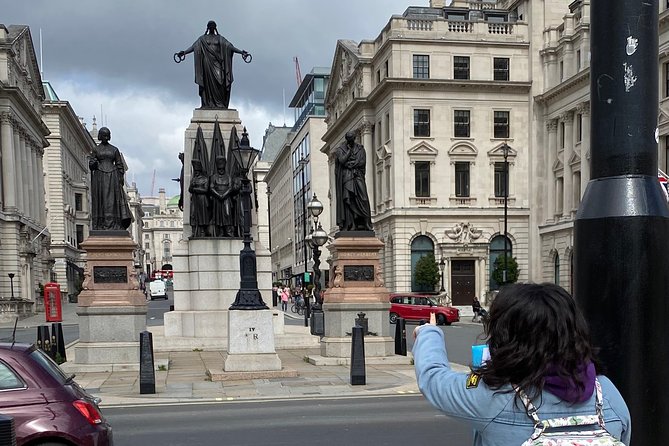
The walk continues to the Crimean War Memorial, where Florence Nightingale takes center stage for about 10 minutes. The memorial stop is free, and it offers a direct link between a public monument and the woman associated with modern nursing and wartime medical care.
This is one of the tour’s strongest choices because Nightingale is familiar to many people, yet her place in London’s public memory is easy to overlook. A guide can add meaning to the name and statue by explaining why she is remembered here and how her work fits into the wider story of women serving and leading during war.
Ten minutes is enough for a concise explanation and questions. It also keeps the walk moving. If you want a long treatment of Nightingale’s life, this tour is not designed as a full biography. Its value comes from connecting her to the city and to the other women on the route.
Parliament Square and Millicent Garrett Fawcett
Parliament Square receives about 20 minutes, making it one of the longer stops. The focus is Millicent Garrett Fawcett and the events associated with Black Friday, an important chapter in the campaign for women’s voting rights.
This is where the tour’s political purpose becomes especially clear. Parliament Square is not just a grand open space beside government buildings. It is a fitting place to discuss women confronting the political system and demanding a role in decisions that affected their lives.
Fawcett offers a useful counterpoint to the more confrontational image often linked with the suffrage movement. Her story helps show that the campaign involved different methods, personalities, and political approaches. The guide can also place Black Friday within the pressure and conflict surrounding the movement.
Because the stop is free and outdoors, you can concentrate on the explanation without ticket lines or security checks. The drawback is exposure to London weather. Bring a waterproof layer and shoes suited to a long city walk.
A different sort of day out in London altogether:
- London: Madame Tussauds London
★ 4.6 · 20,915 reviews - Stonehenge, Windsor Castle, and Bath from London
★ 4.5 · 18,662 reviews - London: Warner Bros. Studio Tour with Transfers
★ 4.7 · 17,586 reviews - London: Tower Bridge Entry Ticket
★ 4.7 · 15,560 reviews
Emmeline Pankhurst and the WSPU
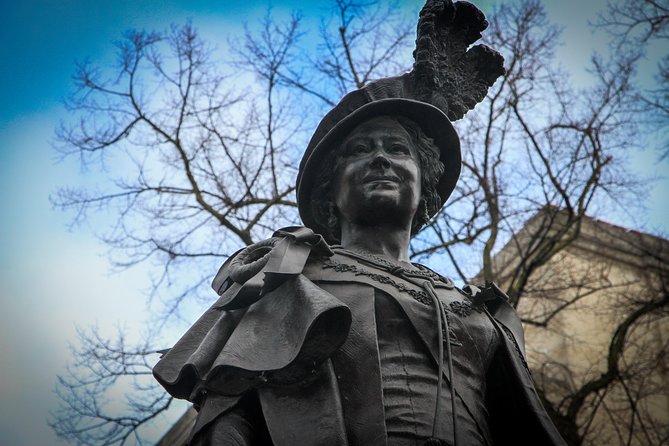
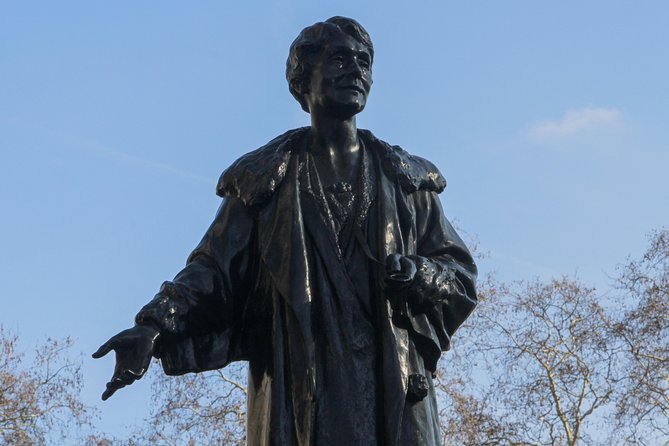
The Emmeline Pankhurst Memorial receives 15 minutes. Here the subject is Pankhurst and the Women’s Social and Political Union, commonly known as the WSPU.
This should be one of the liveliest portions of the route. Pankhurst is closely tied to the more militant side of the suffrage campaign, and her memorial gives the guide a natural place to explain how women organized, protested, and challenged a political system that excluded them.
I like the way this stop follows Fawcett. Seeing both figures on the same route can help you understand that the fight for votes was not a single, tidy campaign. It included different tactics and disagreements, as well as shared goals.
The tour description and the feedback about Carmen place particular weight on the suffragettes. If that is the part of women’s history that interests you most, this is likely the section you will value most. You also have time to ask questions, which matters when a subject includes political conflict and complicated personalities.
Downing Street and the Women of World War II Memorial
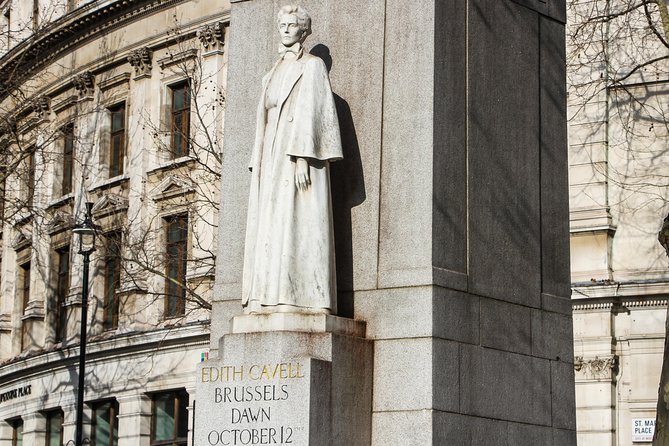
The next stop is the Women of World War II Memorial, with about five minutes devoted to it. The route also connects this area with Downing Street and the suffragettes.
Five minutes is brief, so think of this as a focused memorial stop rather than a long discussion. Its importance comes from shifting the story beyond voting rights and into women’s wartime work. The memorial recognizes the many roles women held during World War II, adding another period to the tour’s broad view.
The location near Downing Street also keeps the route tied to the center of British government. That contrast matters: women are remembered beside the institutions that once limited their political power and later depended on their work during national emergencies.
If you have a special interest in wartime history, you may want to ask the guide for more detail during the walk. The schedule gives this stop only a short window, though the small group format may make a follow-up question possible.
Trafalgar Square and the road to votes for women
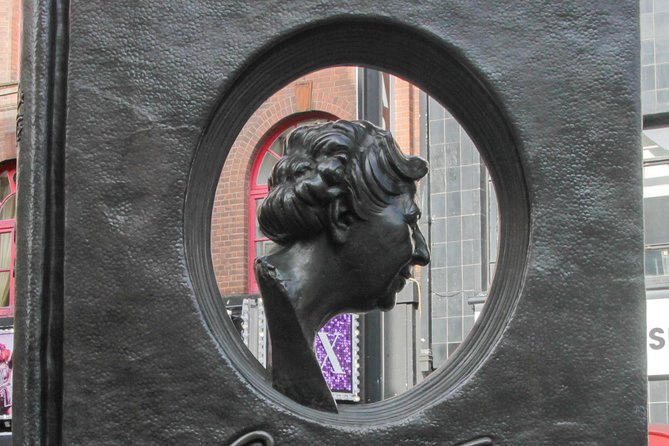
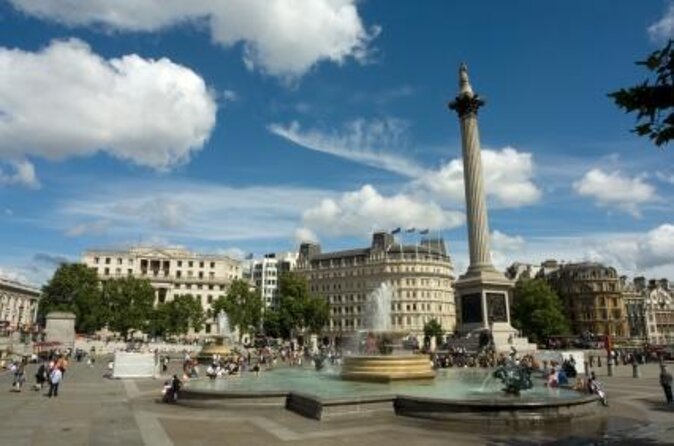
Trafalgar Square receives about 10 minutes, with attention to World War I and votes for women. The square is one of London’s best-known public spaces, so the stop connects a familiar setting with a less familiar account of political change.
The First World War altered public life in ways that affected women’s work, responsibilities, and political position. The guide’s role here is to show how the war fits into the long campaign for voting rights rather than treating suffrage as an isolated event.
This stop should also help you see Trafalgar Square as a place for public expression. It has long been tied to demonstrations, celebrations, and national debate. That makes it a natural setting for a tour about women claiming space in public life.
With only 10 minutes, the explanation will need to stay selective. That is a fair trade for a route that covers so many people and periods. You get a broad connection between war and political rights, then continue to more personal memorials.
Edith Cavell’s short but powerful memorial stop
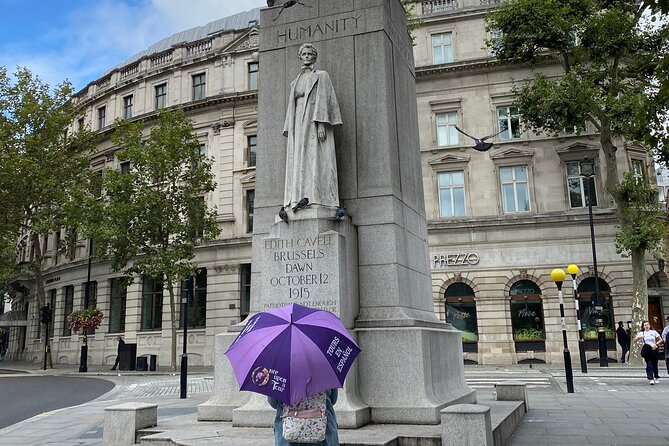
The Edith Cavell Memorial receives about five minutes. Cavell’s life brings another wartime story into the route, this time centered on an individual rather than a broad group of women.
A short stop can still have weight when the subject is tied to a clear memorial. The guide can explain who Cavell was and why her life is remembered in London. The inclusion of her memorial also keeps the tour from narrowing women’s history to suffrage alone.
This is another point where you may want to ask a question if the subject catches your attention. The schedule does not allow a long biography, but the small group may give you a chance to learn more without interrupting a large crowd.
The five-minute timing tells you something important about the tour as a whole. It is a connected overview, not a series of full lectures. You will meet many women and movements, then decide which stories you want to explore later.
Agatha Christie finishes the walk in the West End
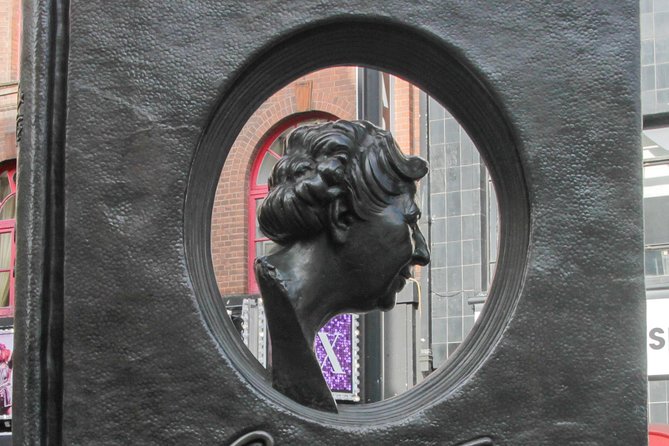
The final stop is the Agatha Christie Memorial, with about 10 minutes devoted to her life. The tour ends at Cranbourn Street, near the West End, rather than returning to the starting point.
That ending gives the route a welcome change of tone. After royal power, political protest, nursing, war, and memorials, Christie represents women’s influence through popular literature and the cultural life of London.
The location is practical. Finishing near the West End puts you close to central London sights, restaurants, theaters, and public transport. You can continue sightseeing without crossing the city to retrieve a vehicle or return to Buckingham Palace.
The end point also makes the tour feel like a one-way story through London. You begin near the royal center and finish among theaters and entertainment venues. Along the way, the route shows how women shaped both public institutions and popular culture.
What the $20.53 price really gives you
At $20.53 per person, this is a modestly priced guided walk for about two and a half hours. The value comes less from entry tickets, since the stops are viewed from outside and most carry no admission charge, and more from the guide’s interpretation.
You could walk past these memorials on your own. You would also miss much of the connection between them. A good guide turns separate statues and squares into a coherent account of women’s political, social, and cultural influence.
The small group improves that value. With no more than 10 people, you should have a better chance to hear clearly and ask about a particular figure. That matters on a subject that can raise questions about protest tactics, political movements, and the way London remembers its past.
The price is especially attractive if you already plan to visit central London on foot. You are paying for context rather than a costly attraction ticket. If you prefer private touring, indoor access, or a highly specialized academic lecture, this experience may feel too limited.
Timing, meeting point, and practical planning
The tour starts at 2:00 p.m. and lasts approximately 2 hours and 30 minutes. It begins at the Constance Fund fountain of Diana, London SW1A 1RD, and ends at the Agatha Christie Memorial on Cranbourn Street, London WC2H 7AB.
Because the tour is one way, plan your afternoon around the final location. The ending is useful for continuing into the West End, but it is not the same place as the meeting point. The route is near public transportation, which should help you reach the start and continue after the walk.
Wear comfortable shoes and prepare for outdoor conditions. The provided details do not promise indoor shelter at the stops, and London’s weather can change quickly. A light waterproof layer is a sensible choice, even if the afternoon begins dry.
Most people can participate, and the group has a maximum of 10. The tour is available in Spanish or French, so check the language option carefully when booking.
Free cancellation is available when you cancel at least 24 hours before the start time. Changes or cancellations inside that window are not accepted for a refund, and the experience requires a minimum number of participants. If that minimum is not reached, you are offered another date or experience, or a full refund.
Who will get the most from this London walk
I would choose this tour if you want a focused way to see central London and care about the people behind the monuments. It suits visitors interested in women’s rights, political movements, nursing, wartime service, literature, or the way public memorials shape memory.
It is also a smart option for Spanish- or French-speaking visitors who want more than a basic sightseeing explanation. A small group and time for questions can make complicated subjects easier to follow.
You may want another type of tour if you dislike walking, need frequent indoor breaks, or want to enter Buckingham Palace or another attraction. There are several stops, and the schedule gives some memorials only five or 10 minutes.
The route works best for someone who enjoys connections. You will not receive a full life story for every woman named. Instead, you will see how different women affected London across politics, medicine, war, and literature.
Should you book The Women of London?
Book it if you want to see central London through a clear feminist lens and prefer a personal guide to a large group. The combination of Parliament Square, the Pankhurst Memorial, the Crimean War Memorial, and the Agatha Christie Memorial gives you a useful range of subjects for a low price.
The strongest reason to choose it is the focus. London has no shortage of sightseeing tours, but few connect royal women, suffragettes, nurses, wartime figures, and authors in one compact route. Confirm your preferred language and, if possible, whether Carmen is leading your date.
Skip it if you are looking for indoor attractions, palace admission, or a slow tour with long stops. For everyone else, this is a practical and purposeful way to spend an afternoon in central London.
FAQ
Where does The Women of London tour start?
The tour starts at the Constance Fund fountain of Diana in London SW1A 1RD.
Where does the tour end?
It ends at the Agatha Christie Memorial on Cranbourn Street, London WC2H 7AB.
What time does the tour begin?
The listed start time is 2:00 p.m.
How long does the tour last?
The tour lasts approximately 2 hours and 30 minutes.
What languages are available?
The guide is available in Spanish or French.
How many people can join the tour?
The activity has a maximum of 10 participants.
Is admission to Buckingham Palace included?
No. Admission to Buckingham Palace is not included, and the palace is visited as an outdoor stop.
Are tips included in the price?
No. Tips are optional and are not included.
Can I cancel for a full refund?
Yes. You can cancel at least 24 hours before the start time for a full refund. Changes or cancellations made less than 24 hours before the start time are not accepted for a refund.
Just added around London
- Up at The O2:Twilight Climb with Guided Tour with Panoramic Views★ 5.0 · 50 reviews
- Private Chauffeur-London Heathrow from/to Southampton Cruise Port★ 5.0 · 9 reviews
- Kensington Palace VIP Garden Tour with Royal High Tea★ 4.5 · 71 reviews
- Secrets of the London Underground Small Group Walking Tour★ 4.5 · 38 reviews
- Urban Canvas: Exploring Shoreditch’s Vibrant Street Art★ 5.0 · 36 reviews
- Up at The O2: Sunset Climb with Guided Tour with Panoramic Views★ 5.0 · 110 reviews
- Ultimate introduction to photography in Central London★ 5.0 · 19 reviews
- Full-Day Self-Guided Paris Tour from London by Eurostar with Seine River Cruise★ 3.5 · 22 reviews