
Reviewed · CITY TOURS
Slave Trade Money Trail Tour in the City of London
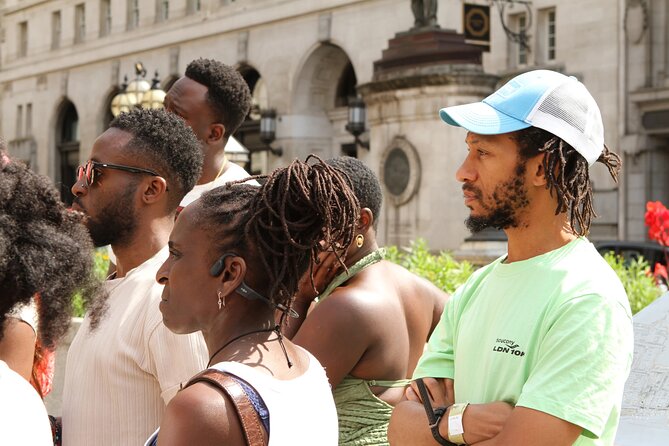
London’s grandest financial buildings carry a history that is easy to miss. This three-hour walk with Darrel Blake shows how banks, insurers, shipping firms, and trading centres helped build wealth linked to the transatlantic slave trade. You move from the Royal Exchange through the City of London and finish at Borough Market.
I like the route’s focus on actual places rather than a classroom lecture, and I like the booklet, which gives you something to follow and revisit afterward. Darrel also uses artifacts, personal experience, and questions to keep the group involved. The main consideration is the subject itself: this is a serious, emotional tour, not a light sightseeing stroll. It also depends on good weather.
Key points to know
- London’s financial centre is the subject: See how the Bank area, Royal Exchange, Fenchurch Street, and Lloyd’s of London connect to slavery-era wealth.
- Darrel Blake leads the walk: Expect clear explanations, questions, historical evidence, personal stories, and artifacts.
- The route ends at Borough Market: The final stop links sugar, tobacco, and other goods to enslaved labour.
- The tour takes about three hours: It begins at noon and has a maximum group size of 30.
- The price is $48.01 per person: Lunch and bottled water are not included, but the guide and booklet are.
- This is best for serious history learners: The tour suits people interested in colonialism, social justice, human rights, and Britain’s Caribbean connections.
Why this London walk changes the way you see the City
Many London tours point out royal homes, medieval churches, and famous monuments. This one asks a harder question: who paid for the city’s growth, and which institutions helped move that money?
You begin in the City of London, a compact financial district where modern office towers sit beside old commercial landmarks. The guide connects these places to the systems that supported British involvement in the transatlantic slave trade from the 17th through the 19th centuries.
That approach gives the walk its value. You are not only hearing about plantations or ships far away. You are looking at the banks, insurers, merchants, and trading networks that helped turn enslaved labour into commercial wealth in Britain.
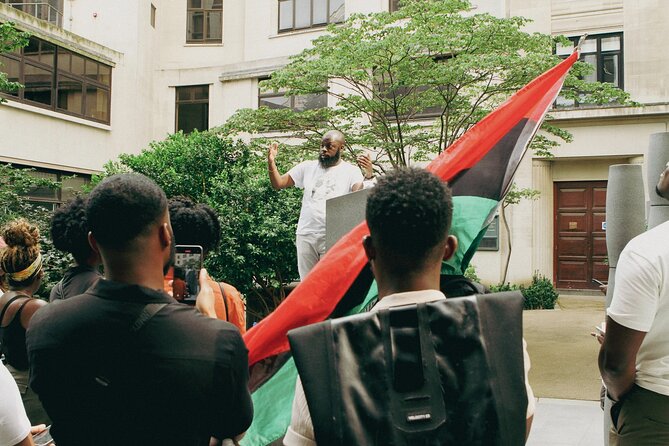
Darrel Blake’s style is direct and participatory. He does not simply speak for three hours while you trail behind. He asks questions, checks what you have understood, and encourages discussion. He also brings artifacts and personal experience into the presentation, which helps connect large economic forces with individual lives and family histories.
The tone can be especially meaningful if you have Caribbean or African heritage and want a clearer picture of Britain’s role in the story of your ancestors. It also works for anyone who has visited the City many times but never considered what its buildings represented during the period of slavery.
More City Tours:
- City Sightseeing London Hop-On Hop-Off Bus Tour & Bookable Extras
★ 4.0 · 1,224 reviews - London: Go City Explorer Pass® – Tickets for 2-7 Attractions
★ 4.3 · 1,111 reviews - London: Speedboat Tour Through Heart of the City
★ 5.0 · 387 reviews
Meeting at the Royal Exchange at noon
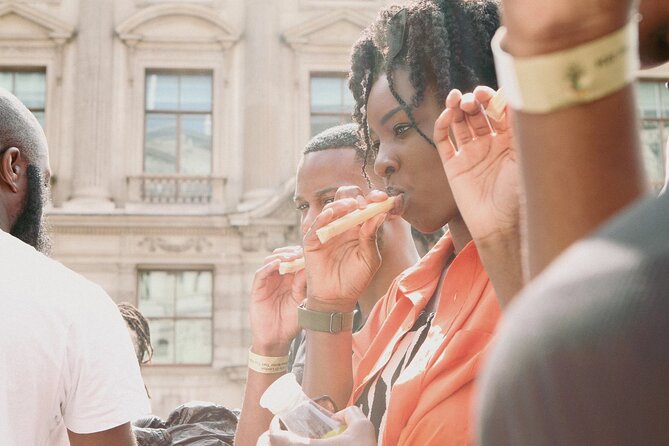
The tour starts at the Royal Exchange, London EC3V 3LL, at 12:00 pm. This is a practical meeting point in the City, close to the Bank area and served by public transportation.
Arrive with enough time to find the building and gather before noon. The booking information does not specify a café stop or indoor waiting area, so bring what you need for the start of the walk, especially water and weather protection.
The opening section sets up the main idea: London’s financial strength did not develop separately from colonial trade. The City was connected to shipping, insurance, credit, and commerce tied to plantations and enslaved labour.
That framing matters because the tour is not limited to a list of wealthy merchants. You are asked to consider how institutions operate, how profits move, and how economic systems can give distant violence a polished local address.
The Bank area and the money behind the City
The first stop lasts about 15 minutes in the historic Bank area. Admission is free, and the focus is on financial institutions with links to the transatlantic slave trade.
This is a short opening stop, but it establishes the pattern for the whole walk. You look at a familiar part of London and then add a missing layer to the view. The grand offices and commercial streets become evidence of a financial system that reached across the Atlantic.
The stop is likely to appeal most to people who enjoy connecting economics with social history. If you prefer a tour based mainly on architecture, famous personalities, or entertaining anecdotes, the subject may feel more demanding.
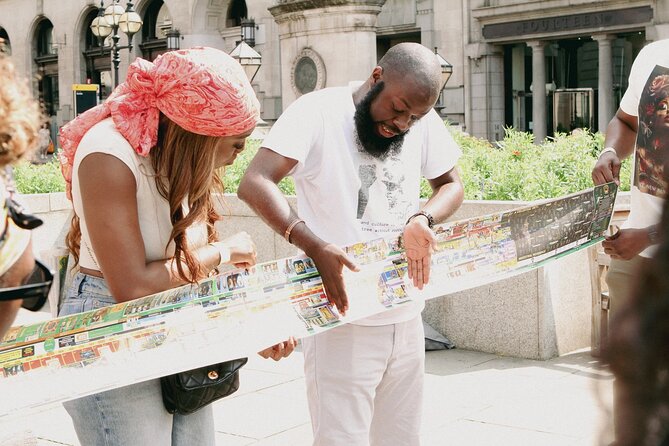
The booklet is useful here. It gives you a reference point as the guide explains names, institutions, and connections that can be difficult to absorb on a single walk. You can also use it afterward to continue your own research.
The Royal Exchange and commercial power
The Royal Exchange receives about 20 minutes. The building once served as the centre of London’s commercial life, and the discussion focuses on how this commercial world helped facilitate the transatlantic slave trade.
The building is an effective place to discuss the difference between trade in goods and the human cost behind those goods. A grand exchange can look like a symbol of progress and order. The tour asks you to see the people and labour systems that made parts of that order possible.
Darrel’s method includes checking what you have just learned. That makes the experience more active than a standard talk. You may find yourself recalling details from one stop as you reach the next, which helps the route build a connected story.
There is also a useful contrast between the building’s public image and its historical role. The Royal Exchange is not presented simply as an old landmark. It becomes part of a wider commercial structure involving merchants, insurers, shipping companies, and consumers.
A different sort of day out in London altogether:
- From London: Harry Potter Warner Bros Studio Tour
★ 4.7 · 26,588 reviews - London: Westminster to Greenwich River Thames Cruise
★ 4.5 · 22,836 reviews - Magical London: Harry Potter Guided Walking Tour
★ 4.7 · 22,044 reviews - London: Madame Tussauds London
★ 4.6 · 20,915 reviews
Fenchurch Street and the shipping network

The longest stop is at 20 Fenchurch Street, with about 50 minutes devoted to the area. Here the focus turns to the shipping industry and the companies headquartered in or connected to this part of London.
This is where the tour’s financial theme becomes easier to picture. Ships were not an abstract part of the trade. They carried people, goods, and capital, and companies connected to shipping could profit at different stages of the system.
The length of this stop suggests that you should expect a sustained explanation rather than a quick photo opportunity. Darrel links the local business district to the wider British economy and explains how wealth from slavery helped support urban growth and elite power.
This section may be the most useful for you if you want to understand systems rather than isolated facts. It deals with how money, transport, commerce, and political influence reinforced one another.
It is also a good point to ask questions. The tour is designed for discussion, and Darrel’s presentation style encourages participation. The group can be as large as 30 people, so your experience may vary depending on attendance and how much time the group spends talking.
Lloyd’s of London and the business of risk
The walk continues to Lloyd’s of London for about 20 minutes. The main subject here is insurance and its role in underwriting voyages connected to the transatlantic slave trade.
Insurance can seem like a dry technical topic, but it is central to understanding how a dangerous and profitable trade operated. Ships, cargoes, and commercial ventures carried financial risks. Insurance helped investors manage those risks and made the wider system more workable for the people who profited from it.
This stop adds an important layer to the tour. It shows that involvement did not depend only on owning a ship or plantation. Financial institutions could support the system through contracts, loans, and coverage.
The guide’s use of evidence and artifacts is particularly valuable during sections like this. Abstract financial arrangements can be hard to remember when heard once. A physical object or document can make the connection more concrete.
You may also find this stop unsettling because it shows how ordinary business practices can sit beside profound human suffering. That discomfort is part of the point, but you should choose this tour knowing it will not soften the subject for easy consumption.
Borough Market and goods produced by enslaved labour
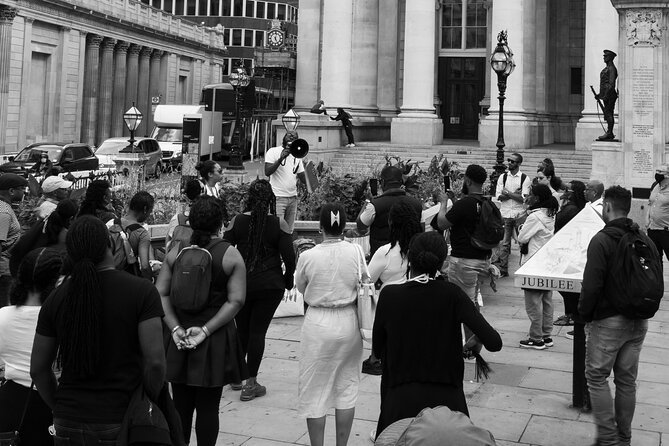
The final stop is Borough Market in Southwark, where the tour spends about 20 minutes. The discussion turns to goods such as sugar and tobacco, and to the way markets helped connect consumers in London with labour performed by enslaved people.
Ending at a food market gives the tour a strong everyday connection. You are no longer looking only at banks, insurers, and shipping firms. You are considering the products that entered ordinary commercial life and helped make slavery profitable.
Borough Market is also a busy public place, so the surroundings may feel less controlled than a quiet museum or private classroom. That can be useful because the subject remains connected to present-day London rather than sealed away as a distant historical episode.
The information provided does not include admission to any separate attraction at Borough Market. It lists the stop itself, with any admission ticket not included. Ask the guide if you need clarification about what the final stop covers before booking.
The walk ends at Borough Market, London SE1 9AL. From there, you can continue exploring Southwark or make your own way elsewhere, but no onward activity is part of the experience.
Darrel Blake’s teaching style

Darrel Blake is the main reason this experience feels different from a standard city walk. His approach combines research, direct explanation, personal experiences, artifacts, and questions for the group.
You can expect him to challenge easy versions of British history. The focus is not only on abolition, but also on the economic growth that came before it and the long effects that continued afterward.
That wider time frame matters. The tour covers the roots of the African slave trade, the period of abolition, and the legacy of slavery in modern London. It also links history to current questions about social justice, human rights, cultural identity, and the diversity of the city today.
The presentation has been especially effective for families and school-age children. Two young participants, aged 13 and 15, were able to take part and understand the material. Still, the subject includes exploitation, violence, and injustice, so parents should decide if the content suits their children.
Darrel’s delivery is described as clear and direct. He does not avoid difficult facts or wrap them in vague language. That honesty is a strength, though it may feel intense if you are expecting a relaxed sightseeing tour.
What the $48.01 price gets you
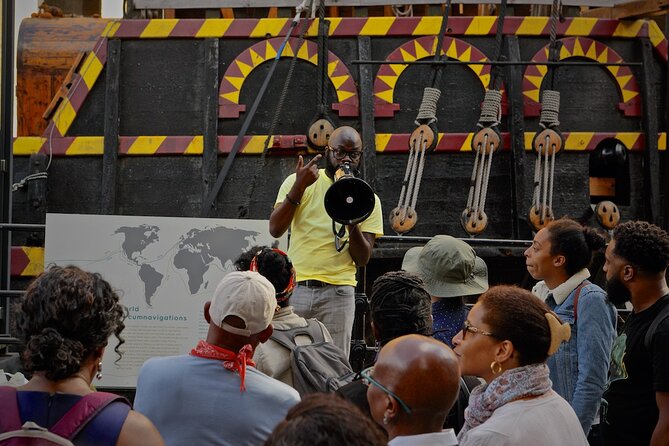
At $48.01 per person, this is not the cheapest way to spend three hours in London. The value depends on what you want from a tour.
You are paying for a specialist guide, a planned route through several important locations, a booklet, and a focused historical presentation. The route gives you context that you would probably not get by walking from the Royal Exchange to Borough Market on your own.
You are not paying for lunch, bottled water, or entry to a separate attraction. Bring your own water and plan food before or after the walk. Since the route lasts about three hours and begins at midday, you may want to eat beforehand.
For a history-focused experience, the price is reasonable if you want interpretation rather than simple directions and dates. If you mainly want views, photographs, or a broad introduction to London, a general city tour may offer better value for you.
The maximum group size is 30. That is small enough for a planned walking group but large enough that personal discussion may depend on the day’s attendance.
Practical planning for a serious history walk
Wear comfortable shoes and check the forecast before you leave. The experience requires good weather, and a poor-weather cancellation may lead to a different date or a full refund.
The tour is offered in English and uses a mobile ticket. Confirmation is received at booking, and the activity is near public transportation. Service animals are allowed, and most people can participate.
The route begins at the Royal Exchange and ends at Borough Market, so do not plan to return to the starting point automatically. The end point is useful if you want to continue around Southwark, but you should allow extra time if you have a separate booking elsewhere.
Free cancellation is available up to 24 hours before the start time for a full refund. Changes or cancellations made less than 24 hours before the start are not accepted for a refund.
This is a walking experience with a serious subject. I would bring water, dress for changing conditions, and leave space in your schedule for reflection rather than rushing straight into another major attraction.
Who should book this experience?
I would choose this tour if you want to understand how slavery shaped Britain beyond plantations and abolition laws. It is particularly suitable for history buffs, people studying colonialism, and anyone interested in social justice or human rights.
It is also a strong choice if you have Caribbean heritage or want to investigate Britain’s connection to your family’s past. The tour can give you useful starting points for further research, especially through its focus on named institutions and physical places.
Families with older children may find it worthwhile. The material can be educational and memorable, but parents should prepare children for a frank discussion of slavery and exploitation.
I would not choose it if you want a light, humorous introduction to London or a tour packed with interior visits. Much of the value comes from listening, thinking, and asking questions at city locations that may look ordinary at first glance.
Should you book the Slave Trade Money Trail?
Book it if you want a direct, place-based account of how London’s financial and commercial growth connected to the transatlantic slave trade. Darrel Blake’s use of artifacts, questions, and personal experience gives the walk a human edge, while the route shows how banks, shipping firms, insurers, and markets fit into one system.
The main trade-off is tone. This is a sobering history experience, and the weather-dependent format means you need to plan sensibly. But if you are willing to spend three hours looking beyond London’s polished monuments, the tour offers a serious and useful way to understand the city.
FAQ
How much does the Slave Trade Money Trail Tour cost?
The price is $48.01 per person.
How long does the tour last?
The tour lasts approximately three hours.
What time does the tour begin?
The tour begins at 12:00 pm.
Where does the tour start?
The meeting point is the Royal Exchange, London EC3V 3LL, UK.
Where does the tour end?
The tour ends at Borough Market, London SE1 9AL, UK.
What language is the tour offered in?
The tour is offered in English.
What is included in the price?
A tour guide is included, along with a tour booklet intended to support the experience.
Are lunch and bottled water included?
No. Lunch and bottled water are not included.
How many people can join the tour?
The maximum group size is 30 people.
Can I cancel for a full refund?
Yes. You can cancel at least 24 hours before the experience start time for a full refund. Cancellations or changes made less than 24 hours before the start are not accepted for a refund.
What happens if bad weather cancels the tour?
If poor weather causes a cancellation, you will be offered another date or a full refund.
Just added around London
- Wonderful Westminster Tour & Visit Windsor Castle★ 4.0 · 11 reviews
- Westminster Abbey Guided Private Tour★ 5.0 · 22 reviews
- Priority Access Tour of Westminster Abbey with London Eye option★ 4.5 · 149 reviews
- Enter Buckingham Palace & See The Main Westminster Sights Tour★ 5.0 · 5 reviews
- Warwick Castle Including Return Train Tickets from London★ 4.0 · 9 reviews
- West End Donut Adventure Sweets and Sights in London★ 5.0 · 20 reviews
- Warner Bros Studio Tour London – The Making of Harry Potter with Hotel Pick-up★ 4.5 · 30 reviews
- Warner Bros. Studio Tour London The Making of Harry Potter with return transfers★ 4.5 · 159 reviews
City Tours, compared.
City Sightseeing London Hop-On Hop-Off Bus Tour & Bookable Extras
Read our review →
Go City Explorer Pass® – Tickets for 2-7 Attractions
Read our review →
Upside Down House Westfield White City Entry Ticket
Read our review →
Westminster Abbey Priority Access & Guided City Tour
Read our review →
Eating London: The Heart of ‘The City’ Food Tour
Read our review →
London Luxury Dinner Experience with Panoramic City Views
Read our review →
Go City London Explorer Pass: 2-7 Things To do including Shard
Read our review →Browse the lists this tour appears in