
Reviewed · LONDON WALKING TOURS
London: Brutalist Architecture & History Walking Tour
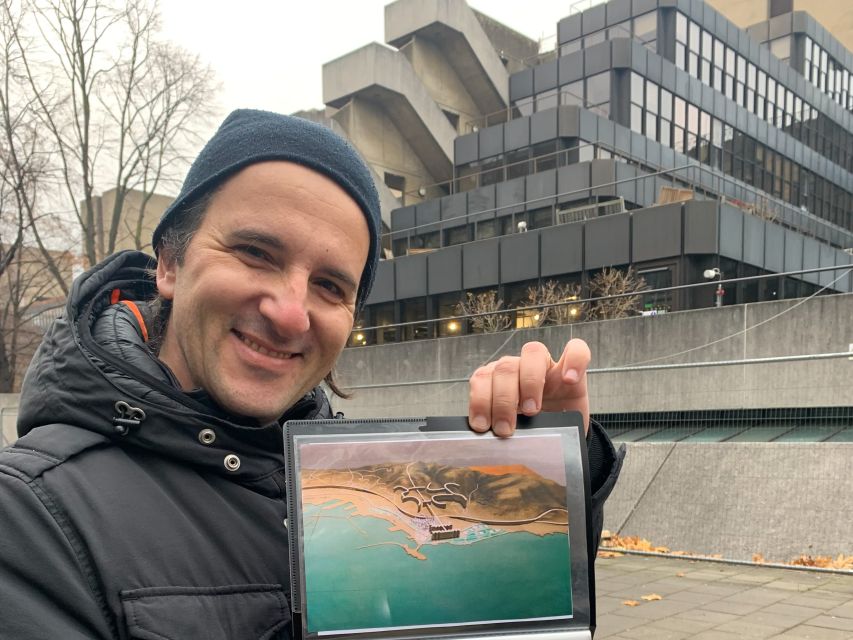
London’s Brutalist buildings are easy to miss if you are focused on palaces, museums, and old pubs. This 2.5-hour walk puts the rough concrete giants at center stage, explaining why post-war London was rebuilt in such a bold and often controversial style. Guide Evan brings a strong interest in architecture and adapts his explanations to the group.
I like the small group of no more than six, which should make questions easier and keeps the walk from feeling like a lecture delivered to a crowd. I also like the way the tour connects buildings such as the National Theatre to post-war politics, economics, social change, and construction methods. The main drawback is that you only see the buildings from outside, and one short Tube ride means you need a Zone 1 transit credit.
Key points to know before booking
- Evan leads an informal but detailed look at Brutalism, with strong attention to London’s post-war rebuilding.
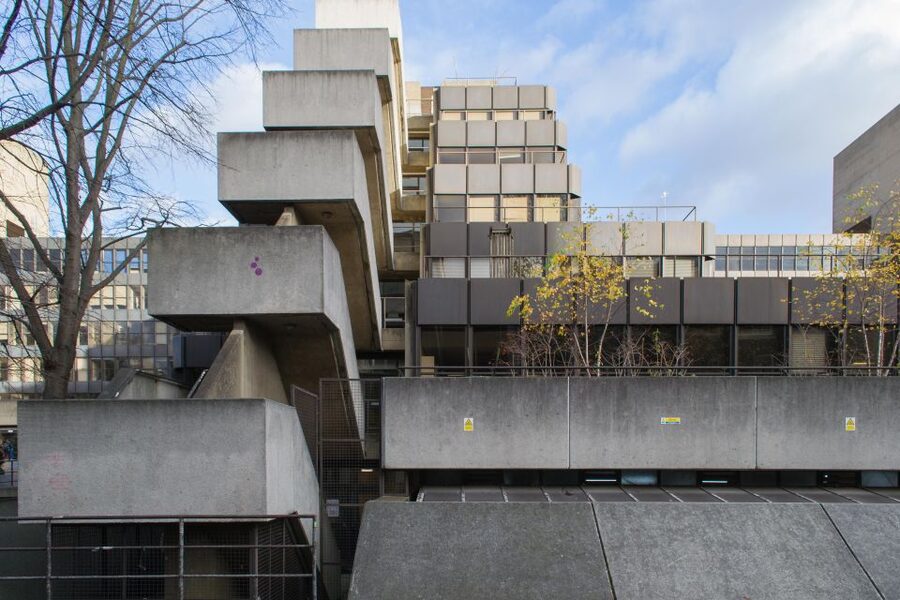
- The National Theatre, Institute of Education, and Brunswick provide some of the tour’s most useful architectural examples.
- Concrete is treated as both an engineering material and a political choice, not simply as a rough visual style.
- A single Tube journey is included in the route, but your public transport fare is not included.
- The group is limited to six people, making this a better fit for discussion than a large sightseeing walk.
- The tour is aimed at adults and older teenagers, and it is not suitable for children under 16 or people with mobility impairments.
Why London’s concrete buildings deserve two and a half hours
Brutalism is often reduced to a matter of taste. You either like the heavy forms and exposed concrete, or you recoil from them. This tour gives you a better way to look at the style.
The term is tied to the use of raw concrete and to the wider Modernist belief that buildings should express their structure, materials, and purpose. In London, the style took shape during a period of post-war rebuilding, public investment, changing social expectations, and major pressure on urban space. The result was a group of buildings that could look severe, practical, idealistic, or all three at once.
I like that the tour does not treat Brutalism as a simple parade of ugly buildings. You learn about the forces that encouraged this kind of construction, then consider why many people disliked it, why some buildings were threatened, and why preservation groups now argue that certain examples deserve protection.
That context matters. A concrete building can look cold when you see only its exterior. Once you understand the public purpose, economic limits, and architectural ideas behind it, the same structure becomes easier to read.
More London Walking Tours:
- Magical London: Harry Potter Guided Walking Tour
★ 4.7 · 22,044 reviews - London: The Original Jack the Ripper Walking Tour
★ 4.7 · 7,833 reviews - Tour for Muggles The Ultimate Harry Potter Walking Tour in London
★ 5.0 · 4,684 reviews
Meeting Evan at Russell Square
The tour begins outside Russell Square Underground Station on the Piccadilly Line. This is a practical starting point in central London, with a clear transport connection and plenty of nearby activity before or after the walk.
Evan’s role is central to the experience. He has a strong command of Brutalist architecture and European Modernism, but the tone is informal rather than academic. Several parts of the tour can be adjusted to suit your level of interest, which is useful if one person in your group already knows the difference between a post-and-beam structure and a load-bearing wall while another is just beginning to notice concrete buildings.
The small format should help here. With no more than six participants, you can ask why a building uses a particular form, how public opinion changed, or what makes one Brutalist example worth preserving over another. You are not simply following a guide from one photo stop to the next.
Bring comfortable shoes and enough transport credit for one short Tube journey within Zone 1. Public transport is not included in the price. The walk may be postponed or canceled in poor weather, so it is sensible to keep some flexibility in your London plans.
The Institute of Education and the language of Modernism
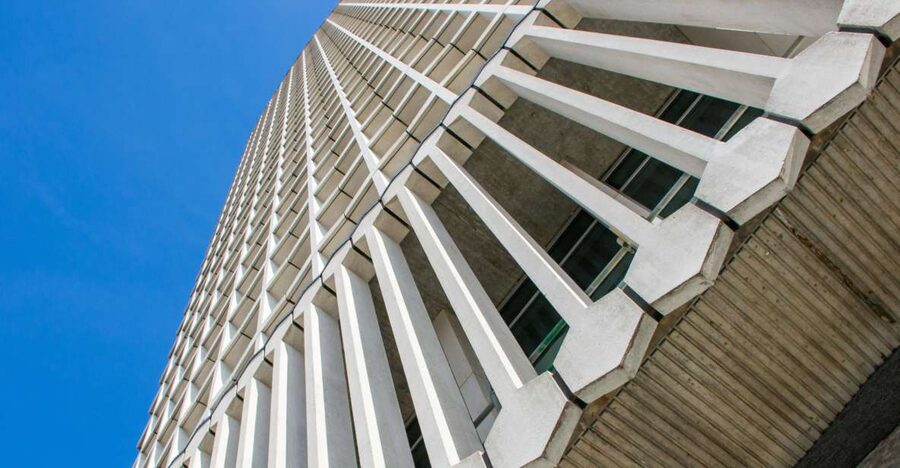
One of the notable buildings on the route is the Institute of Education. Here, the tour uses architecture to explain the larger Modernist project.
You can expect attention to monumental forms, concrete construction, and the way institutional buildings present authority. The point is not merely to identify a famous architect or admire a dramatic facade. It is to consider what the building was meant to communicate and how its function shaped its appearance.
This is also where Evan’s wider European context is useful. The tour introduces key figures in European Modernism and explains how ideas moved between countries before appearing in London. Global events influenced the city’s post-war rebuilding, and those influences help explain why London’s architecture cannot be understood as an isolated local fashion.
The Institute of Education is a good stop for readers who want more than a list of addresses. You begin to see Brutalism as part of a larger argument about education, public life, efficiency, and the role of architecture in a changing society.
The limitation is clear: you do not go inside any of the buildings. If you want to study staircases, foyers, interiors, or structural details from within, this tour will not provide that access. Its strength is the explanation you receive while looking at the exterior.
Concrete as engineering, not just decoration
The tour’s focus on concrete gives you a more useful way to understand Brutalist design. Concrete allowed architects to create broad masses, deep recesses, strong geometric forms, and large public structures. It was also linked to cost, labor, technology, and the need to rebuild after the war.
Evan explains how concrete affected both engineering and architecture in modern times. That distinction is worth paying attention to. Brutalism is not only about a visual preference for gray surfaces. Construction methods helped determine the shapes you see.
You may also discuss the compromises involved in building and maintaining these structures. One particularly useful part of the experience is the attention to practical details, including the ways architects and builders worked around limits imposed by construction.
This is where the tour can be especially rewarding for anyone who enjoys seeing how buildings are put together. It is less satisfying if you want a purely photographic outing with no technical or historical discussion.
Bring a camera, since the large forms, repeating patterns, shadows, and exposed materials can make striking photographs. Just remember that the most dramatic views may require you to look upward, step back, and compare several parts of a building rather than simply take a front-facing snapshot.
More Historical Tours:
- London Small Group Tour of Historical Pubs
★ 5.0 · 10,422 reviews - Soho Music & Historic Pubs Tour
★ 5.0 · 1,993 reviews - London: Historic Pubs of Central London Walking Tour
★ 4.9 · 1,065 reviews - London: Soho Music and Historic Pubs Walking Tour
★ 4.9 · 836 reviews
The National Theatre, a Brutalist building with a public argument
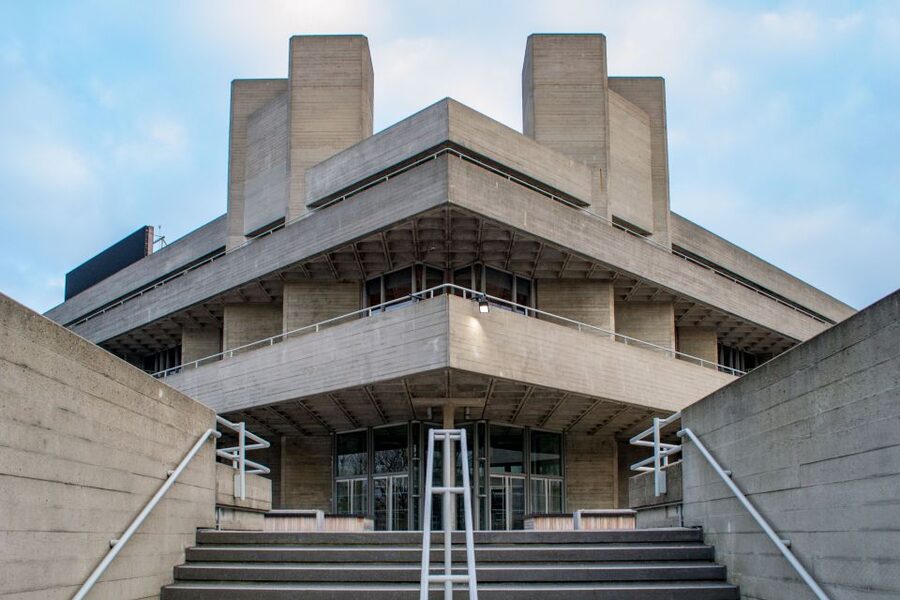
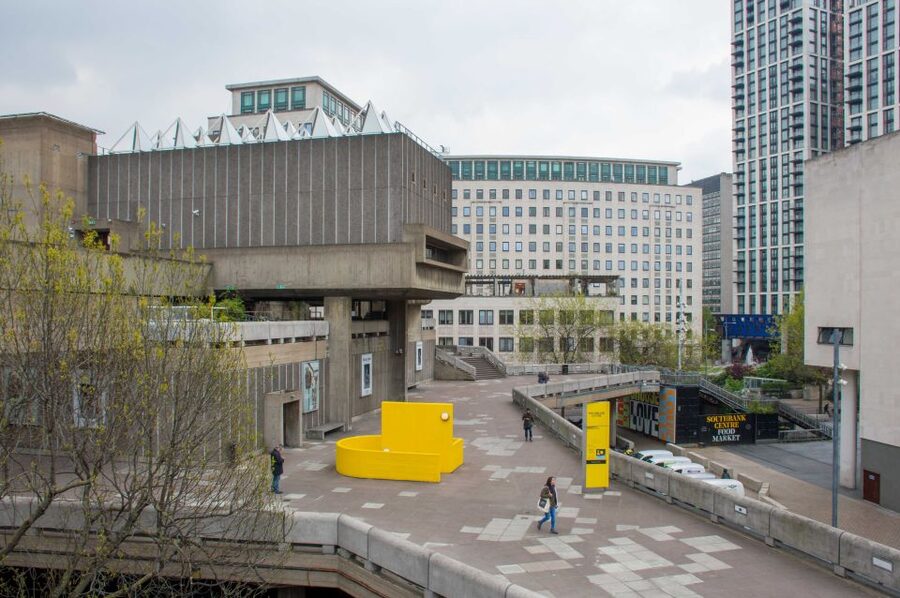
The National Theatre is likely to be the tour’s visual centerpiece. Its broad terraces and layered concrete forms make it one of London’s most recognizable examples of Brutalism. It is also a building that divides opinion, which makes it ideal for discussion.
Here, the tour connects design to the social, political, and economic conditions that allowed the building to be created. You learn why such an imposing public institution took the shape it did and why reactions to it have changed over time.
I especially like this approach because the National Theatre is not treated as a frozen monument. Its future raises practical questions. How should local authorities handle large concrete buildings? What should preservation societies protect? How do residents and building users judge a structure that may have architectural importance but can be expensive or difficult to maintain?
Those questions give the tour a modern edge. You are not just looking at the past. You are considering what happens when a once-new building becomes old enough to need major repairs, new uses, or a defense against demolition.
The National Theatre also offers strong photo opportunities, but the tour’s real value comes from learning to see it as a product of its time. The building’s scale and severity make more sense once you understand the confidence that public architecture carried in the post-war period.
Brunswick and the detail that changes your view
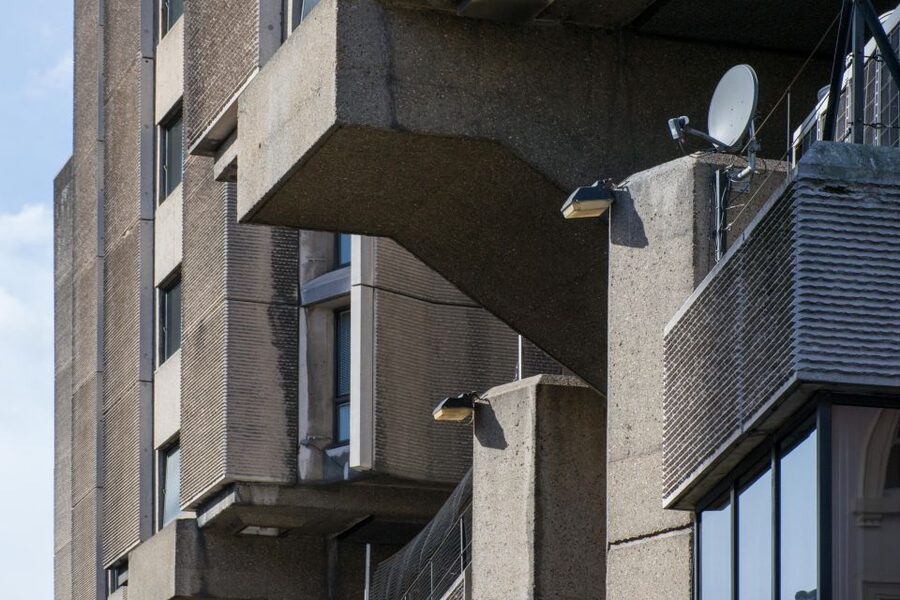
The Brunswick is another important stop, and it seems to reward close observation. Evan has a particularly good eye for its details, including the relationship between the larger structure and the smaller design decisions that can be missed from a distance.
This is the point in the walk where you may begin to notice that Brutalism is not one fixed look. Concrete can be monumental, repetitive, domestic, institutional, or carefully patterned. A building’s success depends not only on its material but also on proportion, human scale, use, and upkeep.
The Brunswick also helps balance the tour. The National Theatre is a major cultural institution, while the Brunswick shows how Brutalist ideas could shape a more everyday urban setting. Looking at both allows you to ask how people experience these buildings in ordinary life, not just how architects discuss them.
If you are new to Modernism and Brutalism, this comparison should be useful. You will have several examples in mind rather than one broad stereotype. If you already read architectural history, you may want to ask Evan more about materials, construction choices, and later alterations, since those details are where the tour can become most specific.
Post-war politics, public money, and changing taste
The best part of this walk is the connection between architecture and the events around it. London’s Brutalist buildings did not appear by accident. They grew from a period when public institutions, housing, education, culture, and transport all faced major demands.
The tour explores how global events influenced London’s post-war architecture and how Modernist monumental design became part of that response. Concrete could suggest strength and renewal. It could also signal bureaucracy, austerity, or an unwanted break with older architectural traditions.
Public opinion changed over the decades. Buildings once dismissed as harsh are now sometimes recognized as important works worthy of protection. That change does not mean every Brutalist building is successful, or that every preservation argument is convincing. It means the conversation has become more careful.
You will also hear about the continuing tension among local authorities, preservation societies, and residents. A building may have architectural value while still presenting real problems for maintenance, access, cost, or daily use. The tour is strongest when it allows both ideas to exist at once.
Evan is praised for bringing social, economic, and political context into the walk rather than focusing only on style. That makes this a useful choice if you want to understand why London looks the way it does, not just collect a few unusual photographs.
How much detail should you expect?
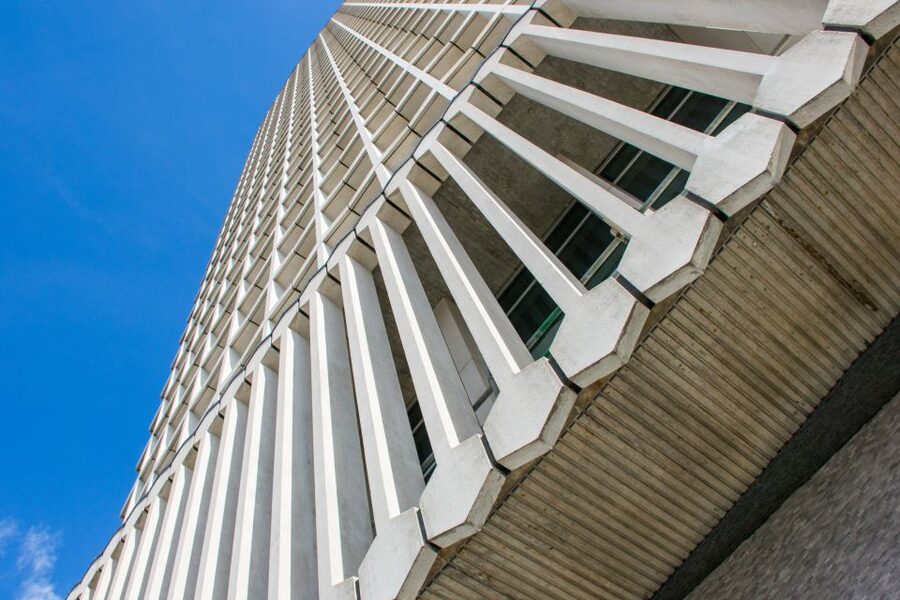
The tour is educational and firmly guided, but it is not presented as a specialist university seminar. Evan explains Modernism, Brutalism, European influences, concrete, and London’s post-war development in accessible terms.
If you know little about the subject, you should find the walk easy to follow. The small group also allows the guide to adjust the level of explanation, as shown by the way he has tailored the experience to different levels of knowledge.
If you already have a strong background in architecture, you may want more discussion of construction methods, material aging, and the compromises made during building work. One participant found the historical discussion more general than expected and wanted closer analysis of materials and construction. That is a fair warning for specialists.
There is also a small accuracy caveat. The tour may include broad historical explanations that deserve nuance. For example, claims about bricked-up windows and window tax have several causes, and political labels applied to historical figures can be too simple. If you are deeply invested in architectural or social history, listen actively and ask questions rather than treating every aside as a final scholarly judgment.
That does not undo the tour’s value. It simply helps you choose it for what it is: an engaging guided introduction with strong architectural interpretation, not a formal research course.
Is $47 good value?
At $47 per person, the tour is not the cheapest way to see London’s buildings. You pay for two and a half hours of a live guide’s attention, a small group, and a subject that is difficult to explore through a standard sightseeing route.
The price makes the most sense if you are genuinely interested in architecture, urban planning, post-war history, or photography. Evan’s knowledge and enthusiasm are a major part of the value. You are also getting a connected story about several buildings rather than isolated facts.
For a casual visitor who only wants to pass the National Theatre and take a quick photo, $47 may feel high. You could see the exteriors without a guide. But you would miss the explanation of how politics, economics, engineering, and public taste shaped them.
The tour becomes particularly good value if you ask questions and engage with the comparisons between buildings. It has also been described as a strong alternative to much more expensive specialist architecture tours. That comparison should be taken as a sign that the guide delivers serious content at a moderate price, while remembering that interiors are not included.
The free cancellation period up to 24 hours before the start and the option to reserve now and pay later reduce the risk of fitting it into a changeable London schedule.
Who should book this walk?
I would recommend it most strongly to:
- Architecture and design enthusiasts
- Visitors interested in Modernism or post-war Europe
- Photographers looking for unusual London subjects
- Students and adults who enjoy social and political history
- Returning London visitors who want a different view of central London
- Couples or friends who prefer a small, discussion-friendly group
It is less suitable for young children, since the minimum age is 16. It is also not suitable for people with mobility impairments. The route involves walking and one short Tube journey, and the buildings are viewed from outside.
This is not a general London highlights tour. You should not book it expecting Westminster Abbey, royal history, or classic Victorian streets. Book it because you want to understand the city’s concrete institutions and are willing to spend several hours looking closely at buildings many people hurry past.
Final verdict: a smart choice for the Brutalism-curious
Book this tour if you want a fresh way to read central London. Evan’s enthusiasm, the six-person limit, and the connection between buildings and post-war society give the walk more substance than a simple architecture photo route.
The strongest parts are the National Theatre, the Institute of Education, and the Brunswick, especially when Evan explains how design choices relate to politics, public money, construction, and changing public opinion. The main limits are the exterior-only format, the required Tube fare, possible weather changes, and the occasional need to question an over-simple historical point.
For a visitor who wants a thoughtful introduction to Brutalist London, $47 is a fair price. For someone who dislikes concrete architecture or prefers interiors and hands-on building access, spend your time elsewhere.
FAQ
Where does the tour begin?
It begins outside Russell Square Underground Station on the Piccadilly Line.
How long does the tour last?
The walking tour lasts 2.5 hours.
What is the price?
The price is $47 per person.
Is public transport included?
No. The tour uses the Tube once for a short journey, and you need enough credit for one trip within Zone 1.
Which language is the tour in?
The live tour is conducted in English.
How large is the group?
The group is limited to six participants.
Are the building interiors visited?
No. The buildings are viewed from the outside.
Is the tour suitable for children?
No. It is not suitable for children under 16.
Can the tour be canceled because of weather?
Yes. The walk may be postponed or canceled if weather conditions are unfavorable. You can cancel up to 24 hours in advance for a full refund.
Just added around London
- London: “Queen” Highlights Walking Tour★ 4.3 · 48 reviews
- Couple’s photo: Romantic photoshoot in London★ 4.8 · 22 reviews
- London 1- or 2-Hour Professional Photo Shoot★ 4.9 · 6 reviews
- London: Private Tour with Locals – Highlights & Hidden Gems★ 5.0 · 8 reviews
- Luxury Private Tour in London with Lunch★ 5.0 · 7 reviews
- London: Private Black Cab Night Tour with Hotel Pick Up★ 5.0 · 11 reviews
- London: Christmas Lights Tour – With Christmas Music★ 4.8 · 9 reviews
- London: Private Pub Tour★ 4.5 · 4 reviews
London Walking Tours, compared.

Magical London: Harry Potter Guided Walking Tour
Read our review →
Tour for Muggles The Ultimate Harry Potter Walking Tour in London
Read our review →
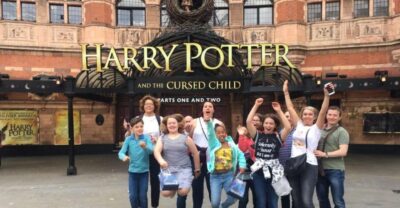
Harry Potter Movies Walking Tour (Kids Go Free)
Read our review →
Changing of the Guard Guided Walking Tour in London
Read our review →
The Great British Rock and Roll Music Walking Tour
Read our review →
Jack the Ripper Walking Tour – Ripper Vision Tours
Read our review →Browse the lists this tour appears in